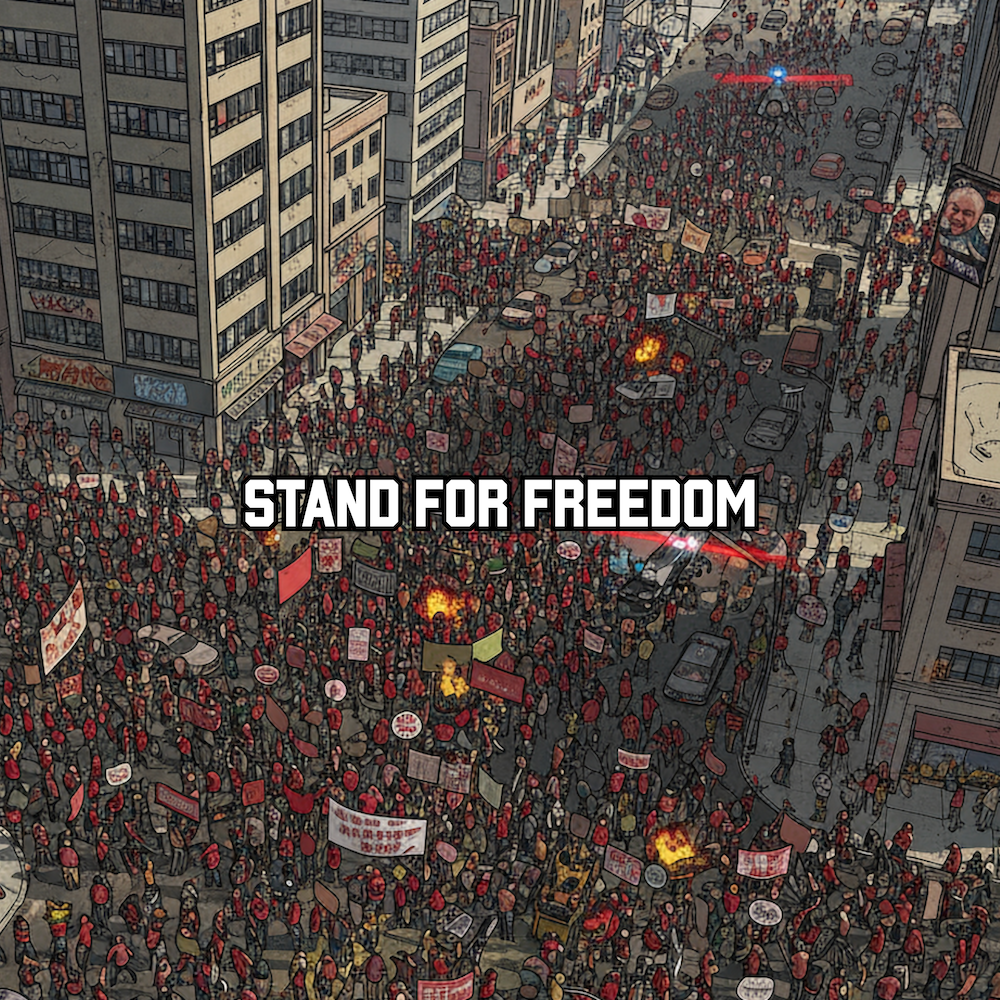
Tony Frissore’s “Stand for Freedom” is an act of excavation, a retrieval of a moment in American history that feels eerily synchronised with our current cultural pulse. Blending experimental hip-hop, spoken-word electronic, and archival political rhetoric, the Cleveland-based artist and producer has crafted a track that operates as both a sonic landscape and a moral mirror. Frissore deliberately centres his composition on Ralph J. Bunche’s 1949 Nobel Peace Prize address, but with a twist: he doesn’t spotlight the familiar diplomatic passages often quoted in history textbooks. Instead, he seizes on the direct challenge Bunche issued to the American people, a challenge demanding introspection, accountability, and courage in the face of racial injustice. More than 75 years later, Bunche’s words pulse through Frissore’s production with a renewed urgency, cutting through the layers of time to confront today’s listener. The result is a powerful reminder that the work of justice is never historical, but always contemporary.
From the opening seconds, the track’s atmosphere is thick with tension. Frissore builds his soundscape slowly, weaving together cold electronic textures, minimalist melodic fragments, and a pulsing beat that feels like a heartbeat holding steady under pressure. The sound is intentionally sparse, almost skeletal, leaving room for Bunche’s archival voice to take the lead. When the speech enters, its grainy texture contrasts sharply with the sleek production beneath it, emphasising the collision between past and present. Bunche’s tone—firm, unembellished, unflinching—cuts through the mix like a warning bell. Frissore refuses to soften or modernise the archival audio; instead, he frames it as a historical torch passed forward. The interplay between voice and rhythm evokes the sensation of walking through a contemporary protest while hearing echoes from a generation that marched long before. It’s grounding and disquieting, a feeling Frissore amplifies with the track’s deliberate pacing and shadowy ambience.
What elevates “Stand for Freedom” beyond the realm of political commentary is the way Frissore transforms historical rhetoric into a living, breathing conversation. His production responds dynamically to Bunche’s words, swelling when the speech intensifies, receding when it asks listeners to reflect rather than react. There’s a call-and-response relationship between the electronic elements and the spoken word, as though the music itself is processing the weight of Bunche’s challenge. The track never becomes didactic; instead, it invites contemplation. Frissore’s decision to avoid melodic vocals or additional lyrical content ensures the spotlight remains firmly on Bunche, while the music works in service of amplifying the message. The fusion of experimental hip-hop and spoken-word aesthetics creates a hybrid form—part documentary, part meditation, part rallying cry. The track moves with the quiet conviction of truth being spoken aloud, unmasked and unaltered.
By the time “Stand for Freedom” reaches its conclusion, the listener is left with an unmistakable sense of responsibility. Frissore doesn’t offer resolutions or easy answers; instead, he leaves us standing at the crossroads Bunche identified decades ago. What does it mean to uphold democratic ideals? What does it mean to confront injustice rather than outsource the task to vague institutions or future generations? Through its minimalist design and maximal emotional impact, the track becomes a vessel for reexamining these questions. It is reflective, but it is also confrontational—a reminder that freedom is not defended through silence or complacency. With “Stand for Freedom,” Tony Frissore proves that music can be more than entertainment: it can be a catalyst, a lifeline to forgotten truths, and a call to stand up, even when history feels heavy on the shoulders.
Connect with Tony Frissore
SPOTIFY
SOUNDCLOUD
YOUTUBE