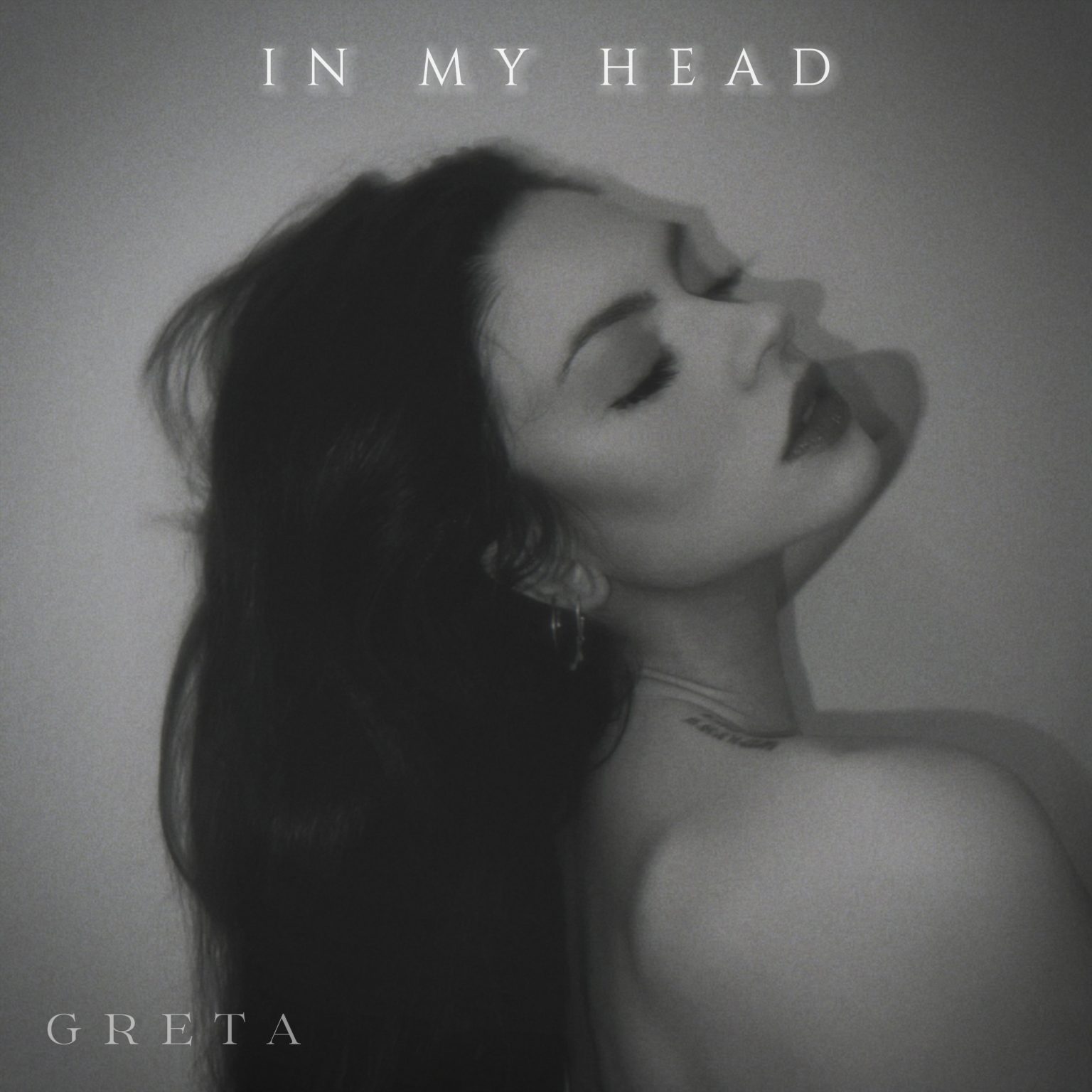
Greta’s “in my head” marks a striking evolution in the London-based artist’s growing catalogue, presenting a song that feels structurally daring and emotionally unguarded. Known for her rich imagery and layered storytelling, she takes a different route here, stripping back her lyrical style to something more immediate and direct. The result is a track that confronts its subject with clarity and quiet intensity. Released as a bold departure from her earlier work, “in my head” explores the fragile line between perception and reality, capturing the disorienting moment when imagined connection dissolves into truth. From its opening bars, the song establishes an introspective tone, inviting listeners into a deeply personal narrative that feels as unsettling as it is relatable.
One of the most distinctive aspects of the track lies in its unconventional 3/4 waltz time signature, a choice that proves central to its emotional impact. Rather than following the predictable structure of contemporary pop ballads, Greta uses this cyclical rhythm to mirror the repetitive nature of intrusive thoughts. The melody sways and circles back on itself, creating a hypnotic effect that reinforces the song’s thematic core. This is a deliberate compositional decision that enhances the storytelling. The production, handled with precision by Alexey Elin and polished through Vittorio Calisti’s mixing and mastering, remains understated yet immersive. Soft instrumental layers provide a delicate foundation, allowing the rhythm and vocal delivery to take precedence. There is a sense of space within the arrangement, as though each note is carefully placed to echo the emptiness described in the lyrics.
Vocally, Greta delivers one of her most compelling performances to date. Her voice carries a quiet vulnerability that feels almost conversational, drawing the listener closer with every line. There is no attempt to overpower the song with vocal acrobatics; instead, she leans into subtlety, allowing small inflexions and tonal shifts to convey the weight of the narrative. This restraint proves effective, particularly as the song navigates its emotional arc from realisation to self-questioning. Lyrically, “in my head” is unflinching in its honesty, examining the painful recognition that the relationship being mourned never truly existed outside one’s imagination. The words capture a universal yet often unspoken experience—the tendency to fall in love with potential rather than reality—and the subsequent unravelling that follows. Greta’s decision to forgo elaborate imagery in favour of direct expression gives the song a raw immediacy, making its emotional core impossible to ignore.

Ultimately, “in my head” stands as a testament to Greta’s artistic maturity and willingness to take creative risks. By challenging structural conventions and her own established style, she delivers a track that feels refreshingly authentic and deeply resonant. It is a song that lingers because of its quiet truths—its ability to articulate a form of heartbreak that is often internalised and difficult to express. In confronting the illusions we create and the expectations we impose on ourselves, Greta offers a space for reflection. “in my head” is about understanding the self in its aftermath, marking a significant step forward for an artist who continues to refine and redefine her voice with each release.
Connect with Greta
SPOTIFY
SOUNDCLOUD
INSTAGRAM