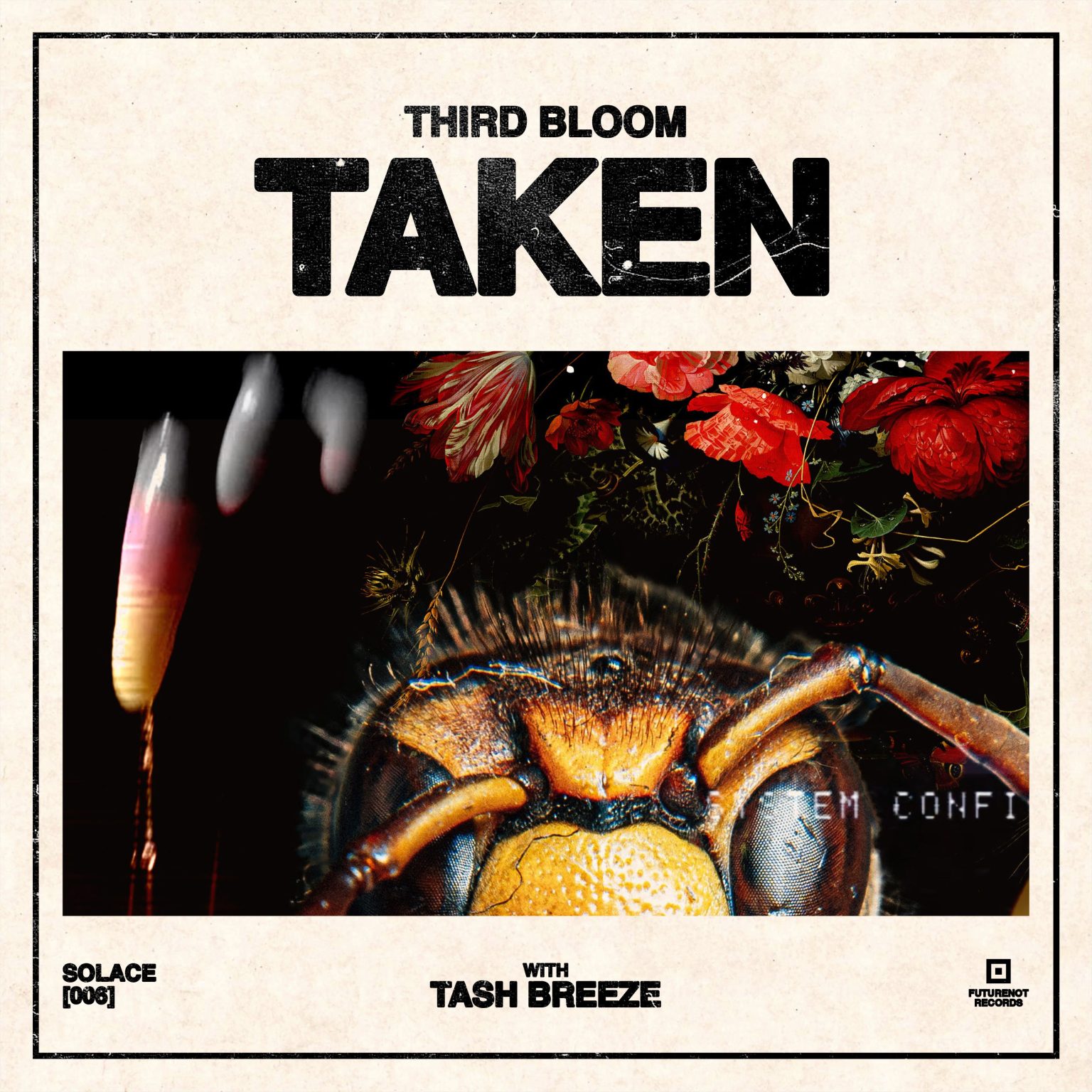
Third Bloom’s “Taken” emerges as an experience shaped by restraint, atmosphere, and an unflinching commitment to emotional honesty. From the outset, the Brighton-based artist strips away any sense of comfort, opening with stark, skeletal beats that feel intentionally exposed. There is no immediate melody to hold onto, no warmth to ease the listener into familiarity. Instead, the track establishes a cold, almost desolate sonic terrain, one that reflects Third Bloom’s background as a musician and visual artist deeply attuned to darker aesthetics. This minimalism is a deliberate artistic decision that allows every element to carry weight. In doing so, “Taken” positions itself closer to a piece of sonic art than a traditional electronic track, inviting listeners into a space where tension is sustained rather than resolved.
Central to the track’s impact is Tash Breeze’s extraordinary vocal performance, which arrives with quiet intensity. Her delivery resists the conventions of singing, leaning instead toward something more intimate and unsettling—part spoken word, part confession. There is a precision to her phrasing that feels almost surgical, as though each word has been carefully placed to expose rather than conceal. The lyrical centrepiece, “What’s Burnt Cannot Grow,” resonates as a statement of finality and a philosophical reflection on loss and irreversibility. In many ways, her voice serves as the emotional anchor of the track, guiding the listener through its sparse landscape without offering the comfort of resolution. This approach aligns seamlessly with the production’s ethos, where patience and control replace immediacy, and where every moment feels deliberately earned.
The production itself unfolds with a quiet defiance of expectation. Drawing subtle parallels to the raw energy of Underworld, the darker tonalities of Orbital, and the fragile intensity associated with Tricky, “Taken” situates itself within a lineage of experimental electronic music while maintaining a distinct identity. The progression is slow, almost stubbornly so, refusing to rush toward a climax. Instead, the track builds tension incrementally, allowing its rhythmic foundation to persist while the emotional weight deepens. When melody finally emerges, it does so sparingly—a single chorus that feels less like a release and more like a revelation. This moment is fleeting yet powerful, a reminder that restraint can often amplify impact. The careful balance between structure and unpredictability ensures that the listener remains engaged, even as the track resists conventional forms of gratification.
As “Taken” approaches its conclusion, it avoids the temptation to tie its elements together neatly. Rather than resolving, the track dissolves, giving way to warm synth textures that rise from the otherwise barren soundscape. This closing passage is soothing and disquieting, evoking the image of light falling across something irreparably damaged. It is a fitting end to a composition that consistently prioritises emotional truth over comfort. Third Bloom has crafted a piece that lingers because it unsettles, leaving the listener to sit with its implications long after it fades. In “Taken,” there is no clear sense of closure, only the quiet acknowledgement of what has been lost and what cannot be reclaimed. It is this refusal to offer easy answers that ultimately defines the track’s power, marking it as a compelling and deeply resonant work within contemporary experimental music.