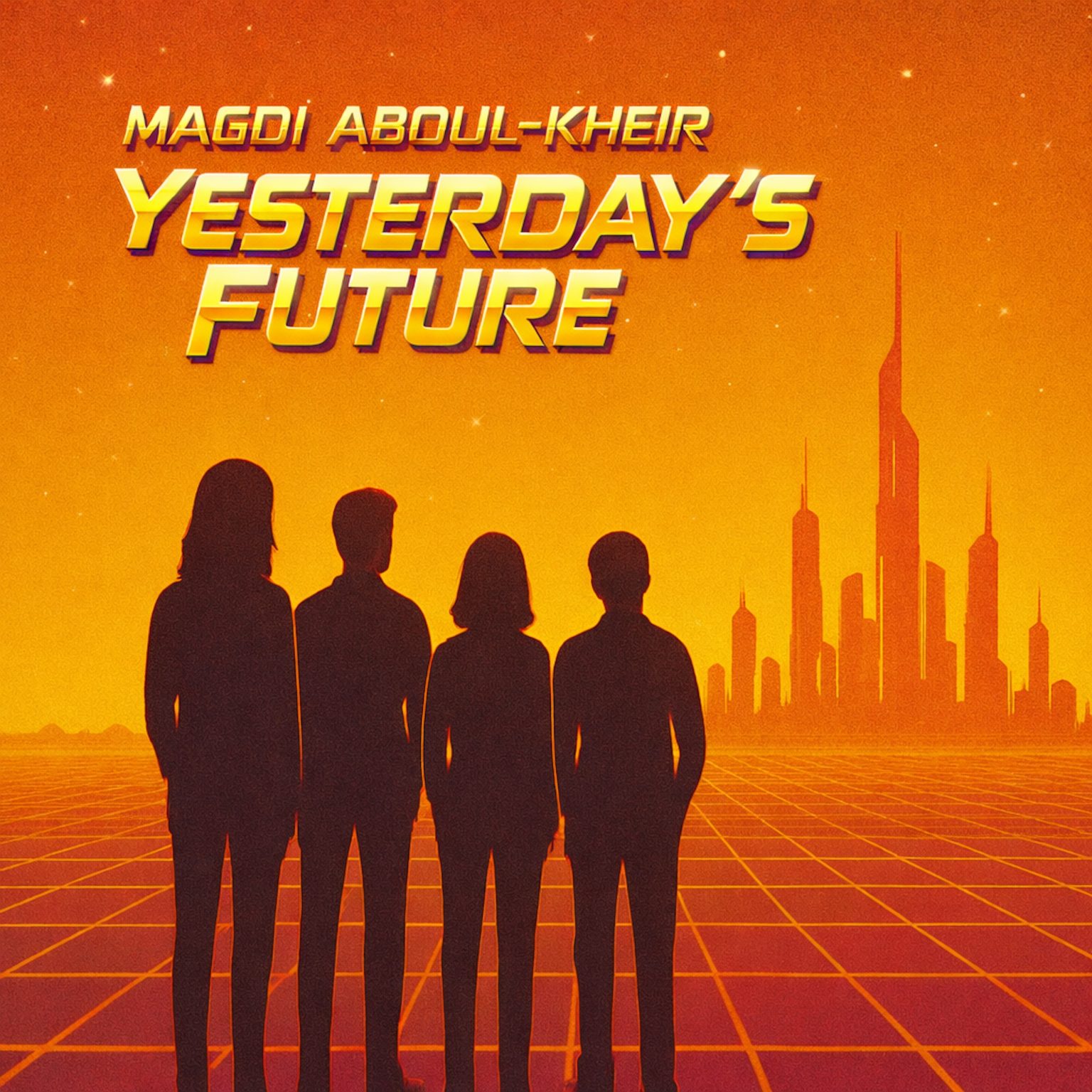
Magdi Aboul-Kheir’s “Yesterday’s Future” is a love letter to the future imagined by previous generations: a world of neon lights, chrome reflections, synthesizer dreams, and endless optimism. The Germany-based composer revives the unmistakeable sonic DNA of the 1980s in nine instrumental tracks but refuses to be caught up in nostalgia. Instead, Yesterday’s Future is an alternate universe where classic synth-pop never stopped moving forward, combining vintage drum machines, shimmering analog synthesizers, soaring electric guitars, cinematic string arrangements, and subtle modern electronic touches into one cohesive trip. It’s a record with character, a record that enjoys retro aesthetics without ever sounding like a museum piece. Magdi Aboul-Kheir doesn’t merely copy the sounds we’ve heard before; he reinvents them, reminding us why those lush melodies and upbeat electronic worlds first captured our imaginations. The album pulses with movement, joy, and wonder, returning the listener to the tomorrow they once dreamed of, while uncovering something entirely new beneath those familiar textures. It’s an album that honors not only memory but also possibility, and there’s an argument that the most powerful nostalgia is that which inspires creativity, not replication.
The intro sequence immediately sets this vibrant tone. “Past Is Calling” is an invitation, a mission statement, allowing the listener to peek into an exciting world where yesterday and tomorrow are comfortable with each other. Warm synth pads bloom slowly, then energetic rhythms drive the composition, giving the sense of stepping through a portal into a retro-futuristic metropolis glowing under endless neon skies. From there, “Machines’ Gym” adds a playful dose of energy, with muscular electronic grooves that live up to the wonderfully imaginative title. You could almost imagine robotic athletes working out under the fluorescent lights with the old arcade machines humming in the background. And then there’s, of course, “Endorphine Wave,” one of the defining moments on the album, for sure. It’s hard to deny the foundation of new wave and the subtle but effective glitchy textures, a perfect display of Magdi’s remarkable understanding of the emotional language of synth-pop. There is no language in the track, but the melody alone communicates a sense of exhilaration, longing, and triumph. Cinematic in scope but accessible, urgent synth motifs, sweeping harmonic progressions, and music that builds gradually toward euphoric climaxes. There are definitely traces of artists associated with French House and the retro electronic revival, but Magdi runs every influence through his own unique melodic voice. “Endorphine Wave” is more than a tribute. It expands the language of classic electronic music, proving that timeless songwriting will always be able to cross stylistic boundaries.
One of the album’s great strengths is its extraordinary sense of momentum. “Through the Neonrain” lives up to its name, wrapping shimmering synths in propulsive percussion to evoke the feeling of zooming down lit-up city streets past midnight with the rain coloring the pavement in endless electric hues. The whole arrangement has a cinematic quality, and listeners can imagine whole stories unfolding without a word spoken. “Pulsraum” continues this thrilling momentum while introducing more rhythmic complexity, combining danceable grooves with sophisticated composition. Then the title track, “Yesterday’s Future,” is the emotional and conceptual heart of the album. Magdi masterfully translates the record’s central philosophy here: to revisit futuristic optimism not through sentimental nostalgia, but through a renewed artistic imagination. The soaring synth themes, expressive guitar passages, and elegant string flourishes all combine beautifully and make for one of the album’s more emotionally resonant moments. It is in these middle chapters that the classical training of Magdi becomes more and more evident. The architecture of each piece is elaborate, and the harmonic shifts reveal a composer who knows as much about emotional pacing as about technical craft. There is a definite composer’s discipline behind each musical choice, even with shiny electronic textures and catchy grooves. The result is immediately inviting instrumental music that pays back close listening with ever more richly textured layers of detail.
Yesterday’s Future is full of positive energy, but it always retains a sense of emotional contrast. “Abyss of Shadows” switches to a darker palette, stepping away from the album’s exuberance for a moment in favor of mystery, introspection, and subtle tension. The textures are rich and ambient, synth melodies are restrained, and the atmosphere is contemplative without being overbearing. The subtle shift is the key, as it prevents the album from falling into predictable emotional territory. And the bright passages are all the more vivid for having moments of reflection. Next up is the appropriately bright “Sunburst,” a tune that bursts with renewed optimism after this atmospheric detour. Bright melodic hooks float effortlessly over energetic electronic rhythms, making the piece feel like sunrise breaking over the horizon after a long night. The bright arrangement unfolds, and you can’t help but smile at the amazing ability Magdi has of creating melodies that will stay with you long after the music is over. Finally, the album ends with “Life’s Journey” on a very satisfying note. Magdi prefers a soft emotional resolution rather than a spectacle at the end, letting the earlier themes sit softly in the final composition. The ending is introspective and optimistic, delivering the overall message of the album that every ending is a new beginning. It’s a suitably elegant closing chapter that rewards those listeners who have stuck with this record from beginning to end, instead of sampling isolated tracks.
The great thing about Yesterday’s Future is that it can tell such powerful emotional stories without lyrics. Each piece becomes the soundtrack to a film yet to be written, allowing the listener to imagine characters, scenic vistas, and stories through the power of instrumental communication alone. This ability to tell stories through music speaks to Magdi Aboul-Kheir’s diverse musical background, encompassing orchestral composition, ambient experimentation, chamber music, jazz-influenced instrumentals, and electronic production. He doesn’t compartmentalize those influences but rather allows them to exist in a natural harmony across the album. Born from classical sensibilities, with pop instincts to make sure every piece has a memorable melody at its core. The album’s aesthetic identity is defined by the nostalgic framework of vintage synthesizers and ambient textures that breathe space between energetic passages. Even the electric guitar parts are more than decoration; they frequently take on an expressive voice of their own, soaring above the electronic foundations in a lyricism reminiscent of the cinematic grandeur of classic film scores. Few instrumental albums sound this emotionally communicative, because this kind of resonance without words requires an extraordinary confidence as a composer. From start to finish, there is an absolute confidence from Magdi.
The success of the album is as important as production. Every synthesizer has warmth and depth to it, not the overly polished sterility that can so often ruin modern retro-inspired releases. Vintage drum machines deliver authentic rhythmic character while contemporary production techniques provide clarity and spaciousness, ensuring the music feels vibrant rather than artificially aged. That ever-present cool, the analog nostalgia versus digital precision. It’s always impressive. String arrangements appear strategically throughout the record, enriching the electronic framework without overwhelming it, while subtle glitch elements introduce just enough contemporary edge to remind listeners this is not a simple recreation of 1980s sounds. Instead, Magdi treats retro aesthetics with great sensitivity, preserving their emotional heart while allowing modern craftsmanship to enhance, not replace, their charm. Every instrumental layer occupies its own carefully sculpted space within the mix, making repeated listens immensely rewarding as previously unnoticed details gradually reveal themselves beneath the primary melodies. This painstaking attention to sonic architecture only complements the cinematic aspirations of the album, letting each composition breathe without feeling cluttered.
What also sets Yesterday’s Future apart from so many modern electronic releases is an air of deep optimism. Where so much contemporary music embraces darker emotional territory, Magdi embraces wonder, curiosity, and joyful imagination without sacrificing an ounce of artistic sophistication. His music implies technology and humanity need not be at war but rather can work together to create beauty, adventure, and emotional engagement. The retro-futuristic visuals sprinkled throughout the record—neon skylines, streamlined machinery, heroic synth leads, and endless highways to the future—act as a signifier of a broader artistic philosophy born of hope rather than cynicism. Even the album’s occasional moments of melancholy ultimately resolve into optimism, reinforcing the idea that imagination remains one of humanity’s greatest strengths. In revisiting the futuristic dreams of decades past, Magdi also invites listeners to reconsider their own relationship with possibility. Instead of mourning the futures not lived, he revels in the continued creativity of the dreams that live on.

Yesterday’s Future is thus one of the most compelling and fleshed-out works by Magdi Aboul-Kheir to date. It manages to build upon the retro foundations he has explored in previous projects while also expanding his compositional confidence and emotional range. More importantly, it demonstrates that instrumental electronic music can remain deeply expressive without relying on lyrical narratives or conceptual complexity. Every melody feels handcrafted with genuine affection, every arrangement reveals thoughtful craftsmanship, and every track contributes meaningfully to a larger emotional journey that feels complete from beginning to end. Whether listeners arrive as longtime enthusiasts of synthwave, admirers of cinematic electronic music, or simply lovers of memorable melodies, they will discover an album overflowing with imagination, warmth, and artistic sincerity. Yesterday’s Future reimagines the dreams that defined it, transforming nostalgia into something vibrant, contemporary, and emotionally timeless. It is an exhilarating reminder that the future, whenever imagined, belongs to those bold enough to dream it into existence.



Connect with Magdi Aboul-Kheir
FACEBOOK
SPOTIFY
SOUNDCLOUD
BANDCAMP
INSTAGRAM