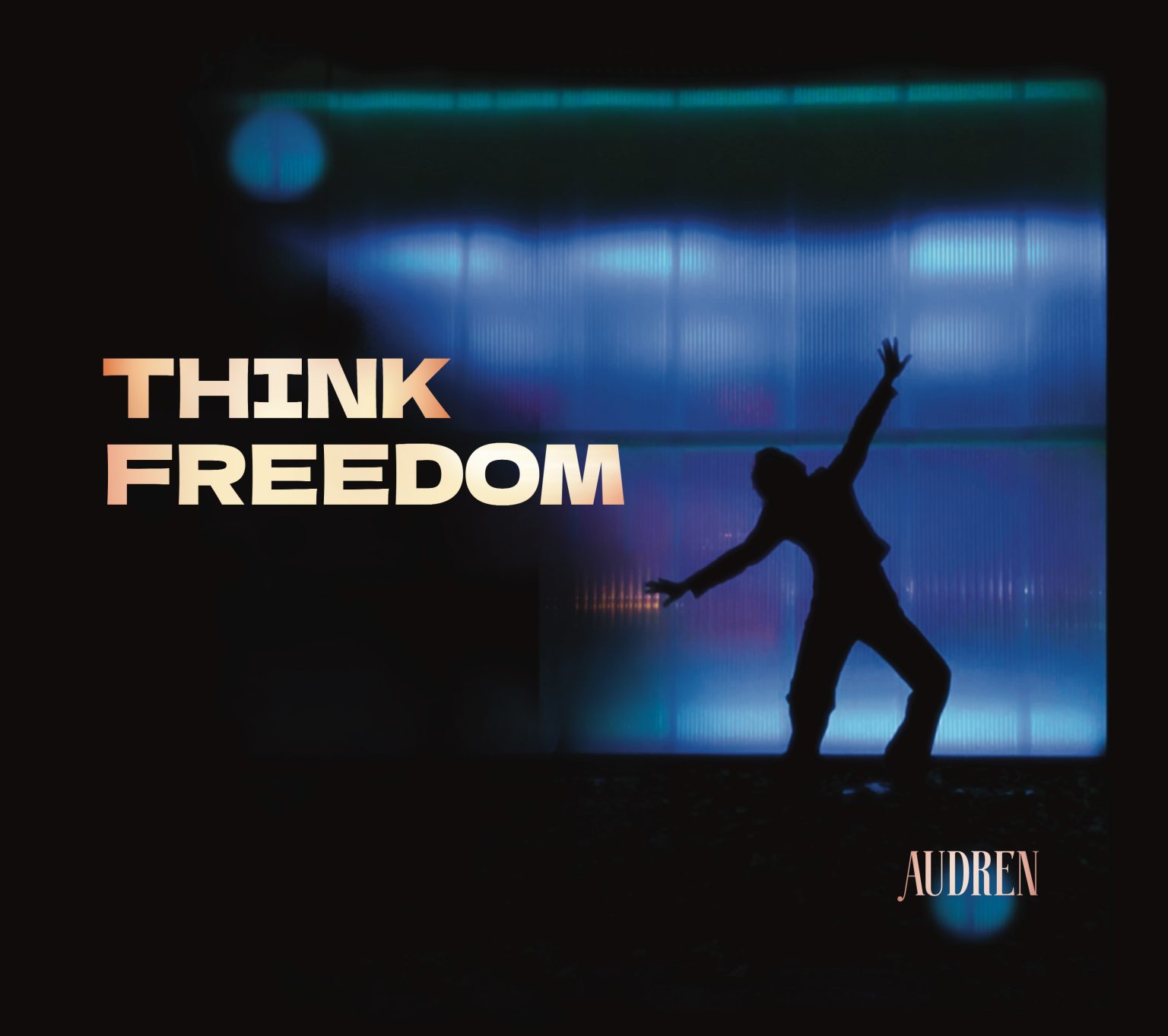
Audren’s Think Freedom arrives as a statement of survival, renewal, and artistic clarity. After a prolonged absence due to illness, the French indie pop artist returns with a body of work that feels deeply lived-in, shaped by vulnerability and resilience. Comprising eleven tracks, the album resists easy categorisation, weaving together elements of indie pop, jazz, neo-soul, folk, funk, and cinematic rock into a seamless and emotionally cohesive listening experience. Produced and arranged by her partner Chris Rime, with contributions from their daughters Sydney and Jemily Rime, Think Freedom carries the unmistakable warmth of a family-crafted project. Yet beyond its intimate origins lies a broader ambition: to question, to challenge, and to ultimately redefine what freedom means in a world saturated with noise and contradiction.
The album opens with “A New Page,” a fitting introduction that sets the emotional and sonic tone. Gentle acoustic guitars shimmer beneath ghostly falsettos and neoclassical accents, creating an atmosphere that feels fragile and hopeful. Audren’s voice enters with quiet conviction, carrying the weight of someone who has known interruption yet dares to begin again. This sense of renewal transitions seamlessly into “The Good Road,” where gospel-inspired harmonies and more assertive percussion inject a sense of forward momentum. The track balances uplift with introspection, reflecting a nuanced understanding that hope is rarely uncomplicated. Audren’s songwriting shines here, marrying poetic lyricism with accessible melodies, ensuring the message resonates without sacrificing artistic depth.
As the album unfolds, its thematic scope broadens and darkens. “When Freedom Dies” stands out as one of its most haunting moments, offering a stark meditation on control, surveillance, and the erosion of individuality. The arrangement is deliberately restrained, allowing eerie melodic lines and subtle instrumentation to create a tense, almost claustrophobic atmosphere. Audren’s vocal delivery remains composed, which only amplifies the unease embedded in the lyrics. In contrast, “We Want Funkey!” provides a vibrant release, bursting with infectious grooves, bold basslines, and playful horn arrangements. It channels a retro sensibility while remaining fresh and immediate, demonstrating Audren’s ability to navigate tonal shifts without losing cohesion. This interplay between light and shadow becomes one of the album’s defining strengths.
One of the most striking aspects of Think Freedom is its remarkable balance between stylistic diversity and structural unity. Tracks like “Si Tu Veux Monsieur” and “We Want Funkey!” lean into rhythm-driven exuberance, while others such as “Flowers In The Snow” offer moments of quiet introspection and emotional stillness. Despite these contrasts, the album never feels fragmented. Instead, it unfolds like a carefully curated narrative, each track contributing to a larger emotional arc. This cohesion is a testament not only to Audren’s vision but also to the thoughtful production, where every instrumental layer—from jangly guitars to lush synth textures—is given space to breathe and interact organically.
Vocally, Audren delivers a performance that is technically refined and emotionally authentic. Her voice possesses a natural warmth and elasticity, moving effortlessly between delicate low tones and soaring highs without ever feeling performative. Rather than overwhelming the listener with vocal acrobatics, she opts for sincerity, allowing the emotion of each lyric to guide her delivery. This approach proves particularly effective across the album’s varied soundscapes, ensuring that her voice remains the unifying thread throughout. Whether navigating the groove-heavy rhythms of funk-infused tracks or the stripped-back intimacy of acoustic moments, Audren maintains a consistent emotional presence that anchors the entire project.

Instrumentally, Think Freedom is rich with detail and craftsmanship. The guitars, alternating between clean, shimmering tones and more textured, rhythmic patterns, serve as a foundational element across many tracks. Meanwhile, the use of synths and orchestral layers adds depth and cinematic scope, enhancing the album’s immersive quality. The rhythm section deserves equal praise, with basslines that provide groove and structural cohesion, while the drums shift seamlessly between steady beats and more intricate patterns. This dynamic interplay ensures that the album remains engaging from start to finish, with each listen revealing new subtleties in arrangement and production.
Ultimately, Think Freedom stands as a compelling testament to Audren’s artistry and resilience. It is an album that challenges conventions while remaining deeply accessible, blending genres with confidence and purpose. More importantly, it invites listeners to reflect on the courage required to pursue it. In an era where much of mainstream music risks blending into a uniform landscape, Audren offers something refreshingly distinct: a work that feels timeless and urgently contemporary. With this release, she expands her voice, delivering an album that resonates long after the final note fades.