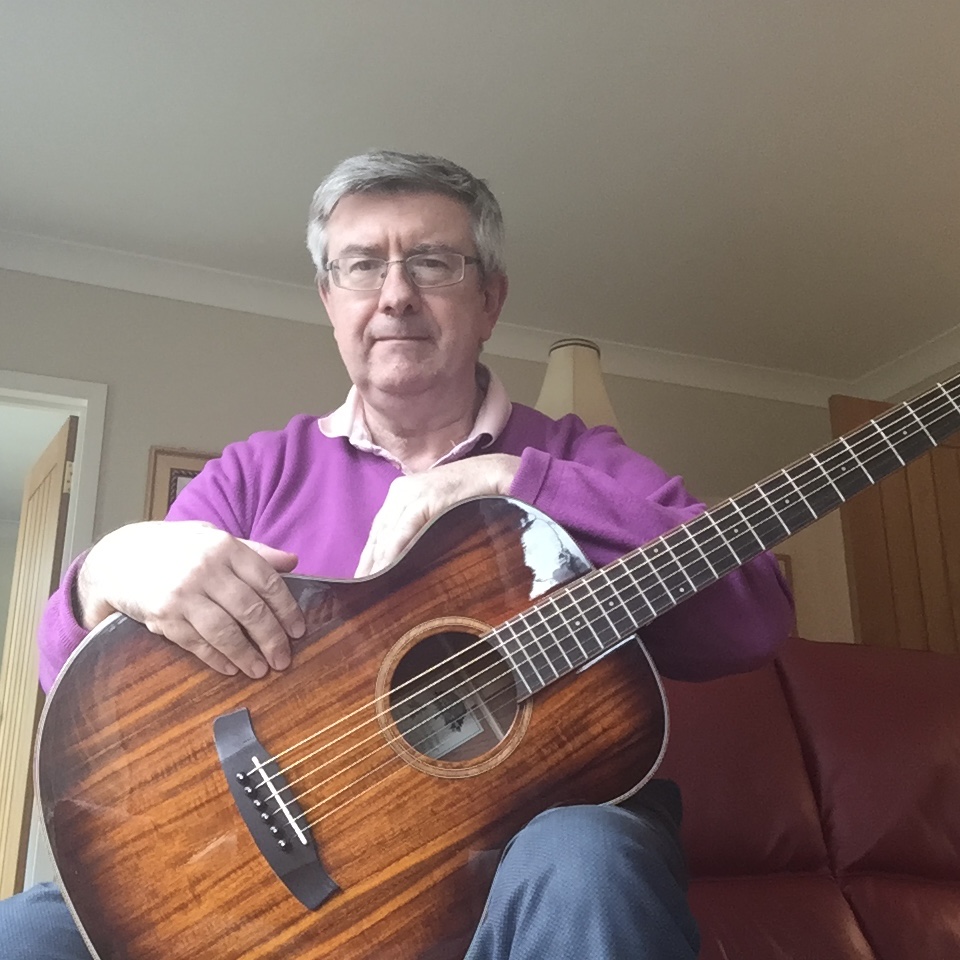
It’s the sort of instrumental that calls for not only being heard but also imagined. Martin Lloyd Howard’s “Highland Mist” fits the bill. Released August 1, 2026, the piece sees the UK-based guitarist and composer turn a simple steel-string acoustic guitar into a portal to another landscape, one of drifting fog, rugged hillsides, ancient paths, and the quiet solitude of the Scottish Highlands. There are no vocals to describe the scenery, no lyrical narrative to tell the listener how to feel. Instead Howard allows melody, harmony, resonance, and silence to tell the story. For an artist who has recorded “Selene,” “Winter’s Light,” and “Hidden Andalucia” and always shown a taste for instrumental music as a way of telling a visual story, it’s a natural step. But what makes “Highland Mist” especially distinctive is the way its musical language relates to the physical character of the landscape that inspired it. Classically trained, Howard has spent years drawing from folk, blues, rock, and classical guitar, soaking in influences from players as varied as Martin Simpson, Julian Bream, Dominic Miller, Jimmy Page in his acoustic and altered-tuning work, and Ritchie Blackmore’s folk-oriented Blackmore’s Nite period. Those influences do not come as overt quotations; they seem to be woven into the grain of his playing. It’s got classical discipline in the fingerstyle technique, folk storytelling in the melodic phrasing, and an earthy way of keeping the performance grounded in its acoustic character. In the end, “Highland Mist” is a call to slow down and take a close look at a landscape that can’t be rushed.
The most striking part of the track is Howard’s use of DADGAD tuning, a technique associated closely with Celtic and folk guitar traditions and perfectly suited to the atmosphere he wants to create. Howard does not simply use the tuning as a handy means of creating odd chord shapes or atmospheric textures but uses it melodically, allowing the changed intervals to become part of the storytelling vocabulary of the piece. This results in a guitar sound that has a little more space in the middle for you. Open strings ring out under the fingerpicking, and the shifting harmonies create a gentle sense of motion without ever breaking the track’s stillness. The story goes that the piece was almost started by accident, when Howard happened upon a fingerstyle chord sequence that immediately conjured up images of the Scottish Highlands. You can hear that sense of discovery in the final piece. There is a wonderful organic quality to music that seems to spring from the instrument itself, and “Highland Mist” keeps that quality rather than overworking the original inspiration. The choice of instrument also adds to the authenticity. For a time, Howard puts aside his usual fifty-year-old hand-built classical nylon-string guitar and opts for a Tanglewood steel-string acoustic instead. The brighter but earthy character of the instrument imparts the composition a different physical presence. The fingerstyle approach works wonderfully with the steel strings, providing enough shimmer to light up the melody while keeping the woody resonance essential to the song’s rustic character. It’s playing that’s intimate rather than grandiose, and it’s that intimacy that makes the landscape feel so close. You can almost see the performer sitting somewhere alone above the valley watching mist slowly cross the hills as the guitar becomes a quiet response to the view.
And the recording itself confirms that sense of closeness. Howard recorded “Highland Mist” in the intimate confines of his home loft using a single Rode NT4 microphone just nine inches from the guitar, and that stripped-back production approach becomes one of the track’s greatest strengths. In an era when instrumental recordings can become cluttered with layers, effects, editing, and artificial ambiance, Howard takes the opposite route: he places the listener right up close to the instrument and lets the guitar speak for itself. The microphone placement captures the physical details of the performance, the articulation of the fingers, and the resonance of the steel strings and the subtle decay of each chord without turning those details into distractions. The instrument sits in a pleasing sense of space, but it’s natural room space, not something added on afterward. The composition is so pure you can almost touch it. You’re hearing an instrument being played in a room, with all the warmth and immediacy that means. This simplicity is also a measure of the strength of Howard’s musicianship. There is no rhythm section, atmospheric pads, percussion, or additional guitars to hide it; the composition depends entirely on his ability to generate movement through fingerstyle patterns and melodic phrasing. Fortunately, the piece never sounds empty. The bass notes provide it weight, the higher melodic figures provide moments of illumination, and the open-string resonance creates a background aura that gives the track impressive depth for a solo performance. It’s a reminder that a sense of space doesn’t need to come at the expense of detail. Occasionally the most immersive soundscape can come from just one instrument and enough confidence to let it breathe.
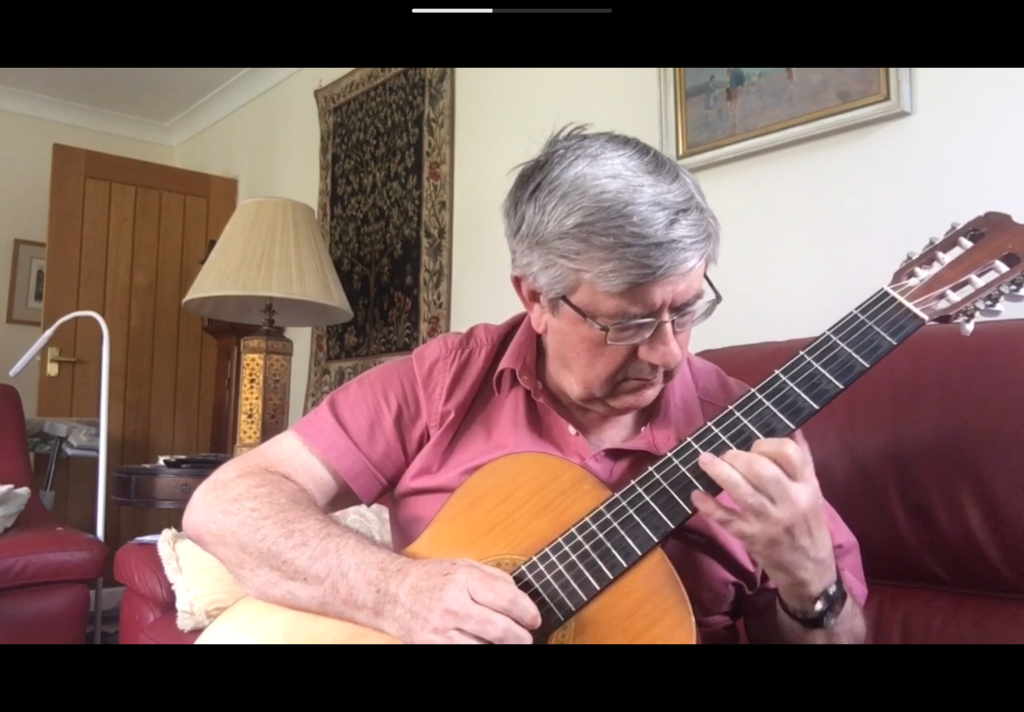
Ultimately, “Highland Mist” is an excellent example of Howard’s greater artistic goal: to create music for solo guitar that is original and inviting enough to pull the listener in, but evocative enough to tell a story without words. Its most significant triumph is that it never comes across as a technical showcase of DADGAD tuning or an exercise in mimicking Celtic music. Instead, the tuning, the steel-string guitar, the fingerstyle technique, and the minimalist recording all serve a larger emotional purpose. Howard has captured a mood, not just reproduced a location. The mist in the title becomes metaphorical, an idea of mystery itself, of standing somewhere vast and ancient, only able to see parts of the landscape around you. His classical background provides the piece structure and precision, while his folk and blues influences give it warmth, humanity, and a sense of narrative freedom. The wider musical philosophy is that of Martin Simpson, Julian Bream, Dominic Miller, Jimmy Page, and Ritchie Blackmore, but ultimately, “Highland Mist” is Howard’s. It is his own acoustic landscape, shaped by curiosity and honed over years of playing and composing. The notes invite the listener to pause, to breathe, and to let imagination complete what the music does not say. No need for dramatic climaxes when the drama is in the atmosphere itself: the soft movement of air, the distant suggestion of mountains, the sense of solitude, and the possibility of something ancient lurking just beyond the visible horizon. “Highland Mist” is a small, potent package of musical storytelling and proof that a guitar in the hands of a thoughtful composer can still conjure a whole world. When the last resonance has faded, it doesn’t feel like the end of a song so much as the moment when the mist clears and then begins to close in again.
Connect with Martin Lloyd Howard
SPOTIFY
SOUNDCLOUD
YOUTUBE