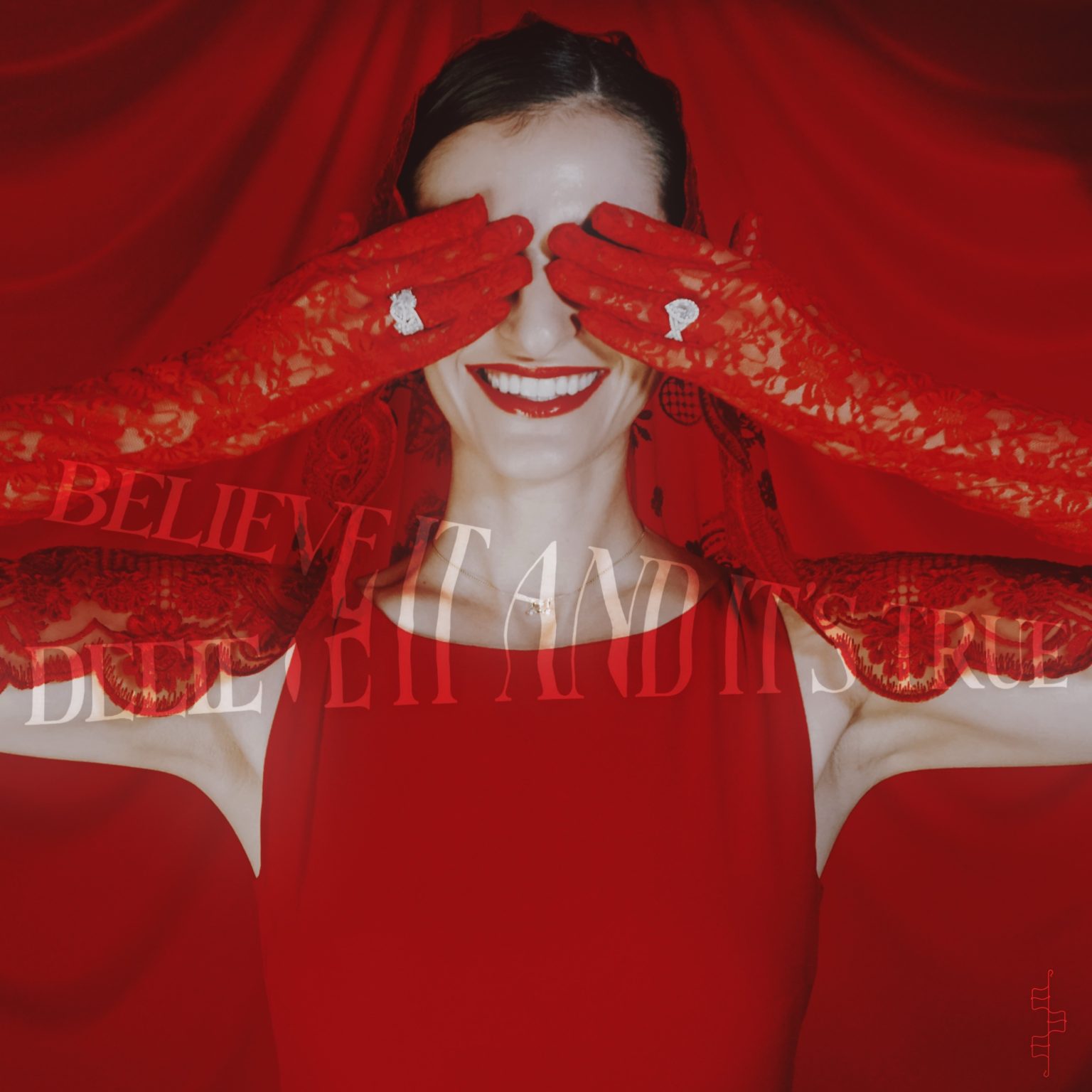
Some songs entertain, some tell stories, and some ask you to participate in their creation. Eleri Ward’s “BELIEVE IT AND IT’S TRUE” falls very much into that third category. Singer, songwriter, producer, and multi-instrumentalist Ward turns inward once again, but this time not only does she chronicle an emotional journey, she constructs a ritual around it. The atmosphere of this track is that of an eclipse and the symbolic energy of a new moon, in a fascinating space between mantra, meditation, spiritual affirmation, and contemporary pop. Its central idea is deceptively simple: say a belief over and over until it moves from language to feeling, and from feeling to reality. But that simplicity is what makes the song so engaging. “Believe it and it’s true” is less a traditional chorus and more a proposition, a phrase that gradually changes in meaning every time Ward sings it. It sounds like an affirmation at first. Then it starts to sound like a command. Eventually, the repetition builds into something that sounds almost like a spell. Ward understands that repetition can be hypnotic, but she also understands that it can be transformative. The song unfolds gradually to immerse the listener in a certain mental state, rather than rushing to a dramatic payoff or surprising them. The result is a deeply engaging piece of music that invites stillness while at the same time creating an inner sense of momentum. Ward doesn’t tell us what to think but instead creates an environment in which we are encouraged to examine what we tell ourselves over and over—and whether those internal pronouncements have the power to reshape the way we experience our lives.
This is most apparent in the song’s mantra-like identity and in the lyrical architecture of “BELIEVE IT AND IT’S TRUE.” Ward begins with straightforward, personal, and uncompromisingly self-affirming statements: “I’m the woman of my dreams,” “My word, my law, my creed,” and “I think, therefore I am.” These lines create a voice that is no longer asking to be something; it is stating that the transformation has taken place. The language of certainty and the process of repetition are particularly revealing in that there is a tension between the two. Ward sings as if she has arrived at total self-belief already, but the very act of repeating these statements suggests that belief is something we practice again and again. This makes the song feel psychologically deeper than just a motivational anthem. It knows that confidence can start out as a sentence before it becomes an instinct. The lyric “I’m living in the end” supports this philosophy, indicating a deliberate attempt to reside in the intended destination rather than waiting forever for conditions to enable it. Elsewhere, ‘I erased me of my past / Rewrote myself to last’ suggests a more radical idea of personal reinvention. The past is not a fixed identity but something to be rethought and rewritten. This is where Ward’s songwriting truly captivates, as the song does not merely convey the message of believing in oneself. It is exploring the relationship between identity, language, memory, and perception. “Like inside, like outside.” “You’re all you ever needed,” the parentheticals When you see you’ve got the power—functions almost like voices inside the central voice, making an internal dialog between doubt and certainty, old programming and new possibility. Even the Latin passage, “Tu es speculum et imago / Tu es velum et proiectio,” adds another ritualistic layer, turning the song momentarily toward the ancient, ceremonial, and mysterious. The overall effect is less like reading a set of inspirational quotes and more like overhearing someone reconstruct their entire belief system in real time.
Ward wisely doesn’t let the music overwhelm the words. The production is meant to create a psychological setting for the affirmations, with hypnotic vocals and atmospheric textures building up slowly. This is important, as a song that relies so heavily on repetition can easily become tiresome if the sonic world does not evolve along with it. Ward uses repetition as the base upon which slight changes can occur. The voice is melody and texture at once: sometimes close enough to touch, sometimes seeming to dissolve into the surrounding atmosphere. There’s a dreamlike quality to the production that makes the track feel less like a conventional pop recording and more like a private ceremony translated into sound. But then there’s always accessibility at its heart. The repeated refrain is catchy enough right away, but the repetition changes its emotional resonance. The first few times the phrase is introduced, the next few times it is reinforced, and finally the listener starts to anticipate it and join in. That participatory aspect is one of the song’s strengths. Ward is not merely giving an audience an affirmation. She is giving the audience the affirmation, telling them to take it on for themselves. There is something beautifully audacious about that choice. In an era where songs often battle for attention with constant structural shifts, explosive drops, and ever more elaborate production, “BELIEVE IT AND IT’S TRUE” goes the opposite way. It asks what happens when you hold on to one idea long enough for it to gain depth of meaning. The brilliance of the song is in its restraint. It allows space for the listener’s own thoughts to come into the music so that two people might hear the same refrain and have entirely different personal experiences attached to it. To another listener, it may sound like a declaration of independence. For one thing, it might be a reminder to stop defining themselves by past mistakes. To someone else, it may just be a calming phrase to rely on when self-doubt becomes overwhelming. Because of that openness, the song has a longevity that goes beyond the first listen.
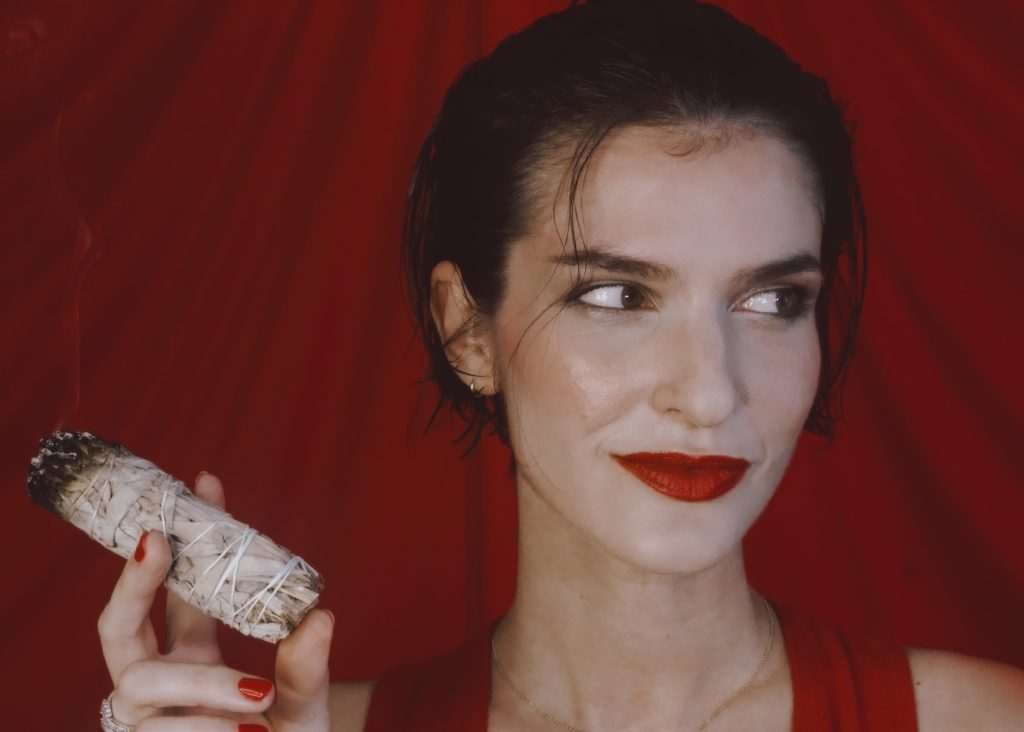
The visual element makes the entire project that much more fascinating, as Ward clearly knows that “BELIEVE IT AND IT’S TRUE” is not just a song to consume and forget. The visualizer that goes with this uses EFT, or Emotional Freedom Techniques, tapping to establish a direct link between the music and a physical practice. That decision is the crux of the song; the words are not just abstract ideas floating in the mind. They are supposed to be felt in the body. Ward’s affirmations rise and reverberate, while the visual experience invites participation, turning the song into something that could become part of a listener’s personal ritual. That’s an ambitious idea, but it doesn’t seem out of touch with the music. Indeed, it feels like the natural end to Ward’s wider artistic fascination with ritual. Her debut original album, Internal Rituals, explored the rituals built into everyday life; here, she takes that exploration to a new level, turning the act of listening itself into some sort of ritual. The release, coming around an eclipse and new moon, only heightens that sense of symbolic renewal. The song itself is about cycles, about transformation, and about the possibility of starting again, so the symbolism works if you come to those celestial events spiritually, psychologically, esthetically, or just as beautiful imagery. “BELIEVE IT AND IT’S TRUE” feels less like a completed statement than an invitation to come back. Its greatest achievement is not that it tells you to believe something; it is that after enough repetitions you might find yourself asking what you believe, what stories about yourself you have repeated for years, and which ones you might finally be ready to rewrite. Ward has made a track that refuses to be passive. It wants to be spoken, heard, said again, and maybe, in time, personalized. She turns a seemingly simple pop premise into a peculiarly personal meditation on self-image in the process. “BELIEVE IT AND IT’S TRUE” is hypnotic without being vacuous; spiritual without being obscure; and repetitive without being predictable. It’s music as affirmation, music as ritual, music as an invitation to reconsider the stories we tell ourselves until they become the architecture of who we are.
Connect with ELERI WARD
WEBSITE
FACEBOOK
SPOTIFY
SOUNDCLOUD
BANDCAMP