
Kansas newcomer NO IDENTITY makes an instant impact coming out of Olathe, with his track “Almost Nothing” trying to kick down the door of traditional electronic music and leaving the pieces strewn across the floor. What’s even more exciting about the release is that there’s no big production team behind the curtain: NO IDENTITY writes, records, mixes, masters, produces, and even creates the visuals around her music all by herself. That unapologetic DIY ethos is not just part of the artist’s biography; it’s audible in every jagged edge, distorted frequency, aggressive rhythmic movement, and odd sonic decision that gives “Almost Nothing” its personality. She has turned her limited equipment and imperfect recording environment into tools for creativity, not barriers. The result is a track with a gritty, restless, exhilarating, and deliberately unpredictable feeling. Musically, it’s influenced by EDM and electronic textures, but NO IDENTITY immediately goes beyond the clean, polished formulas often associated with contemporary dance music. Industrial percussion slams into the aggression of alternative rock, the experimental pop instincts, and the visceral energy of Nine Inch Nails’ Pretty Hate Machine for a sound that is both physical and psychologically charged. The rhythm works especially well for not being a predictable four-on-the-floor exercise. It seems instead to breathe, to lurch, to speed up, and to withdraw, giving a pulse that induces a sense of instability but still allows for movement. The beat takes up space in an almost confrontational way. It sounds as if the machinery is on the verge of overload the whole time, and yet somehow the track remains locked into an irresistible groove. That tension becomes one of the hallmarks of “Almost Nothing”: it is music to move to, but never to really relax into. Each rhythmic collision is another thought at the wrong time, another emotional disturbance breaking through the surface. And for a song that draws from themes of mental illness and relationship anxiety, that chaotic energy feels surprisingly apt. NO IDENTITY doesn’t try to make difficult emotions sound beautiful in a conventional way; she makes them sound alive.
But maybe the most striking thing about the track is its fearlessness in sound design. NO IDENTITY manipulates an apparently ordinary clapping sound, distorting it into something bizarrely unrecognizable, almost acting like a warped bass instrument. The description of it sounding like an “electric bass in a septic tank” is wonderfully weird, but it captures the aesthetic of the track perfectly: this is music interested in finding out what familiar sounds become after they’ve been pushed through the wrong machine, distorted beyond recognition, and returned to the listener as something entirely new. That processed clap is part of the song’s sonic fingerprint, and instead of burying its ugliness, NO IDENTITY places it front and center in the mix. It’s a gloriously rebellious production decision because it rejects the idea that all sounds must be clean, expensive, or conventionally pleasing. Here, distortion is an artistic language. The synths share the same philosophy, opting for grit and saturation over pristine digital perfection. They ripple under the beat, swelling into dense electronic layers at times and slipping away at others to allow other textures to emerge. The arrangement breathes through sidechain compression, a constant push and pull between the bass-heavy elements and the surrounding synth architecture. Although the production is deliberately filthy, ‘Almost Nothing’ never descends into sonic chaos. There is structure under the madness, and that structure shows NO IDENTITY understands rhythm and accessibility as much as she understands experimentation. The track has hooks, movement, and a physical groove, but these accessible elements are surrounded by sounds that constantly challenge the listener. And that balance is important. Too much polish would take the emotional honesty out of the song, while too much noise would make it hard to connect. NO IDENTITY occupies an interesting middle ground where abrasion becomes enticing. It’s sweaty, claustrophobic, and volatile, but there’s always something that draws you deeper. With each repeated listen, new layers come out, from the most minute variations in the synth textures to the way the distorted low-end plays with the percussion. There is a sense of controlled chaos that slowly gives way to a carefully built environment.
It’s the emotional aspect of “Almost Nothing” that gives all this sonic experimentation its real weight. And underneath the abrasive production is a song that touches on mental illness, relationship anxiety, vulnerability, and the challenge of trying to communicate experiences that are often impossible to explain cleanly. Rather than laying those themes out in an obvious confessional format, NO IDENTITY lets the production itself embody the emotional state. There is an anxiety to the song because all of its sounds are always rubbing up against each other. It’s vulnerable because the vocal performance refuses to conceal the limitations of the recording environment. “The rhythm never lets the feeling have a full resolution, which is why it feels restless. This makes the distortion more than an esthetic choice; it becomes part of the telling of the story. The vocals are raw and immediate, authentic in this damaged electronic world. NO IDENTITY doesn’t attempt to conceal the natural imperfections generated by her setup; she embraces them and makes the roughness of the recording part of the performance. She sings with a sense of urgency, but not in an artificial, theatrical way. The distortion she produces around her voice gives the listener the sense that they are hearing someone trying to communicate from within an overloaded emotional system. The mechanical qualities of the instrumental contrast marvelously with the quite human feeling at its heart. It’s precisely in that contrast that the song’s greatest power lies. NO IDENTITY may owe a debt to industrial music, but it’s not fascinated by technology for technology’s sake. The machinery, metaphorically, is inner pressure. The beats, bass, and electronic textures evoke thoughts speeding out of control, while the melodic elements provide brief glimpses of clarity within the turbulence. So the song’s relation to anxiety is not a simple one. There is discomfort, but there is energy. There is tension, but there is freedom, too. Listening to “Almost Nothing” can feel like walking into a room where everything is vibrating and then realizing that it’s the vibration itself that’s keeping you alive. The accompanying music video puts this philosophy into the visual realm, with the same loud, strange, unconventional character as the music. As NO IDENTITY creates both sides of the experience herself, the visual and sonic worlds feel connected instead of manufactured separately. The result is a total artwork from someone who clearly sees no reason to separate music, imagery, experimentation, and personal expression.
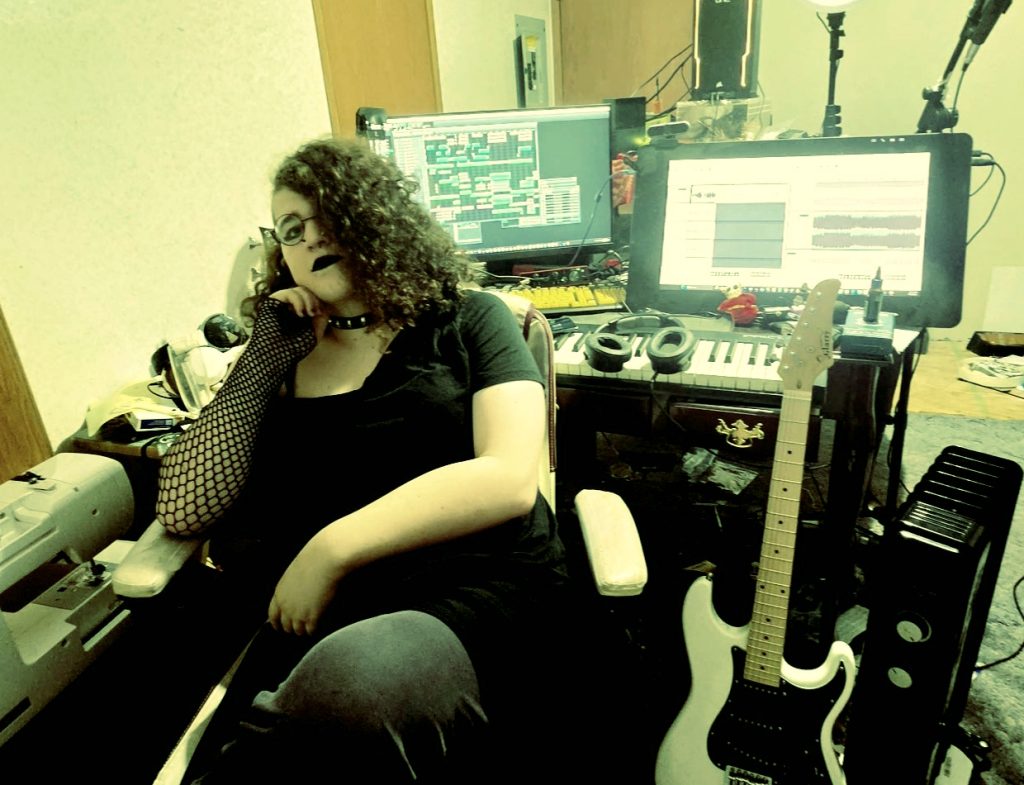
What makes “Almost Nothing” work in the end is the belief behind it. This piece isn’t an artist experimenting because weird sounds might get noticed; this feels like an artist who really needs those sounds to say what she wants to say. A creative personality unwilling to accept the first good answer shows a willingness to spend months experimenting, even to throw out a finished version for something better. That perseverance is audible in the last track. Every weird sample, aggressive beat, saturated synth, and vocal imperfection feels like a statement. There is a likable stubbornness to the whole production, as if NO IDENTITY has decided to discard the conventional approach when it fails to accurately represent her experience. In that sense, “Almost Nothing” is a powerful statement about independence itself. The scarcity of abundant resources has not deterred the artist from creating a world of her own but has forced her to create one. She has made technical limitations into sonic signatures and unconventional production decisions into memorable hooks. Most importantly, she’s shown that experimentation doesn’t have to equal inaccessibility. Beneath the industrial noise is a beat that lingers, beneath the distortion are melodies that shape the structure, and beneath the electronic aggression is an emotional core that provides the song its meaning. “Almost Nothing” sounds as if it’s stuck between a club, an industrial warehouse, and the chaotic interior of an anxious mind, and somehow those environments manage to coexist naturally. It is abrasive yet meaningful, strange yet accessible, and intensely personal while retaining its physical appeal. NO IDENTITY has made something that doesn’t sound like it was churned out of a template, and that may be their greatest achievement. “Almost Nothing” has fingerprints all over it, in an age when so much electronic music is painstakingly buffed to sameness. It sounds human because it’s flawed. It sounds exciting because it is prepared to take risks. And it sounds memorable because NO IDENTITY understands that sometimes the most powerful artistic statement is simply to refuse to make the safe choice. “Almost Nothing” is a vivid introduction to an artist who is forging her language from the ground up, turning anxiety into rhythm, distortion into melody, and limitation into freedom.
Connect with NO IDENTITY
SPOTIFY
BANDCAMP
YOUTUBE
INSTAGRAM
TIKTOK