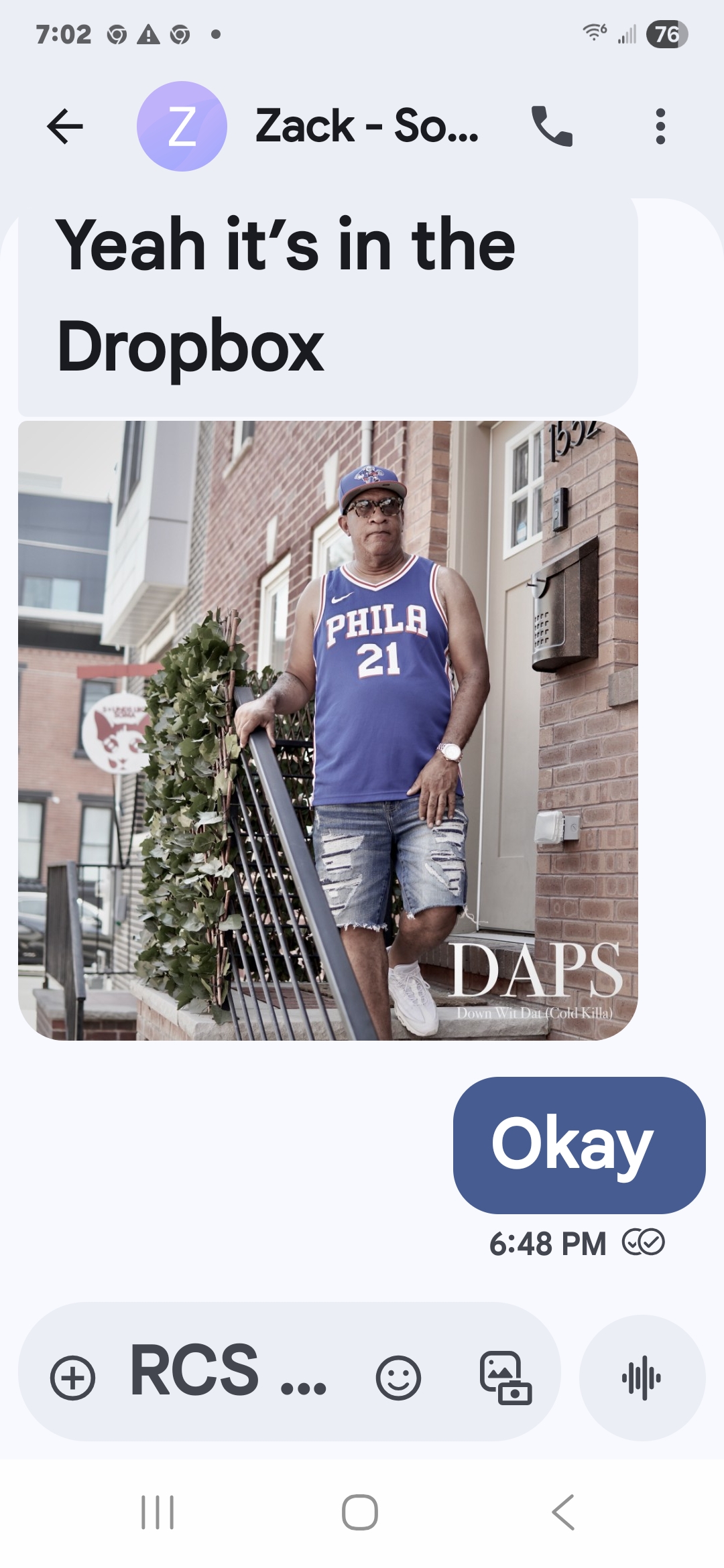
There is an instant magnetism to a rapper who doesn’t need to fabricate a world because he’s got one waiting behind him. On “Down wit dat (cold killa),” Philadelphia rapper DAPS mines the streets of Cobbs Creek, in particular the world he knew growing up around 60th Street, for raw material for a hip-hop record that feels both intensely local and remarkably accessible. This is not the kind of neighborhood record where you throw down a couple of street references over a generic beat and call it authenticity. DAPS cuts straight to the core of the song, using personal experience and memory to craft a track with a real sense of place. There is toughness to the record, no doubt, but also an unmistakable sense of personality. “Down wit dat (cold killa),” from the very first beat, seems built to catch your attention, hold it, then reward you with enough details to make it worth your while to listen again. The production, by Zack at Sounds Like Soma in South Philly, lays down an instantly recognizable foundation with a deep muscular bassline and hard-hitting percussion. The instrumental has a nice steady pulse that gives DAPS plenty of room to maneuver while still creating the kind of physical momentum that makes a hip-hop track feel alive. The intriguing twist is that the beat began with inspiration from the iconic theme from S.W.A.T., but DAPS and Zack don’t leave the listener feeling like they are hearing a simple remake or nostalgic exercise. Instead, that source material has been transformed into something darker, heavier, and more contemporary. It’s more a jumping off point than a destination, allowing the duo to create a musical atmosphere that feels appropriate for DAPS’ story rather than just referencing another piece of music. It’s that transformation that’s important, as it embodies the general spirit of the track: familiar enough to draw you in and unique enough to make you stay.
But the real reason “Down wit dat (cold killa)” has people talking is the contrast between the menacing bite of the production and DAPS’ incredibly clear delivery. His voice has the weight and hardness you’d expect from a rapper who tells stories rooted in a challenging environment, but he never lets that toughness become an excuse for muddy phrasing. Each word is deliberate. The clarity makes the verses especially effective because the listener can actually follow the details, instead of just absorbing the energy. DAPS believes that when you can see the person behind the performance, street-oriented hip-hop is so much stronger. His flow has an appealing rhythm that glides over Zack’s beat with ease, switching between force and catchiness without making the song feel overworked. The performance is confidently slack, as if DAPS knows the neighborhood he’s describing so well that he doesn’t have to exaggerate it. That’s where the song’s storytelling becomes its greatest asset. Cobbs Creek is not an abstract symbol or convenient backdrop: it becomes part of the song’s identity. DAPS has a perspective that can’t just be borrowed from some other artist, because he grew up around 60th Street. What sets good storytelling apart from cliché, more often than not, is the specificity of the verses, the memories and observations woven into the track. DAPS takes typical street rap language and makes it so much more so that you feel like you’re hearing real people, streets, moments, and memories in his lines. You can almost see the neighborhood outside the speakers, the bassline providing the soundtrack to scenes DAPS has personally seen. And there is also a satisfying balance in the way he depicts that environment. The record is gritty, but it doesn’t get bogged down in it. The hooks are ear-catching and make the track immediately memorable, while the verses carry the heavier narrative material. That combo gives “Down wit dat (cold killa)” a replay factor many intensely personal songs struggle to achieve. DAPS is telling his story, but he knows a song still has to move.
The other reason why the track feels so natural is the partnership between DAPS and Zack. Their creative partnership seems to have developed naturally in the environment of the South Philadelphia studio, where Zack was crafting the instrumental and DAPS was contributing the lyrical perspective and performance. However, this division of tasks does not lead to a disjointed production; rather, the opposite. The beat seems to understand the rapper, and the rapper feels completely at home within it. The deep bass lays down the physical setting, while the steady drums keep the song marching forward with an almost cinematic determination. What’s more, the S.W.A.T. inspiration adds another compelling layer in that it provides the instrumental an underlying sense of tension and movement without forcing the song into a retro costume. Zack takes a familiar musical idea and makes it a vehicle for modern street storytelling. DAPS then adds his voice to that framework and turns what could have been a clever production concept into a full-fledged song. The result works particularly well because the record doesn’t waste too much time telling you what it wants to do. It just comes in with a tight groove, locks in on its rhythm, and lets the performance take over. There’s something intoxicating about the flow of DAPS, especially the way his cadence plays with the hooks. The chorus elements give the listener something to grab hold of right away, while the verses have enough detail to keep the listener’s attention. That duality is critical. “Down wit dat (cold killa)” could be the track playing at a party in the background, but it also holds up to the kind of focused listening that shows more of the artist’s experience. It has the energy of something made for movement, without forgetting its storytelling role. That’s a fine line to walk, particularly in a genre where over-amped production can easily drown the lyricism out. DAPS avoids that trap by keeping his vocals up front. Even if the instrumental hits hard, his words are still intelligible, and thus the personality of the rapper is still the central attraction. It makes sense in that context that attention is supposedly coming from listeners and blogs as far apart as Brazil and London. The song is born in Philadelphia, but the core attractions of the song, rhythm, confidence, storytelling, and attitude, are universal.
Finally, DAPS delivers with “Down wit dat” (cold killa). “Authenticity doesn’t have to mean that you lose entertainment value. The track is tough but not impossible to navigate, personal but not overly earnest, and infectious but not at the cost of the truth behind its tale. It’s got an identity that comes from Cobbs Creek and can’t be replaced by just adopting the esthetics of Philadelphia street rap. DAPS isn’t saying that he knows the neighborhood; he’s saying what it meant to him. That difference is what gives the song its emotional core. Zack’s production sets the stage for that story perfectly, taking an unexpected theme from S.W.A.T. influence and turning it into a deep, driving hip-hop instrumental that feels tailor-made for DAPS’ delivery. The bass has enough weight to shake the room, the percussion keeps the record moving, and the hooks give it the instant accessibility that makes the track stick in the mind. But all that energy masks a more important quality: perspective. DAPS is documenting part of his world and making sure the end result is still enjoyable to someone who may have never walked those streets he describes. That’s probably the most impressive thing about “Down wit dat” (cold killa). It doesn’t require listeners to come from the same place for them to feel its energy but invites you in. You hear the beat, and you want to move; you hear the hooks, and they start to linger; then you listen more closely to the verses and realize that there is a story beneath the swagger. The song is a snapshot of Cobbs Creek, filtered through DAPS’ own experiences. It’s confident enough to demand attention and clear enough that each bar is felt. In a crowded hip-hop landscape, personality is everything, and DAPS has plenty of that. “Down wit dat (cold killa)” is a neighborhood record with real replay value, a hard-edged remix that knows how to entertain while keeping one foot planted in the streets that inspired it. DAPS makes Philadelphia part of the beat, the attitude, and the narrative. The result is a vivid, catchy, forceful introduction to an artist who clearly has more experiences to translate into music – and, judging by the strength of this release, plenty more stories worth hearing.