Martin Lloyd Howard’s “Selene” earns it, patiently and gracefully, through atmosphere, restraint, and an almost reverent sense of space. Known for his background in classical guitar and his ability to move fluidly between folk, blues, and rock traditions, Howard returns here to the essence of his craft: a solo classical guitar piece that speaks without words. Written in the uncommon key of G minor, “Selene” immediately signals that it is not interested in familiar pathways. Instead, it invites the listener into a nocturnal landscape shaped by pale light, shadow, and movement. Inspired by a moonscape painting by Howard’s wife and named after the Ancient Greek goddess of the moon, the track feels less like a performance and more like a meditation—one that unfolds slowly, revealing its emotional contours with each passing phrase.
From the opening notes, “Selene” establishes a luminous stillness that feels suspended in time. Howard’s touch on his fifty-year-old, hand-built classical guitar is delicate but assured, allowing each note to bloom fully before giving way to the next. The choice of G minor lends the piece a subtle tension—an underlying melancholy that never becomes heavy, but instead adds depth to the brightness of the imagined moonlight. There is a sense of air between the notes, as though the music is breathing along with the night sky it seeks to evoke. Rather than relying on virtuosic flourishes or dramatic dynamic shifts, Howard builds atmosphere through phrasing and tone, letting resonance and decay do much of the emotional work. This approach makes the track feel intimate, as if the listener has stumbled upon a private moment rather than a polished recital.
What makes “Selene” particularly compelling is how vividly it translates visual inspiration into sound. You can almost see the scene unfolding: clouds drifting across a bright moon, moments of clarity interrupted by soft obscurity, light bending and shifting as the sky changes. Howard mirrors this imagery through subtle harmonic movement and gentle rhythmic variation. Phrases emerge clearly, then blur at the edges, much like moonlight filtered through moving clouds. The piece never settles into predictability; instead, it glides forward with a quiet sense of curiosity. Even in its calmest moments, there is motion—an ever-present reminder that the night sky, though serene, is never truly still. This ability to suggest narrative without words speaks to Howard’s compositional maturity and his deep understanding of how instrumental music can communicate emotion and imagery without explanation.
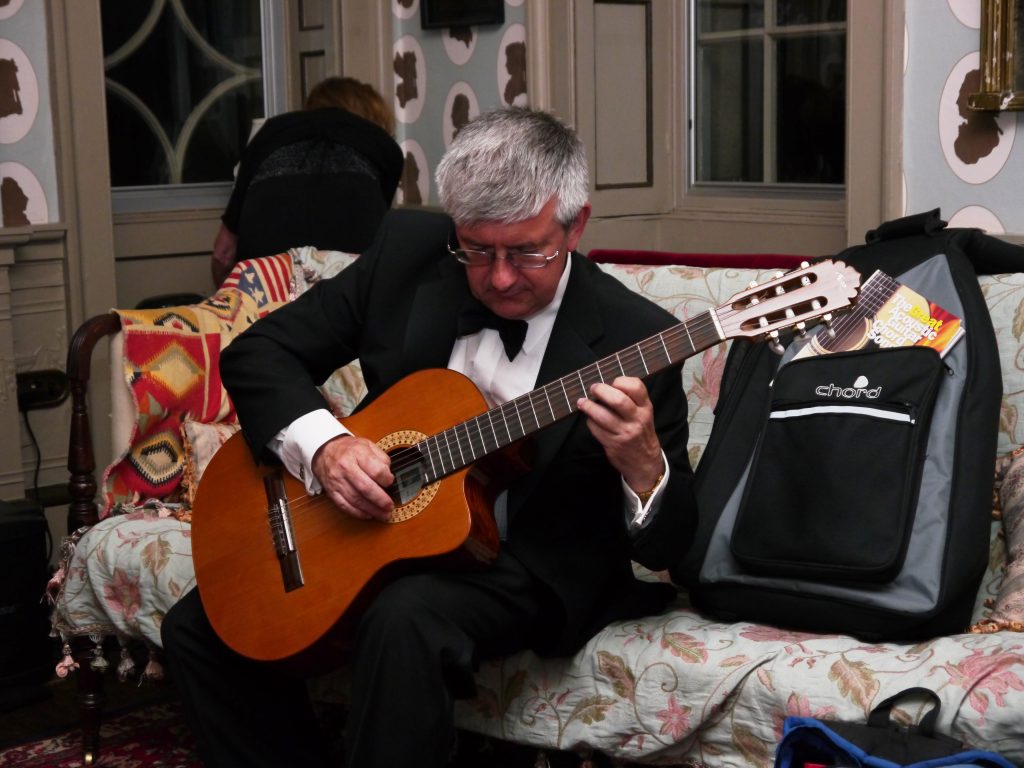
In the broader context of Martin Lloyd Howard’s body of work, “Selene” stands as a refined and deeply personal statement. It reflects not only his classical training but also his openness to inspiration beyond the musical realm—painting, mythology, and the natural world all converge here. The absence of additional instrumentation places full trust in the guitar’s voice, and Howard rewards that trust with a performance that feels honest and unforced. “Selene” is a piece that reveals more with repeated listening, each pass uncovering new shades of feeling and detail. It is not music for distraction or background noise, but for quiet evenings, for moments of reflection, for listeners willing to slow down and follow its gentle arc. In channelling the spirit of the moon goddess it is named after, “Selene” glows softly but persistently—an elegant reminder of how powerful simplicity can be when guided by intention and craft.
Connect with Martin Lloyd Howard
APPLE MUSIC
QOBUZ
YOUTUBE
DEEZER
SPOTIFY
SOUNDCLOUD