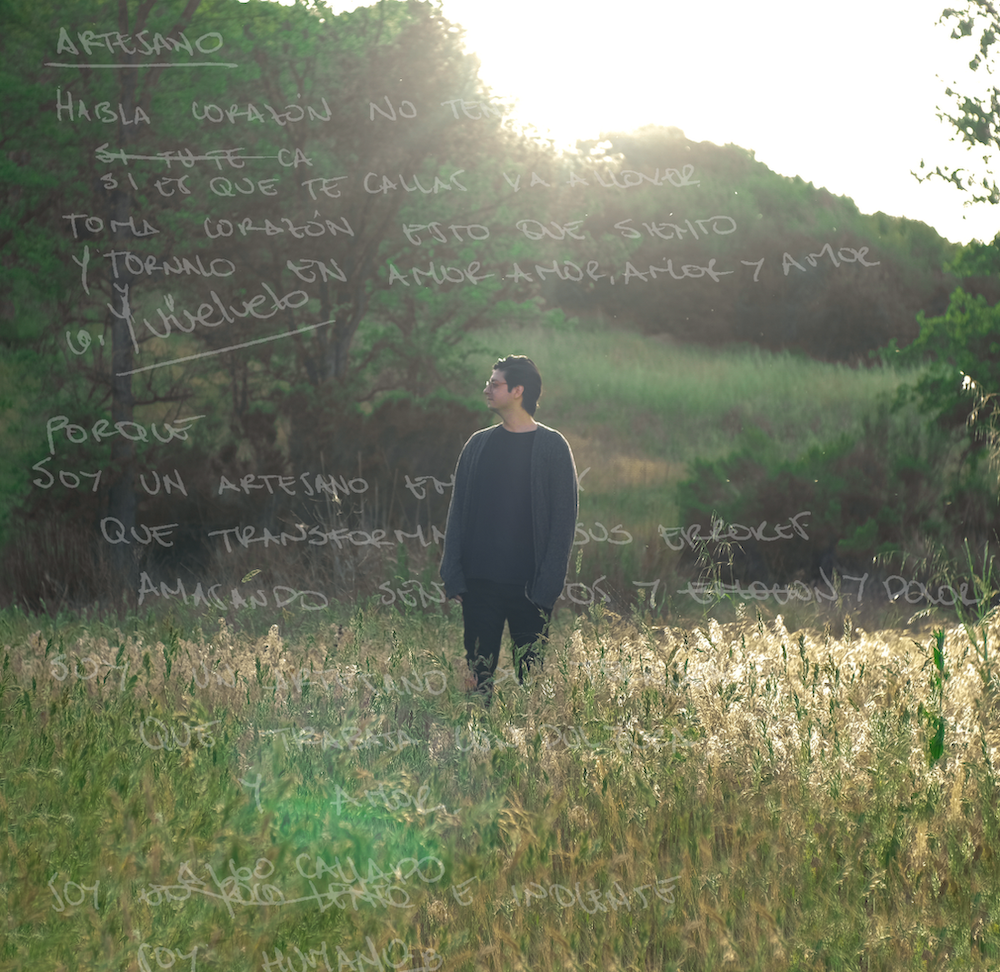
“Artesano,” the debut album by Ecuadorian singer-songwriter Cristian Ávila, unfolds as a carefully constructed exploration of identity, emotion, and artistic purpose. Built around a central question—“Who am I?”—the project presents itself as a cohesive self-portrait shaped through lived experience. Across its seven tracks, the album captures moments of vulnerability, reflection, love, and personal growth, offering listeners a narrative that feels both intimate and universally resonant. Rather than attempting to impress through scale or complexity, “Artesano” finds its strength in clarity and sincerity, positioning Ávila as an artist more concerned with truth than embellishment. This approach immediately distinguishes the album, grounding it in a sense of authenticity that carries through every aspect of its construction.
Musically, the album is anchored in a pop-folk framework that emphasises acoustic textures and vocal arrangements. The use of guitar as a primary instrument gives the record an organic quality, allowing each composition to feel grounded and unforced. There is a deliberate avoidance of excessive production, with the arrangements favouring space and subtlety over density. This restraint allows the emotional core of each track to remain at the forefront, reinforcing the album’s introspective nature. The influence of Ávila’s formal training is evident in the precision of the compositions, yet the music never feels overly calculated. Instead, it maintains a balance between technical proficiency and emotional immediacy, ensuring that the listening experience remains accessible without sacrificing depth.
The album’s structure further enhances its thematic coherence, with each track contributing a distinct perspective to the overarching narrative. Songs like “Vulnerable” and “Si Tú Me Miras” establish the emotional tone early on, exploring themes of openness and connection with a quiet intensity. “Casualidad” introduces an element of spontaneity, capturing the unpredictable nature of love, while tracks such as “Todavía” and “Quiero Hablar” expand the emotional landscape, addressing longing and the desire for communication. “Calma” offers a moment of reflection, providing a sense of stillness that contrasts with the more emotionally charged moments of the record. By the time the album reaches its closing title track, “Artesano,” there is a sense of resolution that ties the individual pieces together, reinforcing the idea of the album as a completed self-portrait.
A defining characteristic of “Artesano” lies in its lyrical approach, which prioritises honesty over abstraction. Ávila’s writing presents emotions in a direct and accessible manner. This clarity allows listeners to engage with the material on a personal level, finding connections between their own experiences and those expressed within the songs. The language remains grounded, avoiding unnecessary metaphor in favour of straightforward expression, which enhances the album’s emotional impact. This commitment to sincerity aligns with the broader ethos of the project, where the process of creation is valued as highly as the final result.
The album’s backstory adds another layer of depth to its listening experience. Created over the course of several years following Ávila’s move to a new city, “Artesano” reflects a period of significant personal transition. The sense of uncertainty that accompanies such change is woven into the fabric of the record, giving it a reflective quality that feels specific and relatable. The involvement of producer Rodney Alejandro further shapes the album’s sound, providing a collaborative dynamic that supports Ávila’s vision without overshadowing it. This partnership contributes to the album’s cohesive identity, ensuring that its themes and sonic elements remain aligned throughout.
One of the most compelling aspects of “Artesano” is its emphasis on craftsmanship. The album’s title is indicative of Ávila’s approach to music-making. Each track feels carefully assembled, with attention given to detail and overall structure. This sense of intentionality is evident in the pacing of the album, which allows moments to unfold naturally rather than forcing progression. The result is a listening experience that feels immersive and considered, encouraging repeated engagement as new nuances reveal themselves over time.

Despite its introspective nature, the album maintains a sense of openness that invites listeners into its world. The themes it explores—identity, love, vulnerability, and growth—are presented in a way that transcends cultural and geographical boundaries, reflecting the universality of the human experience. This accessibility is further supported by the album’s musical simplicity, which ensures that its message remains clear without becoming reductive. Ávila’s ability to balance personal specificity with broader relatability is one of the project’s greatest strengths, allowing it to resonate across diverse audiences.
Ultimately, “Artesano” stands as a confident and thoughtfully executed debut that establishes Cristian Ávila as an artist with a clear sense of direction and purpose. It is a record that values process over perfection, emotion over spectacle, and authenticity over artifice. By embracing these principles, Ávila has created an album that feels grounded and enduring, offering a listening experience that rewards attention and reflection. As an introduction to his artistic identity, “Artesano” succeeds in inviting listeners to consider their own, making it a release that lingers long after it has ended.