
Mattock deliver a striking and deeply human listening experience with Daughters, a record that feels less like a calculated studio product and more like a document of lived moments. Rooted in the songwriting partnership of Casey Brandt and Jason Fletcher, the album emerges from a process defined by instinct, rehearsal, and the unfiltered chemistry of collaboration. From the outset, it becomes clear that Daughters is not concerned with chasing trends or adhering to a singular genre identity but embraces a fluid blend of Americana, indie rock, punk, and power-pop, creating a sound that feels both familiar and refreshingly unconstrained. This sense of freedom becomes the album’s defining trait, allowing it to move organically between moods and textures without ever feeling disjointed.
The opening track, “Holy Boat,” sets the tone with remarkable confidence. It begins in a haze of ambience and low-end resonance, gradually building toward a forceful, guitar-driven crescendo that feels earned and exhilarating. The transition from introspective calm to distorted intensity is handled with precision, showcasing Mattock’s ability to navigate dynamic shifts without losing emotional coherence. This interplay between restraint and release recurs throughout the album, becoming a central mechanism through which the band communicates its ideas. The title track, “Daughters,” follows with a more grounded approach, leaning into straightforward rock structures while still maintaining the layered depth established in the opener. Its heavy percussion and swirling guitars create a sense of momentum that carries the listener forward, even as the vocals appear sparingly, adding weight through their selective presence.
Across the album, standout moments arrive with impressive consistency. “Daedalus” channels a blues-inflected swagger, its groove-driven foundation giving it a distinct personality within the broader tracklist. In contrast, “Lil’ Busted Fox” leans into a brighter, power-pop sensibility, offering a melodic immediacy that feels both accessible and invigorating. Meanwhile, “Reptilian” stands as one of the album’s most electrifying entries, driven by urgent percussion and escalating guitar lines that build toward a climactic final section. These tracks highlight the band’s versatility, demonstrating an ability to shift between styles without sacrificing cohesion. Each song retains its own identity, yet contributes to a unified sonic narrative that rewards attentive listening.
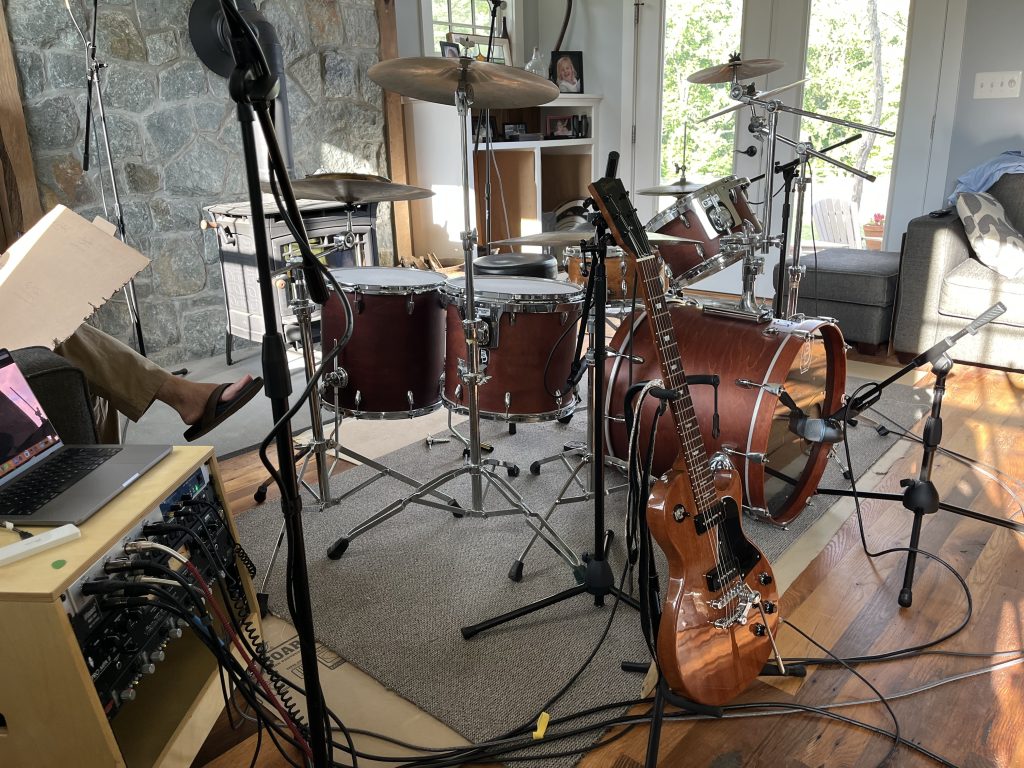
One of the most compelling aspects of Daughters lies in its production approach. Recorded largely in home environments—across different rooms, houses, and setups—the album carries a texture that feels undeniably real. There is a tangible sense of space within the recordings, as though the listener is positioned in the room alongside the musicians. Drums push and pull against the rhythm in subtle, human ways, while guitars retain a rough-edged warmth that resists over-polishing. This deliberate imperfection becomes a strength rather than a limitation, reinforcing the album’s commitment to authenticity. Mattock understand that emotional impact often lies in what is left unrefined, and they lean into that philosophy with confidence.
Vocally, the album achieves a balance that further enhances its emotional resonance. Casey Brandt’s delivery feels unforced and intimately connected to the material, avoiding theatrical excess in favour of sincerity. The harmonies woven throughout the record act as a subtle yet powerful counterpoint, softening the more abrasive instrumental edges while adding depth to the overall sound. These vocal layers never feel ornamental but function as integral components of the compositions, enriching the emotional landscape without overwhelming it. The collaborative nature of the project is particularly evident here, as the interplay between voices mirrors the instrumental dialogue occurring across the album.
At its core, Daughters exists in a space between genres, drawing from folk-rock introspection, alternative country looseness, and the restless energy of underground indie rock. There are faint echoes of established traditions—heartland rock, psych-inflected jams, and jangly guitar pop—but Mattock never allow these influences to define them. Instead, they use them as building blocks, constructing something that feels uniquely their own. This refusal to settle into a single stylistic lane gives the album a sense of unpredictability, keeping the listener engaged as it shifts between hypnotic grooves, ragged guitar passages, and quieter, more reflective moments.
Another defining strength of the album is its sense of history. These songs do not feel hastily assembled; rather, they carry the weight of time and shared experience. The year-long rehearsal process is evident in the intuitive interplay between musicians, as each element moves with a natural, almost conversational flow. The rhythm section, in particular, demonstrates a flexibility that allows the songs to breathe, avoiding rigidity in favour of organic momentum. This lived-in quality gives Daughters a depth that extends beyond its immediate sonic appeal, inviting repeated listens to appreciate its nuances fully.
Despite this depth, the songwriting remains refreshingly unpretentious. Mattock avoids grandiose statements and overly complex metaphors, instead focusing on direct emotional expression and atmospheric detail. There is a trust in the power of mood, with instrumental passages often carrying as much meaning as the lyrics themselves. This balance between structure and spontaneity is crucial to the album’s success, allowing it to feel cohesive and free. It is music that does not demand interpretation, but rather invites it, leaving space for the listener to find their own connection within the sound.



The closing track, “Boring Life,” encapsulates much of what makes Daughters so compelling. Its introspective tone and melodic sensibility provide a fitting conclusion, tying together the album’s themes of reflection and quiet resilience. There is a sense of resolution here, though not in a conventional narrative sense, but it feels like the natural endpoint of an emotional journey. As the final notes fade, what lingers is the impression of an album that values honesty above all else.
Ultimately, Daughters stands as a testament to the enduring power of collaboration and instinct in music-making. In an era where precision and polish often dominate, Mattock offer a reminder that some of the most impactful art emerges from imperfection and shared experience. The album succeeds by embracing its own identity with clarity and conviction, delivering a work that feels immediate, genuine, and quietly expansive.