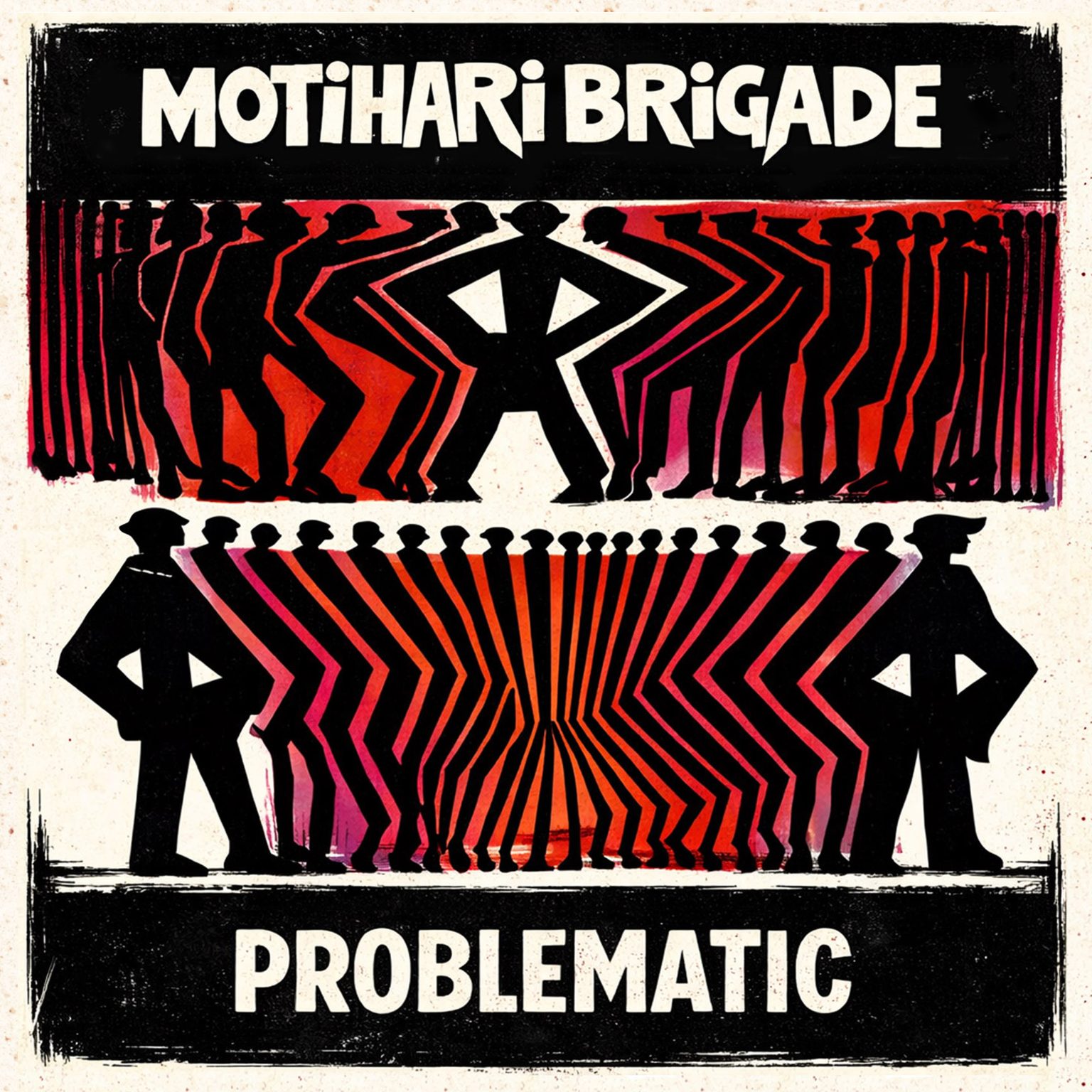
The third full-length from Motihari Brigade, a fiercely intellectual, unapologetically defiant body of work that stands against the creeping influence of algorithmic conformity in modern life, is problematic. The record is released with a symbolic intention, its thematic inspiration taken from philosophical and literary figures such as Orwell, Huxley, and Socrates, channelling their skepticism of controlled narratives into a contemporary musical framework. The album announces itself as a singular manifesto, an artistic statement against passive consumption and the decline of critical thought. It’s a testament to the band’s commitment to this idea that the depth of the lyrics and sonic immediacy that drives each song forward makes for an experience that’s as thought-provoking as it is musically compelling.
Opener “Cowboy Armageddon” sets the dramatic tone, with gritty guitar textures and a sense of impending doom that reflects the thematic concerns of the album. It’s a sort of overture, giving the listener a universe where the illusion and reality become increasingly difficult to separate. That energy flows into the title track, “Problematic,” where the band sharpens its critique. On this one, Motihari Brigade delivers sharp lyrical phrasing and dynamic instrumentation, wrestling with the discomfort of disagreeing in a hyper-curated society. The track’s structure mirrors its message: unpredictable, restless, and unconfined, making it one of the album’s defining moments. The opening songs set up a resistance that reverberates throughout the record.
One of the most compelling tracks of the album is “Chatbot Don’t Like It,” where the undercurrent of irony gives another layer to the philosophical backbone of the project. The track’s title is a good indicator of its trajectory—the subtle yet pervasive power of automated systems on human expression. The band tackles this problem with a combination of wit and urgency, combining pointed lyrics with an infectious rhythm so the message never becomes too didactic. Problematic has always had a strength in the balance between accessibility and depth. “Save Ourselves” continues the theme of collective responsibility, calling on listeners to reassert themselves in an ever more invisible digital world. There’s a real anthemic feel to it, which gives a moment of unity in the rather introspective feel of the album.
As the album progresses, songs like “Not What They Seem” and “The Great Refusal” further explore perception and resistance. The second toys with ambiguity so that we doubt the veracity of appearances and of stories we are asked to believe without question. Musically, it is somewhat more restrained, letting the lyric breathe, but maintaining a steady pulse of tension. “The Great Refusal,” in contrast, is a call to arms in name and in deed. It’s a statement against ideologies thrust upon us, with a driving rhythm and emphatic vocal delivery that reinforces the message. The songs testify to the album’s central thesis: resistance and awareness save individuality.
The album is moody and reflective, with moments of introspection like “Heedless Of The Storm” and “Ten Years Time” breaking up the larger criticism. The first is to ignore what is happening in society until you must confront it. The second is the future consequences of today’s decisions. These tracks give the album space to breathe and create a more reflective mood while maintaining thematic coherence. Motihari Brigade here has a sense of pacing, letting the listener breathe and take in the ideas of the album without feeling stifled. This variation is a boost to the overall listening experience, making the record feel more built than simply reactionary.
The album’s “Fortunate Son” shares a title with a classic, but it’s recast as a take on privilege and inherited advantage in a digitally stratified world. This song keeps hitting on the band’s critique of curated realities, a reminder of the disparities often hidden behind algorithmic narratives. “Pleasure Craft” is the album’s most sonically sprawling moment, meanwhile, with layers of instrumentation adding texture and depth to the latter half of the record. This offers a brief break from the heavier thematic issues but is still contained within the context of the larger story, dealing with escapism and its function as a dodge of discomfiting truths.

“Problematic (Reprise)” is a smart structural move, coming back to the main ideas of the album from a different angle. It doesn’t seem extraneous but instead increases the listener’s understanding of the title track, emphasizing the cyclical nature of the issues at hand. “Someone’s Dream” is therefore a moving meditation on ambition and disillusionment, an intersection between the personal and the collective. The album ends with “Chatbot Don’t Like It (Radio Clean Edit),” a somber but powerful reminder of the compromises often made to appeal to a wider audience. The final song captures the tension between the authentic and the adapted, leaving the listener with a lingering sense of unresolved tension.
Ultimately, Problematic is a musical and intellectual exercise, a blistering critique of modern society that does not forget its artistic merit. Motihari Brigade has crafted an album that makes you think but still provides a sonically enjoyable ride. It’s a record that demands attention and thought, its rock-powered energy tempered with philosophical exploration to differentiate it from more conventional releases. The problematic is glaring when we challenge the frameworks that influence our viewpoints in a world where convenience often overshadows introspection.



Connect with Motihari Brigade
WEBSITE
FACEBOOK
TWITTER
SPOTIFY
YOUTUBE
BANDCAMP