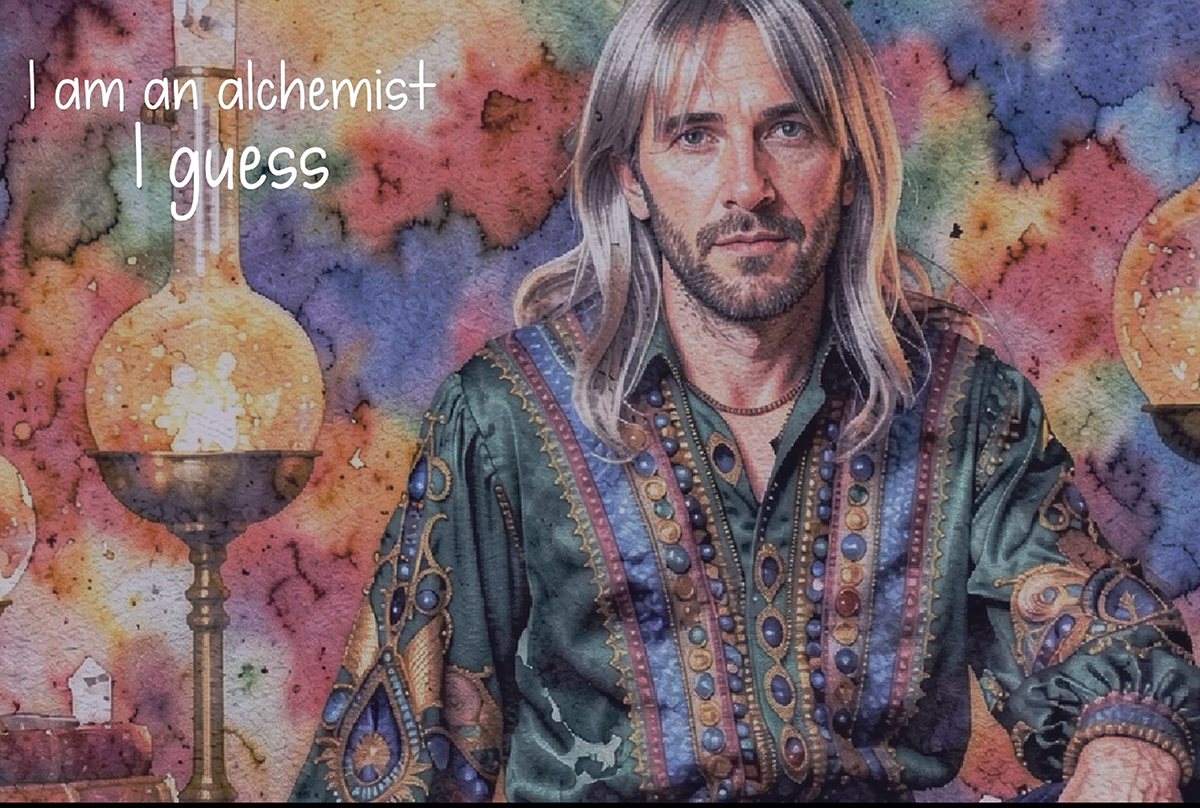
Rusty Reid’s reading of “Alchemist” is a quiet triumph of patience, nuance, and emotional intelligence. For a long time, Reid has been known for his dedication to writing songs that put sincerity over spectacle, and he approaches this Zack Kibodeaux composition with a deep respect for its introspective heart. Instead of trying to make the song something overtly great, he lets its reflective quality take hold, letting its ideas about contradiction, self-examination, and personal change develop on their own time. The result is a track that feels less like a performance and more like a conversation: intimate, searching, and unguarded. “Alchemist,” the second single from his covers project Lone Stardust: Masterworks of Texas Songwriters signals Reid’s intent to rediscover it from within.
And at the heart of the song is Kibodeaux’s quietly profound lyrical notion: the image of an alchemist trying to turn life’s internal conflicts into something meaningful. Reid knows that the strength of this idea is in its subtlety, and he is not tempted to overplay it. His voice is warm and weathered, with a lived-in quality that lends authenticity to every line. No theatrical strain, no effort to dramatize emotion beyond what the song requires. Instead, Reid lets the lyrics breathe. He trusts their depth. He makes it sound natural, even conversational, as if he’s thinking aloud instead of performing. This subtlety proves to be one of the most compelling strengths of the song, pulling the listener inward rather than out to seek attention.
The production, done in collaboration with Mumbai-based multi-instrumentalist Rohit Bhusan, pushes the track into something quietly cinematic. Bhusan’s touches, from the atmospheric keyboards to the layered guitars to the carefully constructed rhythm section, add dimension without ever overwhelming the song’s core. The balance of folk authenticity and ambient rock textures creates a soundscape that is expansive yet grounded. Each instrument has its room, giving a clarity that lets all the emotional nuances of the piece come through. A particular success is the interaction of acoustic and electric elements, offering warmth and depth while anchoring the song’s changing mood. It’s a restrained style of production where every addition feels earned, and nothing is overplayed.

What ultimately sets this production of “Alchemist” apart is its space and gradual unfolding. The track unfolds with a subtle assurance, revealing new depths with each listen, not giving everything away on the first. This gradual process parallels the song’s thematic exploration of transformation, suggesting that understanding, like alchemy itself, is a process rather than a destination. Reid’s reading respects the original composition but also confidently asserts its own identity, demonstrating that reinterpretation is not merely a matter of technical proficiency but also of emotional insight. In the process, he stresses that great songwriting has not been confined to a single voice or arrangement but can be reshaped with love. In Reid’s hands, “Alchemist” is a meditation on the search for meaning that lingers long after the final note fades, inviting the listener to come back and discover something new each time.