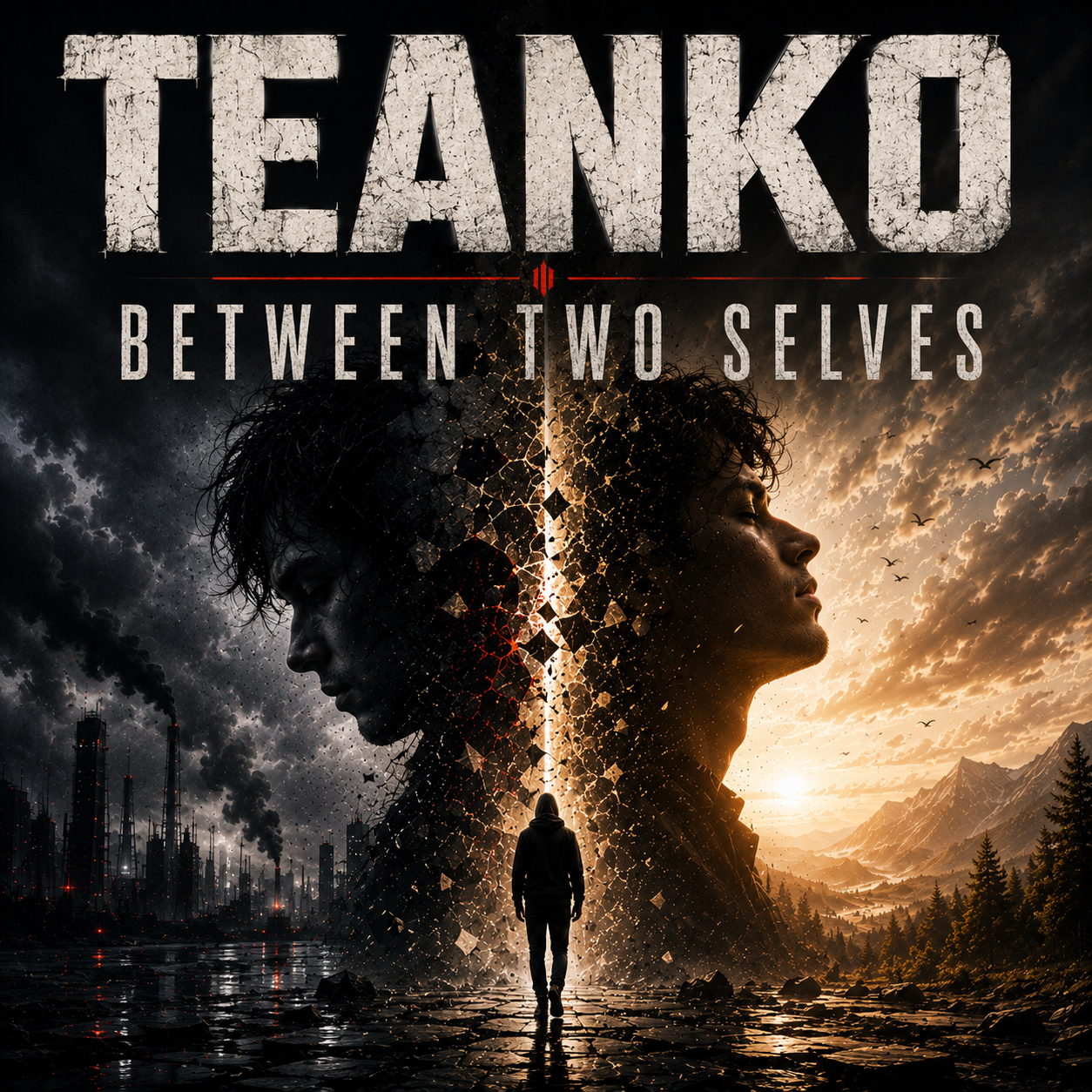
There is a particular kind of silence that arrives when a life built around constant motion suddenly slows down. For years, the calendar is crowded, the phone continues to ring, responsibilities pile up, and tomorrow always seems to demand another achievement. Then, one day, the urgency changes. Teanko’s “Between Two Selves” steps directly into that fascinating emotional territory, transforming the transition from a busy working life into retirement into a thoughtful meditation on identity, memory, and the freedom of discovering a different pace. What makes the track immediately compelling is that it does not treat retirement as either a tragedy or a fairy-tale ending. Instead, it explores the strange middle ground where one version of yourself is gradually giving way to another. Musically, that transformation begins with surprising energy. The opening arrives with a high-octane classic-rock atmosphere, led by an electric guitar that seems to spiral upward with the confidence of someone looking back at a life packed with movement and possibility. Textured drums reinforce that sense of forward momentum, creating a fascinating contrast with the reflective subject matter. It is almost as though the music initially embodies the person Teanko used to be: busy, energetic, always looking ahead. Then the emotional weight of the lyrics begins to reshape that momentum, encouraging us to consider what happens when a person who has spent decades moving forward suddenly has the opportunity to stop and look around. That tension between motion and stillness gives “Between Two Selves” its emotional identity. The song goes beyond retirement; it explores the uncomfortable and ultimately liberating process of realizing that identity is not permanently attached to productivity. Teanko asks what remains when the deadlines disappear, when the professional titles no longer define the day, and when there is finally enough quiet to hear your thoughts. His answer is surprisingly hopeful: there is still a self waiting to be discovered.
The vocal performance provides a human center for this transformation. Teanko sings with an emotional directness that makes the story feel lived rather than manufactured, and there is a convincing sense of someone taking stock of his history while simultaneously learning how to inhabit the present. His voice conveys experience without being burdened by nostalgia. That distinction matters because “Between Two Selves” could easily have become a sentimental catalogue of everything that has been lost, but Teanko repeatedly chooses another perspective. He looks backward without becoming trapped there. The inspiration of old photographs, memories, and music from different periods of his life becomes particularly important because photographs are essentially frozen moments of identity. They preserve people as they once were, often allowing us to look at an earlier version of ourselves almost as though we were meeting a stranger. Teanko turns that experience into a musical conversation between past and present. The “two selves” are not enemies. They are connected versions of the same person, each carrying something the other needs. The earlier self represents ambition, activity, opportunity, responsibility, and the exhilarating pressure of constantly having somewhere to go. The present self represents patience, reflection, acceptance, and the freedom to decide what deserves attention. That idea lends the song a universal quality far beyond retirement. In a world increasingly defined by anxiety, global uncertainty, relentless information, and pressure to remain productive, many people are quietly asking similar questions about who they are beneath the roles they perform every day. What happens when we stop measuring our value through achievement? What happens when stillness becomes something to embrace rather than something to fear? Teanko does not answer these questions with abstract philosophy. He answers them through lived experience, allowing the emotional truth of the song to emerge naturally. The result is deeply relatable because everyone must confront the distance between who they were and who they are becoming.
The arrangement makes that emotional journey especially vivid because its rock energy never disappears entirely; instead, it becomes a symbol of continued life. The swirling introductory guitar, textured percussion, and expansive classic-rock character lend the song the scale of a personal anthem, but beneath that grandeur is a surprisingly gentle emotional message. There are echoes of the forward-driving introspection associated with artists such as Bruce Springsteen and The War on Drugs, alongside the darker reflective sensibility one might associate with The Cure, yet Teanko’s song remains distinctly his own because its central story is so personal. It has the potential to feel like the soundtrack to a coming-of-age story, except the coming-of-age happens later in life, when experience has replaced youthful uncertainty and the challenge is no longer figuring out what you might become but accepting what you already are. One can imagine the song accompanying a cinematic sequence of old photographs, familiar roads, empty office corridors, packed suitcases, and eventually a quieter morning where there is nowhere time-sensitive to be. That cinematic quality comes from the way Teanko balances movement with contemplation. The music continues pushing forward while the lyrics encourage us to pause and look backward. It is a beautiful contradiction and one that mirrors real life. Even after retirement, the instinct to move forward does not disappear. What changes is the reason for moving forward. The most revealing sentiment arrives in the affirmation, “But this is where I’m exactly meant to be.” That line carries the emotional payoff of the entire song because it does not sound like surrender. It sounds like freedom. There is a profound difference between believing you have stopped out of necessity and realizing you have finally arrived somewhere you genuinely want to be. Teanko captures that distinction with warmth and conviction. The new chapter does not leave behind an empty space created by the old one. It is a landscape with its possibilities. This pace is not a punishment but an opportunity to notice things that speed once made invisible. In that sense, the song becomes less about retirement itself and more about reclaiming ownership of time.
Ultimately, “Between Two Selves” is a moving reminder that growth does not stop simply because one chapter of life has ended. Teanko takes a deeply personal transition and turns it into a broader reflection on how human beings continually renegotiate their identities. The song acknowledges the colorful, eventful life that came before—the work, the opportunities, the responsibilities, the constant forward motion—without diminishing its importance. At the same time, it refuses to suggest that the past must dictate the future. Instead, Teanko arrives at the reassuring realization that a quieter existence can be just as meaningful, perhaps even more so when it is chosen consciously. That is what makes the track feel so uplifting despite its reflective subject matter. Its optimism does not come from pretending that aging, change, or endings are easy. It comes from recognizing that every ending creates space for a new kind of beginning. The guitar provides that realization a soaring emotional backdrop, the drums keep the journey moving, and Teanko’s vocals provide the personal voice at the center of it all. There is no need for an enormous dramatic conclusion because the song’s most important revelation is already contained in its acceptance: “I’m no longer moving forward because I have to. I’m moving forward because I want to.” That is a remarkably powerful distinction, and it gives “Between Two Selves” relevance well beyond the experience that inspired it. It speaks to anyone standing between identities, between careers, relationships, homes, ambitions, or versions of themselves. It reminds us that looking backward does not necessarily mean wanting to return. Occasionally we examine old photographs simply to understand how far we have traveled. Teanko makes that act of reflection feel celebratory rather than mournful. “Between Two Selves” ultimately becomes an anthem for accepting every version of ourselves—the person who chased the future and the person who has finally learned to appreciate the present. Its message is simple but profound: life does not have to remain in constant motion to remain meaningful. Occasionally the greatest freedom is discovering that you have arrived exactly where you are meant to be.