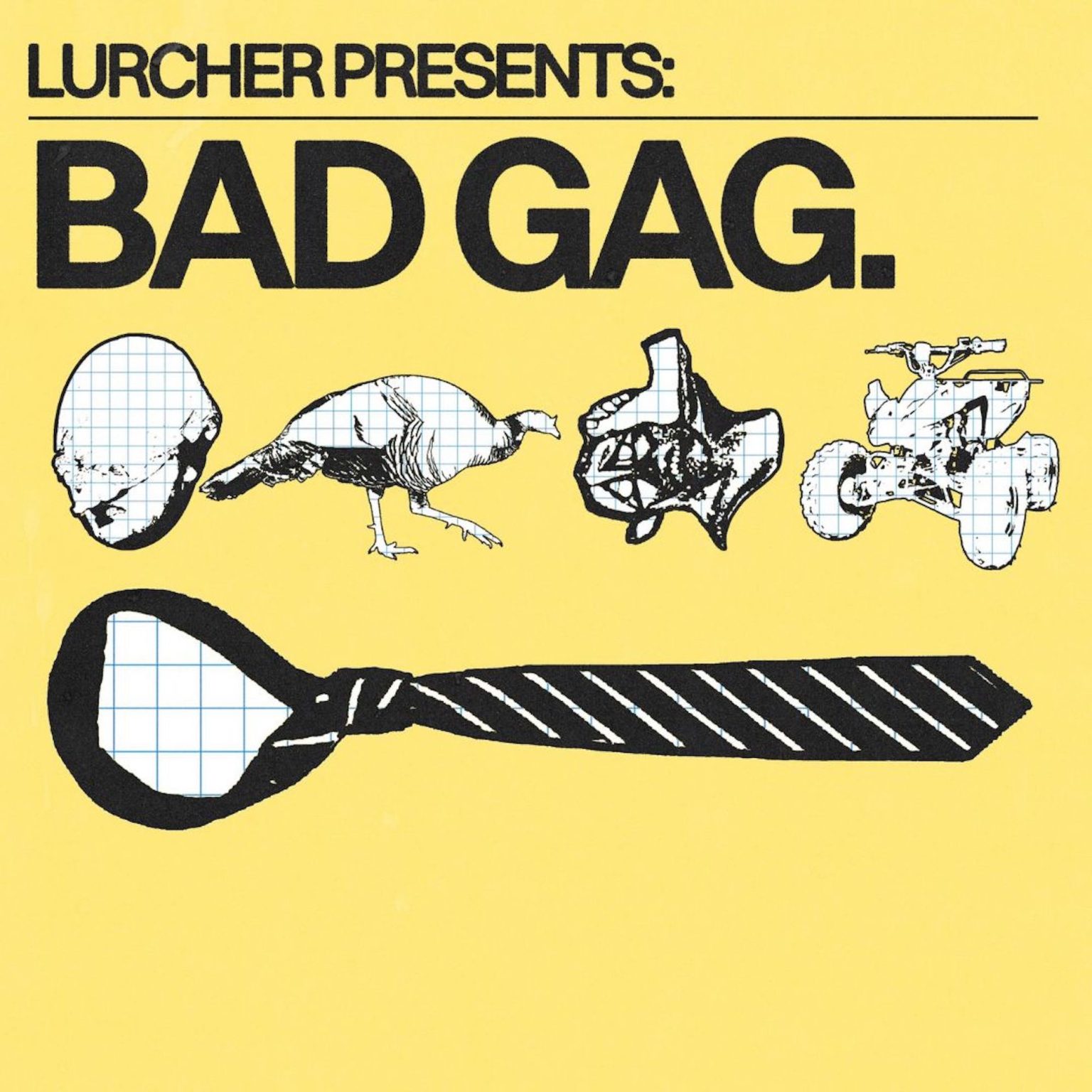
Lurcher return with Bad Gag, an EP that captures a band stepping more confidently into its own peculiar, sharply defined world. Built from the familiar components of their earlier work—angular guitars, tightly wound rhythms, and a kind of blunt lyrical honesty—the record does not attempt to reinvent their sound so much as refine and intensify it. There is a noticeable shift in intention here. Where previous material sometimes felt reactive, even slightly chaotic, Bad Gag feels deliberate, as though each element has been pushed into place with purpose. Across its five tracks, the EP presents a band that is not smoothing out its edges but learning how to wield them more effectively.
The opening track,“Punchline Blues,” sets the tone with a jagged, restless energy that immediately draws the listener into Lurcher’s sonic landscape. Lurcher lean into tension here, allowing wiry guitar lines to clash and intertwine over a rhythm section that feels rigid and on the verge of collapse. The vocals arrive with a sense of detachment, delivering lines that feel observational rather than confessional. This emotional distance becomes one of the EP’s defining traits, giving the music a dry, almost sardonic quality. It is about small, uncomfortable truths presented without embellishment.
“Wretched Egg” continues this trajectory but introduces a heavier, more oppressive atmosphere. The instrumentation feels thicker, the grooves more insistent, as though the track is pressing down on the listener. There is a subtle shift in pacing here, with moments that stretch just enough to create unease. Lurcher demonstrate a growing confidence in allowing space within their arrangements, resisting the urge to fill every second with noise. This restraint enhances the track’s impact, making its bursts of intensity feel more deliberate and controlled.
The EP reaches one of its most vivid narrative points with “Blistered in Turkey,” a track that encapsulates Lurcher’s ability to find meaning in the mundane and the uncomfortable. The imagery of a disastrous holiday—sunburn, disorientation, and quiet embarrassment—is rendered through a soundscape that feels chaotic and strangely focused. The guitars flicker and snap, while the rhythm section maintains a steady, almost indifferent pulse. Lurcher excels at balancing humour and discomfort, creating a track that is as unsettling as it is oddly relatable. It is a reminder that their storytelling thrives not on exaggeration, but on the careful observation of everyday absurdity.
“Ortenburg” shifts the setting but retains the same sense of dislocation. Inspired by the experience of a Hartlepool school exchange in a picturesque German town, the track juxtaposes idyllic imagery with an undercurrent of awkwardness and alienation. Musically, it introduces a slightly more expansive feel, with melodies that stretch further and arrangements that feel less constrained. Yet, even as the sound opens up, there is no sense of comfort. Lurcher maintain their signature tension, ensuring that the track never settles into something too polished or predictable. It is this refusal to romanticise their subject matter that gives the EP its distinctive edge.
The standout moment arrives with “Quad Biking,” a track that encapsulates the band’s evolution most clearly. Driven by a tightly locked groove and sharp, angular guitar work, the song builds momentum that feels almost unstoppable. Lurcher channel their raw energy into a more focused structure, allowing the track to unfold with precision while still retaining its unhinged character. Lyrically, the focus on quad bike riders as a subculture adds another layer of intrigue, presenting them as figures existing on the fringes, detached from mainstream expectations. The song’s final moments are particularly striking, erupting into a controlled chaos that feels exhilarating and earned.
A significant factor in the EP’s success is its production, handled at Blank Studios in Newcastle with Chris McManus. The recording captures a sense of immediacy that brings the listener closer to the band’s live presence. There is a looseness to the sound, a willingness to let imperfections remain, that enhances the overall authenticity of the project. At the same time, the mix is carefully balanced, ensuring that each instrument retains its clarity within the dense arrangements. Lurcher benefit greatly from this approach, as it allows their music to feel raw and intentional, a combination that is not always easy to achieve.

What ultimately defines Bad Gag is its commitment to identity. Lurcher are not attempting to broaden their appeal by softening their sound or chasing accessibility. Instead, they are sharpening their existing strengths, embracing the quirks and imperfections that make their music distinctive. The result is an EP that feels more self-assured than anything they have released before. It does not seek to comfort or to impress in conventional ways, but seeks to present a perspective, one rooted in observation, tension, and a uniquely dry sense of humour.


In the end, Bad Gag stands as a compelling statement from a band that is clearly growing into its own voice. The EP demands attention, rewarding those who are willing to engage with its layered textures and understated narratives. Lurcher have crafted a record that feels alive in its roughness, confident in its direction, and unafraid to dwell in the uncomfortable spaces that define much of everyday life. It is this honesty, more than anything else, that makes Bad Gag a memorable and significant release.