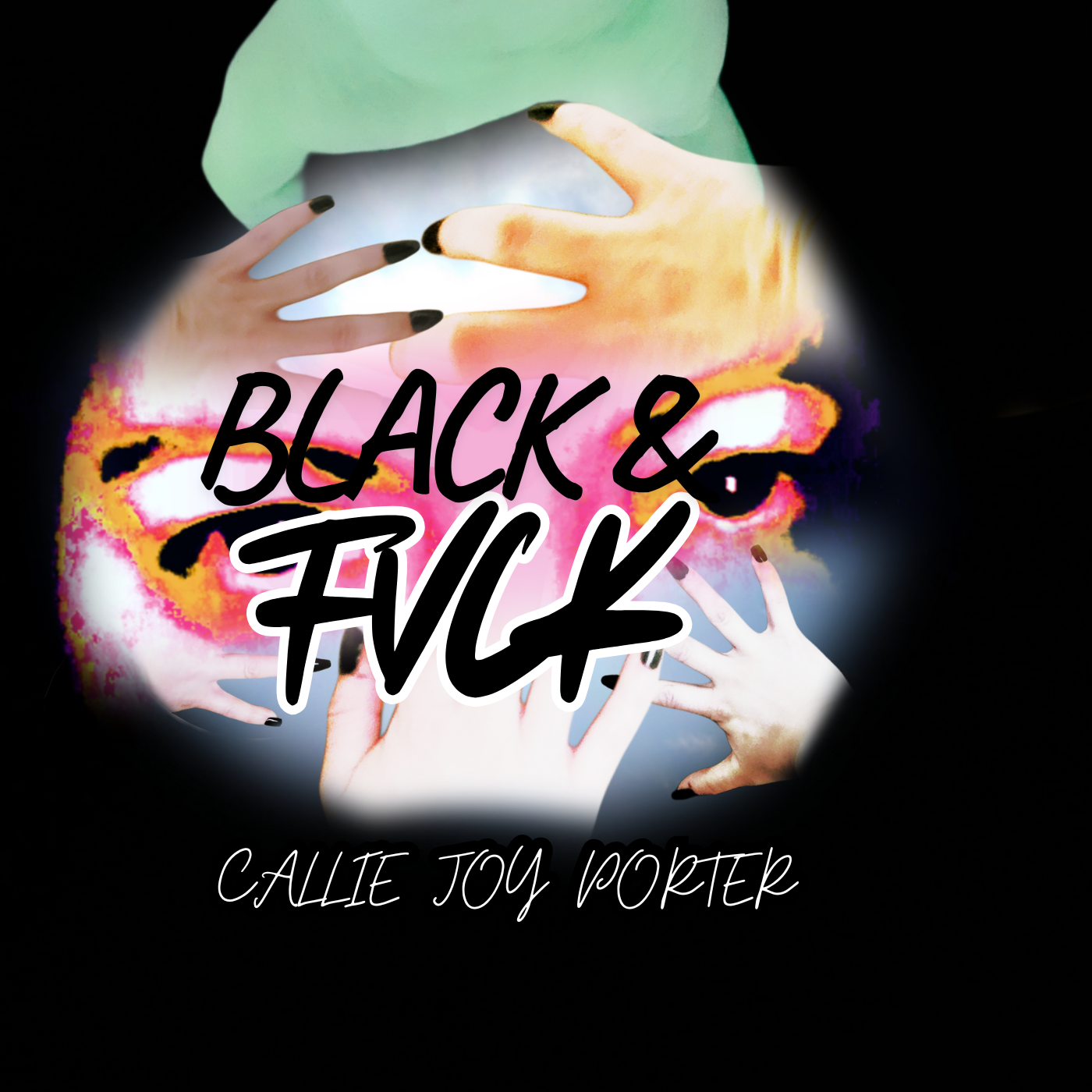
Callie Joy Porter’s Black & Fvck is a confrontation, a reckoning, and ultimately a reclamation. Across eight tracks, Porter dismantles the long-held assumption that darkness is something to be feared, hidden, or corrected. Instead, she frames it as a natural, even necessary, state of being. From the outset, this record announces itself as unapologetic and does not ask for permission, nor does it soften its edges for comfort. The album exists because it had to exist now—born from impostor syndrome, age-related doubt, and the pressure to remain palatable. In confronting those forces head-on, Porter transforms them into fuel, crafting an album that feels both intimate and mythic, like a personal diary written in ritual fire.
The opening track, “Black,” functions as a thesis statement. It sets the emotional tone of the album by challenging the listener’s relationship with shadow and identity. Black, in Porter’s world, is not evil—it is truth stripped of decoration. This idea ripples throughout the record, especially as the project moves into “Liminal Goddess,” a devotional and symbolic centrepiece. Dedicated to Hekate, the song exists in an in-between space, embodying thresholds, transformation, and power reclaimed. Sonically, Porter leans into cinematic pop textures layered with ethereal darkness, creating an atmosphere that feels ceremonial rather than commercial. The production choices feel intentional and deeply felt, as if each sound has been interrogated and reshaped until it aligns with her internal compass.
“Phoenix” and “Belladonna” deepen the album’s thematic weight, using metaphor as a tool of resistance and revelation. “Belladonna” flips the femme fatale narrative inside out, giving voice to the woman behind the myth—one judged, consumed, and misunderstood by societal norms. There’s a sharp intelligence here, a refusal to romanticise harm while still acknowledging its allure. “Phoenix,” on the other hand, is a song of self-awareness and rebirth, reminding the listener that transformation is inevitable and often self-initiated. These tracks highlight Porter’s strength as a storyteller: she doesn’t explain her metaphors, but inhabits them, trusting the listener to meet her halfway.
Mid-album, tracks like “Mine” and “Sour (Means to Devour)” explore possession, desire, and emotional consumption. These songs feel claustrophobic in the best way—intentionally tight, charged with tension, and emotionally confrontational. Porter’s vocal delivery oscillates between control and release, mirroring the push-and-pull dynamics embedded in the lyrics. The album’s sonic world remains cohesive, but never stagnant; there’s a sense of constant motion, as if each track is testing a new boundary. This is where her creative rule—reworking anything that doesn’t fully convince her—becomes most evident. Nothing here sounds accidental or half-resolved.
“Heartless” introduces another layer of vulnerability, examining how emotional armour can be mistaken for a lack of empathy. Rather than framing detachment as a flaw, Porter treats it as a survival mechanism—one developed through lived experience rather than indifference. The song resonates as a quiet rebellion against the expectation that women must always be emotionally accessible. By the time the album reaches its closing track, “Fvck,” that rebellion becomes explicit. The song’s history—being entirely remade just hours before submission—mirrors the album’s central conflict: the battle between self-doubt and self-trust. The final version feels raw, decisive, and unfiltered, like a line drawn firmly in the sand.
What makes Black & Fvck particularly compelling is how deeply it is entwined with Porter’s personal evolution. This album closes an era that began with “Bye” and “I Decide” in 2024, marking the end of people-pleasing and creative hesitation. Throughout the record, you can hear the sound of an artist choosing herself—sometimes painfully, sometimes defiantly. Porter doesn’t shy away from acknowledging fear, bullying, or internalised criticism, but she refuses to let those forces dictate the narrative. Instead, they become part of the texture, woven into the album’s emotional DNA.
The dedication of this era to all women is not performative—it’s instructive. Porter’s message is clear: darkness is not a failure state, and it’s never too late to claim your voice. Her advice, echoed through the album’s themes, is grounded and hard-earned—learn the difference between kindness and self-erasure, ambition and recklessness, loyalty and people-pleasing. Black & Fvck functions as both a warning and a permission slip, particularly for younger listeners navigating identity, expectations, and desire in a world that isquick to judge deviation.
Musically, the album’s blend of cinematic pop and ethereal shadow feels deliberate and immersive. Porter’s meticulous approach—revisiting tracks, reshaping sounds, and refusing to settle—results in a body of work that feels cohesive without being predictable. Each song exists as its own entity, yet contributes to a larger emotional arc. The mystical atmosphere never feels ornamental; it serves the narrative, reinforcing the album’s exploration of liminality, rebirth, and truth.


As a closing chapter before renewal, Black & Fvck feels complete, defiant, and unafraid of consequence. It clears space for what comes next: an era marked by honesty, boundaries, and creative fearlessness. Callie Joy Porter emerges from this album not as someone seeking approval, but as someone fully aware of her power. In embracing black—not as absence, but as presence—she offers a body of work that is dark, luminous, and unapologetically alive.
Connect with Callie Joy Porter
YOUTUBE
SPOTIFY
INSTAGRAM
TIKTOK
APPLE MUSIC
SOUNDCLOUD