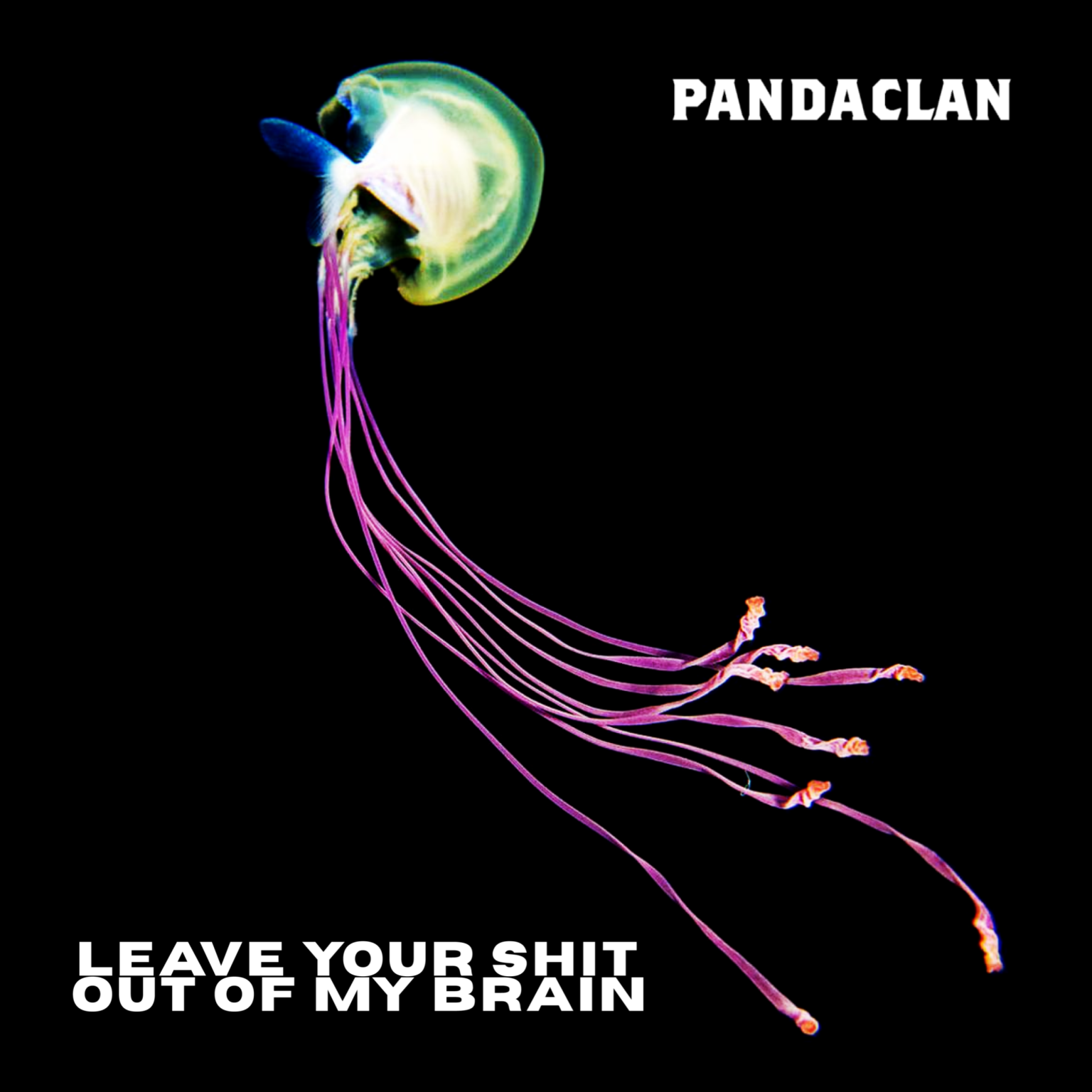
Leave Your Shit Out Of My Brain is a direct and unmediated engagement with the cultural, political, and psychological noise that defines contemporary existence. The collective, coming from the antagonistic cultural scene of Milan, considers music an artistic and intellectual exercise, avoiding traditional routes of visibility and commodification. This refusal is a philosophical position that pervades the album at every level. Even the title of the project is a statement of refusal against intrusion, saturation of the media, ideological manipulation, or the insidious pressures of living an algorithmically determined life. What comes out of it, after eleven tracks, is a densely woven, often disturbing portrait of modern society that is not for casual listening but rather demands your attention.
Musically, the album is a confluence of electronic experimentation, dub textures, and the abrasive edges of metal, creating a soundscape that feels intentionally disorienting. Rather than searching for a conventional coherence, Panda Clan embraces the fragmented quality of the very reality it seeks to critique. You can hear this strategy early on in songs like “Poppy Fields,” where hypnotic rhythms are combined with an undercurrent of tension that never quite resolves. The production is lush and enveloping, often pitting mechanical precision against raw, almost chaotic energy. It’s a duality that mirrors the album’s thematic preoccupations, where systems of control meet human resistance, and noise always undercuts clarity. It’s not an effortless listen but rewards you with depth and intricacy.
Thematically, “Leave Your Shit Out Of My Brain” serves as an indictment of late-stage capitalism and its many contradictions. “Battle Struggle War” and “Crisis” are dark commentaries on a world in permanent war, in which violence has been normalized and exported as policy and spectacle. The tracks hit you with an urgency that is immediate and unsettling. But under the intensity is a carefully crafted story that links individual experience to larger systemic forces. The album suggests that the personal is political, that outside forces shape the most intimate aspects of our lives, forces we rarely examine.
“Happy Slave” and “Ignavia” delve even further into this investigation, exploring the mentalities of submission and complacency. Here, Panda Clan moves from external systems to internalized behaviors, asking how individuals become complicit in their oppression. Further repetition and the developing sonic motifs are used to reinforce the idea. The feeling of entrapment is difficult to escape from. “Ignavia” is a specific case of the double performance, in which the original and rap versions, on a common thematic basis, offer different points of view.
But this is no duplication. It is a reiteration of a different kind, one that underscores the tenacity of these problems in different guises and situations.
Collaborations also expand the album’s vision, with tracks such as “Incudine” featuring Danti and “No Kings” with Aquadrop adding new textures and voices to the collective vision. “Incudine” takes on greenwashing, revealing the hollow husks of sustainability often sold and not done. Its layered production foregrounds the contradictions critiqued in the song by combining conflicting elements. One of the album’s most anthemic moments, “No Kings” is a collective cry against authoritarian tendencies and the erosion of democratic values. There is an energy of rebellion and disorientation in this work, which reflects the confusion of a society that has trouble recognizing its transformation.
“Abjure” and “Abiogenesis” are more abstract, with themes of origin, transformation, and the possibility of renewal. The songs are less tied to particular criticisms and more to the larger cycles that define existence, a short respite from the album’s more confrontations. But this transition doesn’t lessen the impact of the album; it adds a philosophical depth that expands the scope of the album. The different editions of “Abiogenesis” (including the Trip version with Suso) go further into the idea of evolution and reinterpretation and suggest that meaning is never fixed but always in flux.
The closing moments of the album, particularly the final “No Kings,” bring it all together for a cohesive, if not neatly tied up, conclusion. Panda Clan leaves the listener wondering, wondering about power, identity, and the role of resistance in an increasingly controlled world. This sense of uncertainty is an intentional decision, mirroring the ongoing quality of the problems the album tackles. The album is to demand that the listener stay involved and questioning, not complacent.
What makes Leave Your Shit Out Of My Brain so captivating is its commitment to authenticity and its rejection of traditional expectations. Panda Clan’s choice to stay anonymous and work as a collective is another nod to the album’s themes, pushing back against the cult of personality that often dominates the music industry. This anonymity shifts the focus away from the person and the work, putting it squarely on the ideas themselves. The audience is meant to focus on the ideas, not on the people who have them. It’s a bold move that ties in perfectly with the album’s broader critique of image culture and superficial engagement.




In the end, Leave Your Shit Out Of My Brain is a powerful, unflinching statement that commands respect, not for its listenability but for its mental and emotional weight. It’s an album that challenges and provokes and stays with you long after it’s finished, offering no easy answers but plenty of reasons to keep thinking. In a cultural landscape often characterized by distraction and immediacy, Panda Clan has created a work that demands depth, reflection, and resistance. It’s not an uncomplicated listen but an essential one, dissecting the tensions of the present with clarity and conviction.