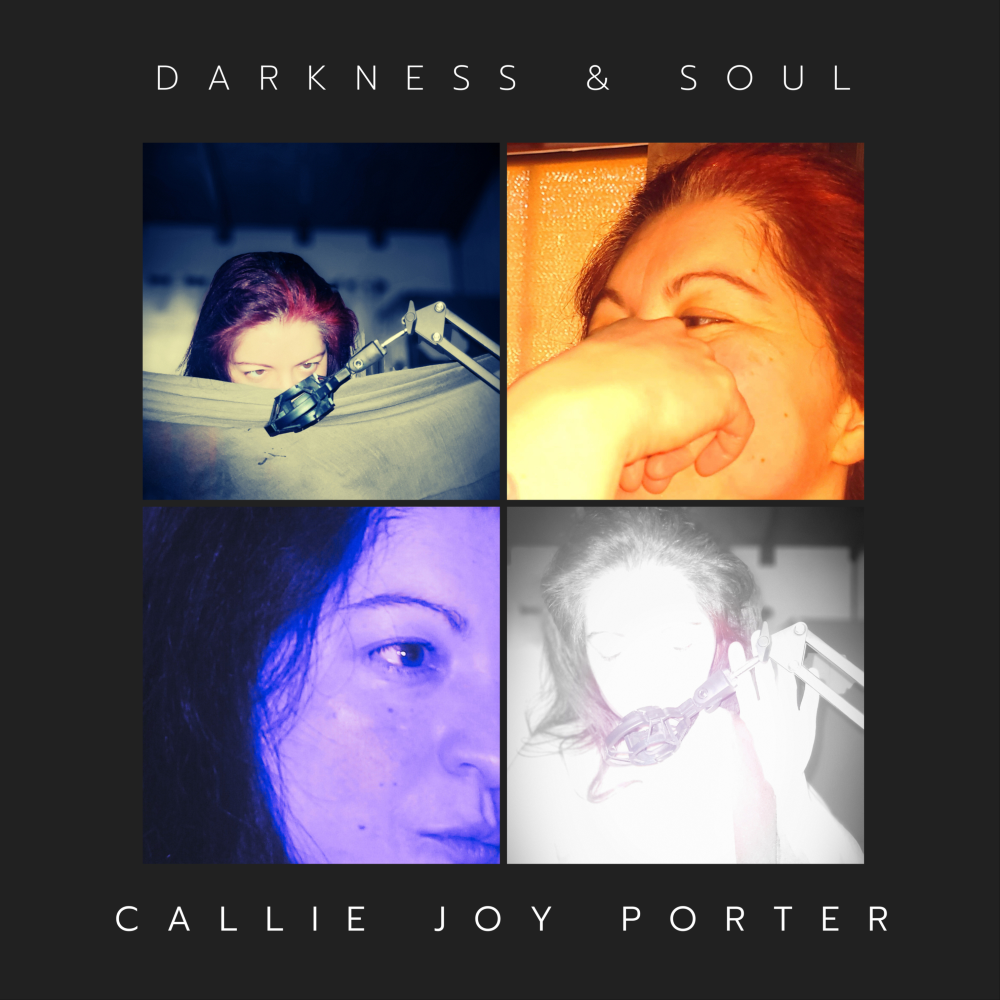
Callie Joy Porter’s Darkness & Soul arrives as the kind of debut that doesn’t feel like an introduction, but feels like an unveiling. Across its eight tracks, the album acts more like an emotional rite of passage than a conventional studio record. Porter doesn’t simply write songs, but exorcises them. They pour out like wildfire, like confessions that have been simmering beneath the surface for years, waiting for the exact moment they’re ready to ignite. And when they do, Darkness & Soul becomes a beautifully unsettling experience—haunting, mystical, and deeply human. It carries the weight of someone who has spent a lifetime guiding others, absorbing their pain, witnessing their breaking points, all while quietly wrestling with her own. That lived reality is carved into every track, making the album feel less like a performance and more like a shared reckoning.
From the opening track “Darkness,” Porter sets the tone with something between a whisper and a war cry. Her voice feels like a lantern moving through shadow—unafraid, but aware of what lurks in the corners. Musically, the song pulls from ethereal alt-pop and spiritual folk, echoing artists like Florence Welch and Grimes, but with a rawness that’s entirely Porter’s. It’s a declaration of self-experimentation, a moment where she pushes past the fear of what people think and walks straight into the shadows she once hid from. As someone who grew up reading tarot for the broken-hearted and lost, Porter understands emotional darkness intimately. The song becomes a meeting place for those who’ve spent years giving their power away, and for those who, like Porter, eventually decide to reclaim it.
The emotional centre of the album sits inside “Claim to Know You,” a track Porter admits was the hardest to release. You can feel that tension in every quiver of the melody. It’s a song that doesn’t simply describe vulnerability, but embodies it. Porter wrestles with the ache of being misunderstood, the fear of revealing too much, and the courage it takes to expose your inner scars to the world. What stands out most is the fragility she lets seep through the lyrics, even as the production blooms into something lush and atmospheric. It’s a powerful moment of artistic surrender, the kind of track that forces listeners to confront their own hidden echoes, the parts of themselves they’ve kept buried because they feared no one would understand.
Other tracks widen the lens, showing more of Porter’s inner landscape. “After All” and “Back Around” explore the cyclical nature of healing—how we drift, return, fall apart, and rebuild. Her songwriting thrives on contrasts: heavy emotions paired with shimmering melodies, spiritual imagery woven into modern production. “I’m Happy Now” becomes a turning-point anthem, not because it pretends everything is perfect, but because it acknowledges the quiet victories that come from choosing yourself after years of self-abandonment. “Turbo,” on the other hand, speeds things up, capturing the frantic momentum of change—the way growth can feel terrifying and exhilarating at the same time. Each track functions like a different step in a personal ritual, moving listeners through darkness, confrontation, release, and, finally, emergence.
The album’s playful entry, “Booktok,” showcases another side of Porter’s artistry—a wink at social culture wrapped in dreamy synths and grounded honesty. Even here, beneath the surface-level charm, she’s still wrestling with identity, influence, and the way the world projects narratives onto us before we’ve had a chance to write our own. That duality—light and shadow, humour and confession—becomes one of the album’s greatest strengths. It mirrors the contrast within Porter herself: a woman who has spent years helping others navigate their inner worlds while slowly learning to walk through her own.
Then comes “Release – Unplugged,” the closing moment that ties the entire project back to its core intention. Stripped down and spiritually bare, it feels like the exhale the album has been building toward. Where other tracks shimmer with layered production, “Release” pulls everything away until only Porter’s voice and truth remain. It’s intimate, almost ritualistic, the sound of someone unlocking a door from the inside. As the final notes fade, you get a sense that you’ve not only witnessed her catharsis—you’ve been invited into it.
What gives Darkness & Soul its magnetic pull is the philosophy behind it. Porter describes the album as her own liberation—a shedding of impostor syndrome, fear, and self-silencing. She wanted to write music for minorities, for women, for those who’ve been told their voices don’t matter. She wanted to make something that exposed every hidden layer most people are afraid to acknowledge in themselves. And she succeeded. The album is deeply personal and universally resonant because it doesn’t flinch away from discomfort. Porter shows her shadows so listeners may find a way to face their own.
By the time the final track ends, Darkness & Soul feels like a companion for anyone navigating the murky terrain between who they were and who they’re becoming. Porter hopes the album helps listeners confront their echoes, and it does exactly that. It doesn’t promise quick healing or easy answers, but it opens a door to honesty, courage, and renewed self-belief. In a world that asks us to be small, Darkness & Soul insists that we look inward, claim our power, and choose to live a full life rather than fragments of one.
More Read



Callie Joy Porter has already announced her second album, set for release on December 11, but Darkness & Soul stands as a defining beginning. It is the sound of someone stepping into themselves with every ounce of fear, passion, magic, and truth they possess. It’s a debut that sets a soul on fire.
Connect with Callie Joy Porter
INSTAGRAM
APPLE MUSIC
QOBUZ
YOUTUBE