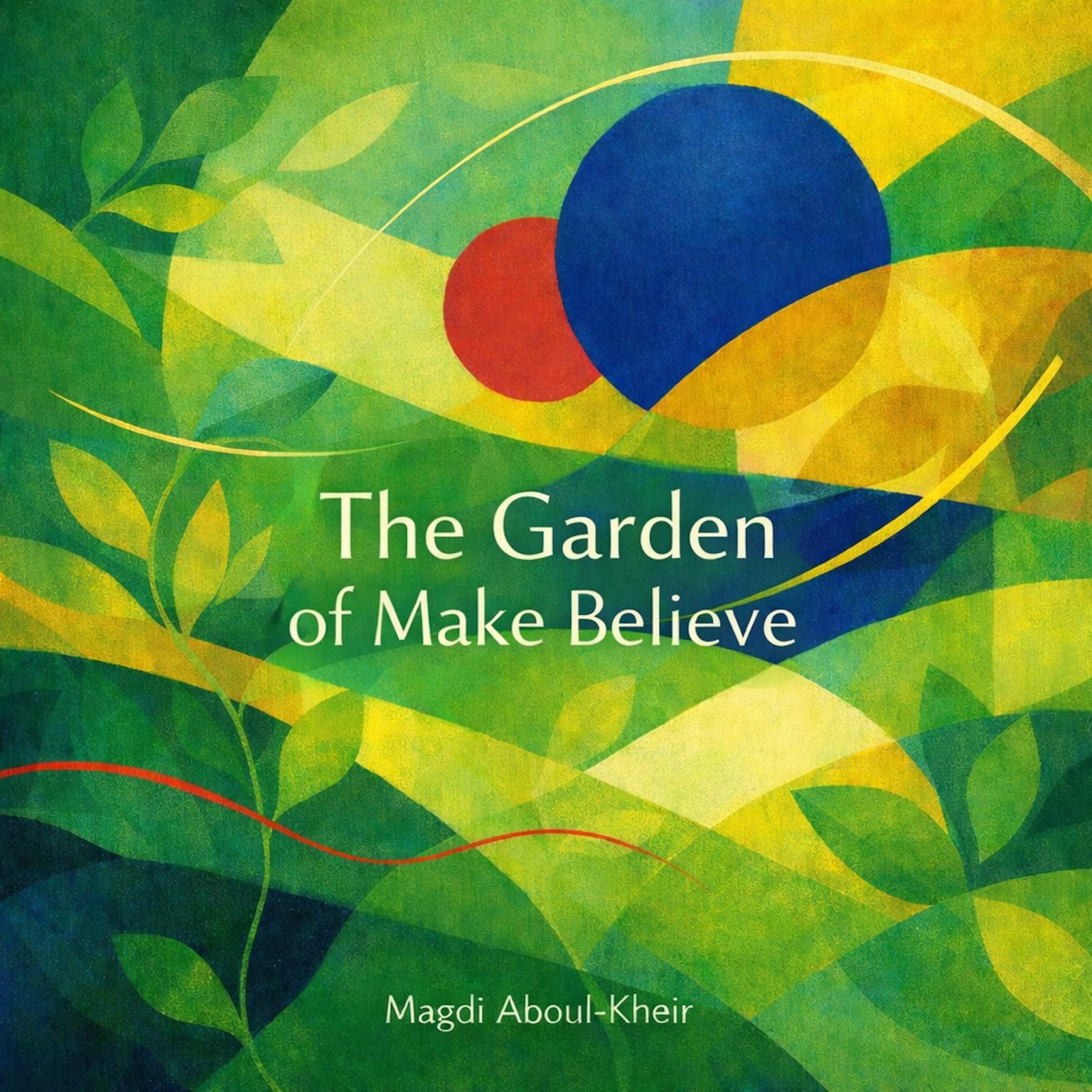
Magdi Aboul-Kheir presents The Garden of Make Believe as a sweeping orchestral meditation on beauty, longing, and the quiet spaces between memory and imagination. Rooted in a deep appreciation for classical tradition yet unbound by rigid formalism, the album unfolds as a collection of ten evocative pieces that prioritise emotional clarity over technical exhibition. From the outset, it is evident that this is a work guided by feeling—melodies are allowed to breathe, textures evolve organically, and each composition carries a sense of purpose that feels deeply personal. Rather than overwhelming the listener with grandeur, the album invites introspection, offering a gentle yet persistent pull into its carefully constructed world.
The opening track, “On the Meadow,” establishes the album’s tone with a sense of pastoral serenity. It feels like stepping into a quiet landscape where time slows, and perception sharpens, setting the stage for the emotional journey ahead. This sense of stillness is expanded in “If I Could Freeze Time,” where delicate phrasing and subtle harmonic shifts create an atmosphere of suspended motion. The composition captures the universal desire to hold onto fleeting moments, translating an abstract longing into something tangible through sound. As the album progresses into “Love in an Alternate Universe,” the mood becomes more expansive, suggesting a kind of romantic idealism that transcends the boundaries of reality.
At its core, The Garden of Make Believe thrives on its ability to merge the inner and outer worlds. Tracks like “The World in His Arms” and “Gentle Ties” explore the nuances of human connection, balancing intimacy with a broader sense of emotional resonance. The orchestration remains restrained, allowing individual motifs to emerge and recede with natural fluidity. This restraint is one of the album’s greatest strengths, as it ensures that each moment feels intentional rather than excessive. The compositions do not rush toward resolution, but linger, encouraging the listener to inhabit each emotional space fully.
Midway through the album, “Tears and Smiles” offers a poignant reflection on the duality of human experience. The interplay between light and shadow is particularly striking here, as shifting tonalities mirror the complexity of emotion itself. This theme continues in “The Summer Wind in the Wheat,” a piece that evokes movement and transience through its flowing structure. There is a cinematic quality to these compositions, as though they are scoring moments that exist just beyond the edge of perception. Yet, despite this expansiveness, the music never loses its sense of intimacy, maintaining a connection that feels immediate and personal.
The title track, “The Garden of Make Believe,” serves as the album’s conceptual centrepiece, encapsulating its central themes with quiet elegance. Here, Aboul-Kheir brings together the various threads introduced throughout the album, creating a composition that feels both cohesive and expansive. The piece unfolds with a sense of wonder, as if guiding the listener through a landscape shaped as much by memory as by imagination. It is a moment of synthesis, where the album’s emotional and philosophical ideas converge into a single, resonant expression.
In the latter part of the album, “My Yearning and Longing” deepens the introspective tone, emphasising the persistent nature of desire and the ways in which it shapes our perception of the world. The composition is marked by a subtle intensity, building gradually without ever becoming overwhelming. This sense of restraint allows the emotional weight of the piece to emerge naturally, reinforcing the album’s commitment to authenticity. The closing track, “Sleepletter,” brings the journey to a gentle conclusion, offering a sense of quiet resolution without fully closing the narrative. It feels less like an ending and more like a continuation, suggesting that the emotional journey extends beyond the confines of the album.
Sonically, The Garden of Make Believe is defined by its clarity and balance. The orchestral arrangements are carefully constructed, ensuring that each element contributes to the overall texture without overshadowing the others. This attention to detail reflects Aboul-Kheir’s background as a pianist and a composer, as well as his willingness to draw from a wide range of musical influences. While the album is firmly rooted in a neoclassical tradition, there are subtle hints of other genres woven into its fabric, creating a sound that feels timeless and contemporary.

Ultimately, The Garden of Make Believe stands as a testament to Magdi Aboul-Kheir’s ability to translate complex emotional landscapes into accessible and deeply affecting music. It is an album that does not demand attention through spectacle but earns it through sincerity and nuance. By prioritizing melody and emotional resonance, Aboul-Kheir creates a listening experience that feels immersive and reflective, inviting the audience to explore their own inner worlds. In doing so, he reaffirms the enduring power of music as a means of connection, offering a work that lingers quietly yet persistently in the mind long after it has ended.



Connect with Magdi Aboul-Kheir
FACEBOOK
SPOTIFY
SOUNDCLOUD
BANDCAMP
INSTAGRAM