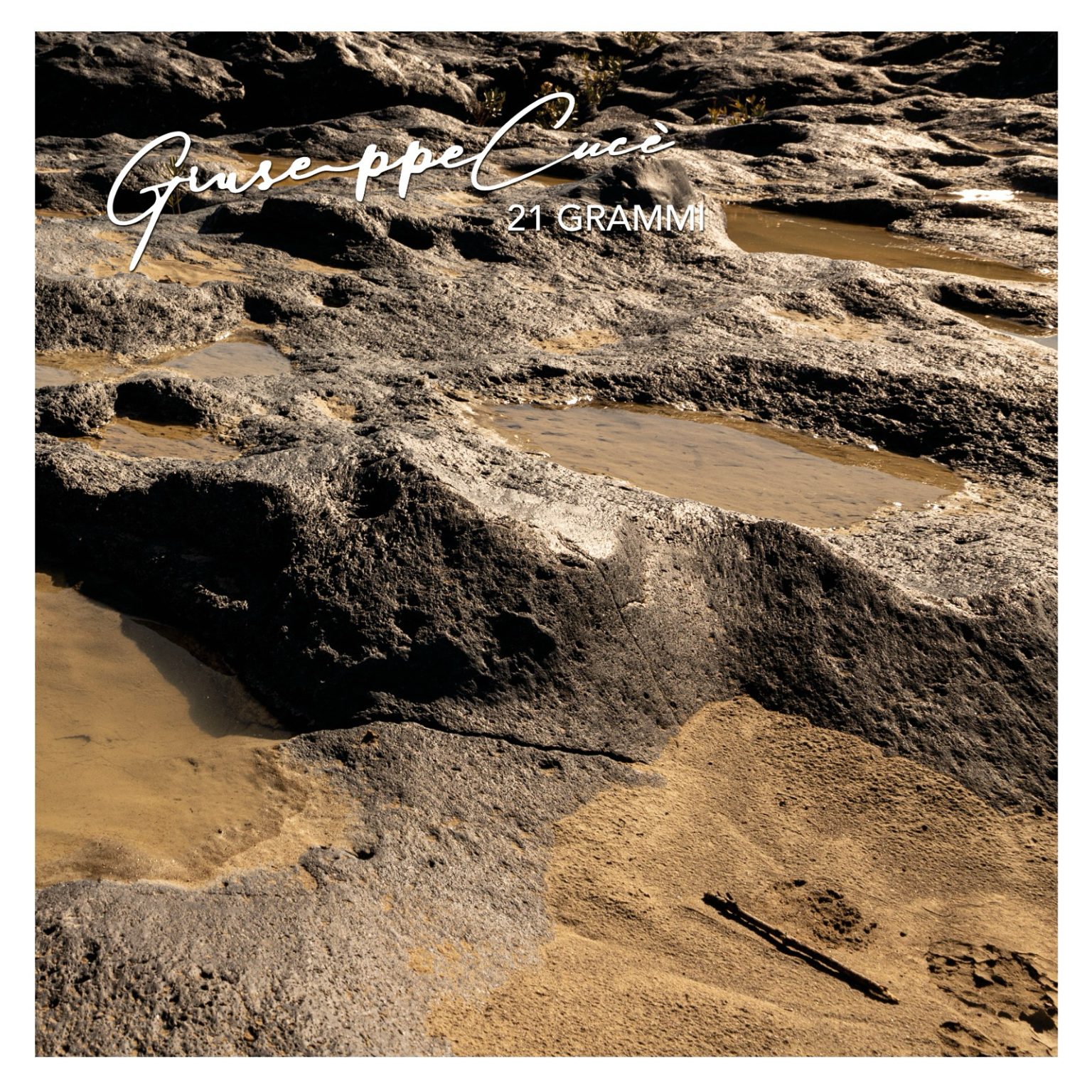
Giuseppe Cucé’s 21grammi is a philosophical excavation of the unseen. Rooted in the myth that the human soul weighs twenty-one grams, this project transforms an abstract measurement into a vivid emotional cartography, guided by the Sicilian singer-songwriter’s introspective pen and Riccardo Samperi’s refined production. Across nine tracks, Cucé reaches into memory, heartbreak, renewal, and the quiet violence of introspection, crafting a sonic environment where indie-pop modernity meets Italian cantautorato tradition. From the brassy brightness of “È tutto così vero” to the piercing melancholy of “Cuore d’inverno,” the album feels like a journey through the atmospheric spectrum of human fragility — always poetic, always sincere. 21grammi succeeds by making the immaterial feel tactile, giving weight and colour to the existential forces that shape us.
The record opens with “È tutto così vero,” a vibrant and deceptively buoyant introduction bursting with woodwinds, energetic brass, and Cucé’s charismatic vocal shifts. The track sways between spoken musings and melodic flourish, painting scenes of nights out, fleeting joys, and memories that sting with their own vividness. The lyric “È tutto così vero / Quando passa la primavera” reveals a narrator clinging to moments that pass too quickly yet linger like perfume on the skin. There is an escapist tone woven into the instrumentation — joyous on the surface, but shadowed by emotional residue beneath. Cucé sets the thematic tone for the album here: the truth is heavy, but we move through it dancing, smiling, pretending its weight is less than it is.
“Ventuno,” the album’s conceptual nucleus, arrives with jangling guitar textures, soft-rock warmth, and a dreamlike progression that feels nostalgic and quietly rebellious. What makes the track unforgettable is its lyrical architecture: Cucé assigns grams of weight to different parts of the human body, creating a metaphorical anatomy of the soul. “Le anime sono due grammi di seni / Due grammi di gambe / Due grammi di braccia…” — each line echoes the idea that our emotions, our wounds, and our memories live physically within us. The harmonised hums and organ flourishes create a hazy aura, building an atmosphere that feels like wandering between consciousness and memory. “Ventuno” is the album distilled: a song about carrying invisible burdens without ever fully knowing how heavy they are until they suddenly crush or liberate us.
The emotional climate cools into “Fragile equilibrio” and “Dimmi cosa vuoi,” which continue the album’s meditation on vulnerability and desire. Here, Cucé leans more into traditional songwriting frameworks, delivering lyrics that wrestle with communication, hesitation, and the fragile dynamics of love. “Fragile equilibrio” in particular stands out as a balancing act — the melody teeters between calm and collapse, mirroring a relationship sustained on hope rather than stability. Meanwhile, “Dimmi cosa vuoi” is almost pleading in tone, its percussive pulse and soft instrumental layering emphasising the frustration of emotional ambiguity. Cucé excels in these spaces where longing becomes introspection; he knows how to turn quiet confusion into something musical, almost cinematic.
Mid-album highlight “Cuore d’inverno” arrives like a slow snowfall — delicate, crystal-clear, and devastatingly beautiful. The orchestral strings create a glacial emotional landscape, one that slowly thaws as twinkling piano notes melt into a rising guitar surge. The lyrics explore the instability of love, the way affection can shift like seasons: “L’infinito non esiste / e non esiste l’attimo.” It’s a haunting line — a reminder that permanence is an illusion, and moments only exist long enough to disappear. Cucé moves with ease between fragility and emotional crescendo, crafting a piece that feels like heartbreak suspended in time. “Cuore d’inverno” is the kind of track that makes an album unforgettable.
“Tutto quello che vuoi” and “La mia dea” serve as emotional bridges, expanding the album’s themes into different shades of sincerity. “La mia dea” is romantic yet grounded, a praise song that avoids idealisation by leaning into raw truth. Cucé’s ability to write love songs that feel human — flawed, questioning, hopeful — is one of the record’s most luminous strengths. “Tutto quello che vuoi,” by contrast, leans into a kind of resigned tenderness: a confession wrapped in indie-pop warmth, where desire meets acceptance. Both songs underline Cucé’s songwriting range, proving that his emotional palette is wide, textured, and deeply personal.
The project reaches one of its most cinematic peaks with “Una notte infinita,” a track that blends nocturnal melancholy with a sense of boundless motion. The arrangement shimmers, evoking city lights reflected on wet pavement, the hush of late-night streets, and the feeling of searching for clarity in darkness. Cucé captures the paradox of nights that feel endless and fleeting — moments when time slows, thoughts intensify, and emotions become amplified. The track is atmospheric, immersive, and arguably the album’s most visually evocative composition, turning silence into a character and yearning into a narrative.

Closing the album with the striking “Di estate non si muore,” Cucé ends 21grammi not in grief, but in a strangely life-affirming glow. The track blends piano warmth with subtle synth gleams and a funky rhythmic pulse, creating a surprising contrast between melancholy lyrics and bright production. The title — “You don’t die in summer” — becomes a bittersweet mantra, a recognition that warmth, light, and motion hold us together even when we’re breaking. As the song swells, 21grammi circles back to its thesis: the soul may be invisible, but its weight is present in every breath, every wound, every hope. And through these nine tracks, Giuseppe Cucé makes that weight not only audible, but beautifully, undeniably felt.



Connect with Giuseppe Cucé
APPLE MUSIC
DEEZER
SPOTIFY
WEBSITE
FACEBOOK
YOUTUBE