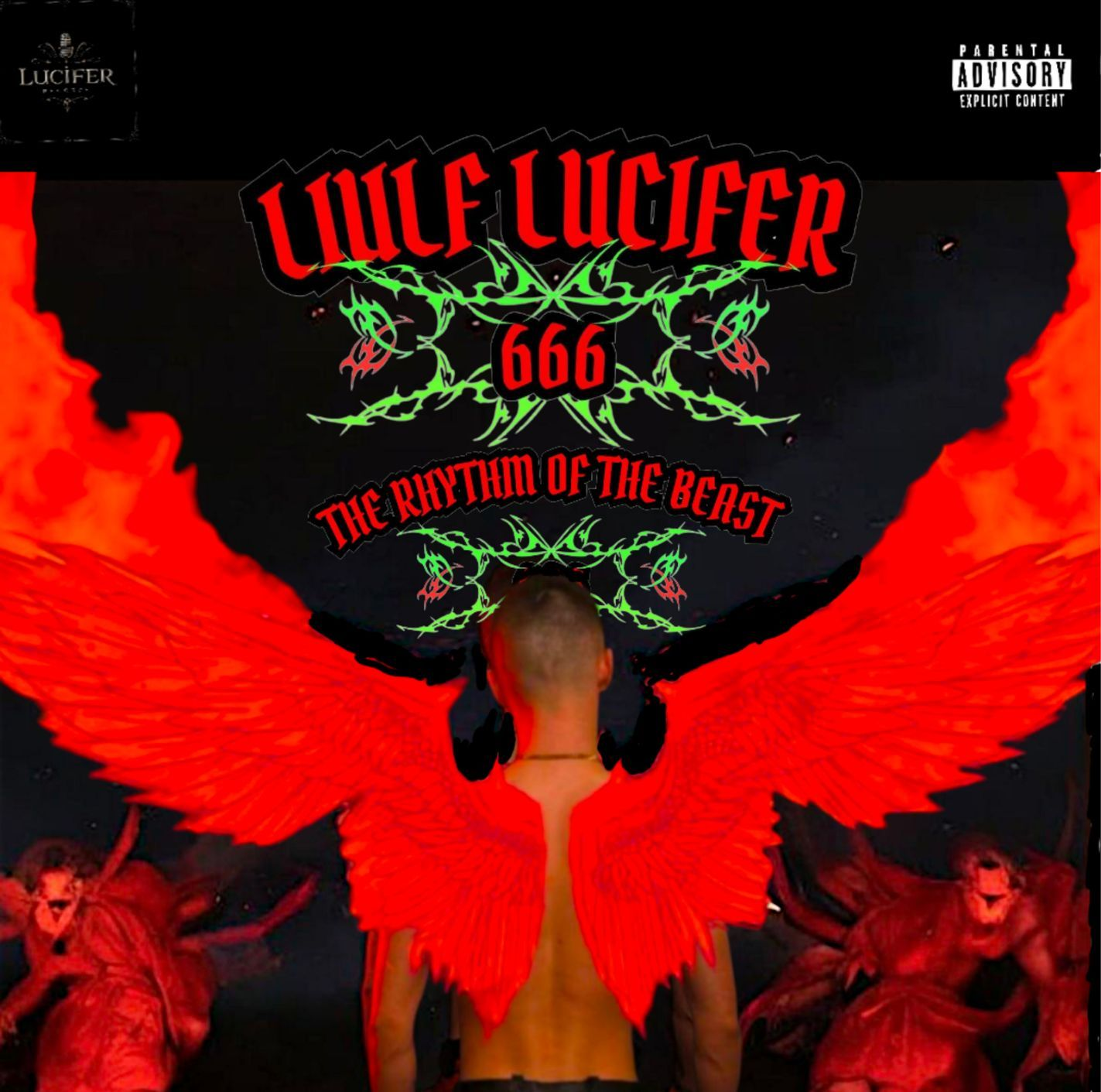
Few albums have the audacity to claim themselves as cinematic experiences rather than just collections of songs, but Liulf Lucifer’s THE RHYTHM OF THE BEAST (Act 2) deserves that ambition from the very first moment. Building on the foundations of his 2025 debut, the Manchester and Salford-based artist is back with a sequel that refuses to be pinned down by genre conventions. Instead, the twenty-song album is a deep narrative of dark pop crashing into alternative R&B, industrial electronics, house music, trap, and EDM, all without losing cohesion. If Act 1 was about betrayal, survival, and the breakdown of emotions, Act 2 is about the aftermath, the reconstruction of identity through confrontation rather than avoidance. Liulf Lucifer embraces this change with unapologetic theatricality, indulging in luxury aesthetics, shadowy imagery, and larger-than-life production while grounding it all in real emotional stakes. Instead of resilience as silent healing, THE RHYTHM OF THE BEAST imagines recovery as reclaiming power, stepping into the light, and not apologizing for taking up space. It’s an album that knows vulnerability and dominance are not opposites but rather different chapters of the same story.
The introductory sequence immediately sets up that narrative with remarkable clarity. It’s the first scene of a psychological thriller, surrounding the listener with faraway percussion and cinematic swells and building tension before the main character arrives. That tension translates effortlessly into “Lucifer DeVil,” where subterranean basslines and layered R&B vocals provide a protagonist who’s abandoned the role of victim altogether. The atmosphere is brooding but purposeful, suggesting someone who has lived long enough to rewrite his mythology. The “TYRANT P2” emphasizes this declaration with a distorted low end, fractured rhythms, and an uncompromising vocal performance that exudes confrontation rather than confession. It sounds like the emotional follow-up to its name, bringing unresolved rage forward and turning it into fuel at the same time. By the time we get to “DOLLAR DADDIES TECHNIQUE,” Liulf Lucifer starts to expand his scope from personal survival to manipulation, transactional relationships, and power structures. Sharp electronic production and trap-influenced percussion set the icy backdrop for lyrics delivered with calculated confidence, proving the album has little interest in comforting its audience. Rather, it calls for involvement, pulling the listener into an arena of feeling where each beat has a dramatic purpose.
THE RHYTHM OF THE BEAST draws much of its power from intensity, but Liulf Lucifer has the good sense to understand the benefits of emotional contrast. “ALL I WANT TO SAY” is one of the most revealing moments on the record, shedding some of the surrounding armor. Marching drum patterns anchor the composition, swirling synth textures soften the edges, and distorted vocal effects convey vulnerability without sacrificing atmosphere. The track suggests that emotion is more effective when restrained than when displayed in full spectacle. That sensitivity perhaps finds its fullest expression on the title track, THE RHYTHM OF THE BEAST, which arguably serves as the emotional centerpiece of the entire project. Here, alternate R&B grooves meet hypnotic dance rhythms to demonstrate the album’s central philosophy: pain never leaves, but it can be transformed into movement. Liulf Lucifer doesn’t give trauma as something to run from but pours it straight into rhythm, making dance music itself a metaphor for perseverance. It’s a beautifully conceived idea that lifts the project from being just about playing with style to something conceptually coherent.
Through the middle of the album, Liulf Lucifer continues to blur the lines between introspection and confrontation with admirable confidence. “Receipt Heart” begins with nervous hi-hats and synthetic basslines that echo the emotional bookkeeping implied by the name. Each rhythmic beat documents another emotional debt still to be paid. With the sparse arrangement, every lyric lands with calculated precision. “GIVE IT TO ME, LIKE ME” is a club-ready anthem that flips the energy with pounding four-on-the-floor house beats and explosive electronic production. But underneath its dancefloor allure is another assertion of self-worth, a need to be seen, not approved of. “THE MELODY ON REPEAT” smartly personifies psychological repetition with looping electronic motifs that generate a hypnotic sense of thoughts running in circles inside the mind. Meanwhile, “EYE FOR A LIE” channels vengeful energy into minimalist but devastating production, centered around crushing 808s and metallic percussion. Liulf Lucifer doesn’t overload the arrangements but leads with silence and space to build emotional tension, showing impressive production discipline throughout.
Most impressive about the album is its embrace of contradiction. “WHO DO THEY PAY TO SEE?” is a big electronic, synthetic brass, stadium-sized anthem of self-belief. It’s a victory speech, an artistic manifesto. Moments later, ‘Fuck Em Right’ moves into grittier underground club territory, with basslines that won’t relent and rhythms that become claustrophobic, creating a sense of cathartic release instead of a polished celebration. NARCISSISTIC THINKING continues the quest for psychological depth with shimmering electronic rhythms and lyrical musings on ego, manipulation, and emotional toxicity. Rather than presenting the confident as infallible, Liulf Lucifer repeatedly acknowledges the dangers of power while insisting on facing them head-on. That emotional honesty prevents the album from becoming one-dimensional. This is not bravado, but a constant negotiation between wounded humanity and hard-won resilience. Even when it is most confrontational, there is enough introspection to preserve its emotional core.
The finale of THE RHYTHM OF THE BEAST expands the possibilities of cinema even further. “Whips and Chains” provides industrial textures, metallic percussion, and slow-burning contemporary R&B, creating one of the record’s most seductive sonic environments. The production has a tactile, immersive quality, with a sensuality that carries a subtle unease. “GOTHAM 2 / DARKER KNIGHT ON THESE STREETS” builds on the album’s urban mythology with cold electronic soundscapes and industrial rhythms to reflect loneliness under the neon city lights. It’s one of the most visually evocative compositions of the project, practically beckoning the listener to imagine cinematic sequences unfolding alongside the music. Then, “DEVIL ON THE LEFT” brings the pace back to life with a burst of EDM energy and non-stop percussion—it’s the sound of a conflict within, where even the tempo is a metaphor for emotional urgency. The juxtaposition of songs demonstrates Liulf Lucifer’s understanding of pacing. He avoids a constant force, instead skillfully shifting atmosphere and momentum to keep the listener engaged over an ambitious twenty-track runtime.
The last sequence is the emotional payoff the album has been building toward. “Deeper Than Before” digs into emotional rock bottom with submerged sonic textures and massive sub-bass frequencies that seem to pull the listener down before softly revealing unforeseen resilience beneath the surface. That transformation blooms on “MY WAVE,” where buoyant electronic chords and infectious rhythms announce full ownership of the narrative introduced at the album’s beginning. It’s a victorious moment that feels well-deserved because the songs that got us here never attempted to gloss over the struggle. ” Dollar Daddies CAN’T BEAT MY” is a thrilling act of defiance, a frenetic glitch production with breathless momentum that feels like an uncompromising victory lap. The Rhythm Of The Beast Chilled Mix ends on a graceful note, peeling away much of the aggression that came before it and letting soulful R&B harmonies breathe. After nearly twenty tracks of confrontation, transformation, and emotional excavation, this closing remix feels less like an afterthought and more like a well-earned moment of peace.
Production-wise, THE RHYTHM OF THE BEAST is very cohesive, even with the incredible stylistic variation. Liulf Lucifer is a very sophisticated sonic architect, employing bass frequencies, vocal processing, electronic textures, and rhythmic variation not simply as aesthetic choices but as narrative devices. Every decision made in service of the production plays a role in the album’s emotional ebb and flow, whether it’s the heavy low-end during moments of conflict or the sweeping synth arrangements during moments of liberation. He’s also got to be applauded for his vocal performances. He doesn’t depend on technical exhibitionism; he modulates his performance to the emotional demands of the song, sliding from contained vulnerability to aggressive confrontation to seductive confidence to introspective reflection. This fluidity allows the album’s diverse musical influences to coexist without ever sounding fragmented. Whether embracing dark pop, atmospheric R&B, industrial electronica, or euphoric dance music, Liulf Lucifer maintains a singular artistic identity that ties every composition together.


Ultimately, THE RHYTHM OF THE BEAST succeeds because it does not compromise on its vision. This album creates its own immersive world where emotional survival becomes a theatrical spectacle and relentless rhythm drives personal transformation. The twenty tracks work as interconnected chapters, not individual singles, rewarding those who take the project from start to finish. Betrayal, identity, revenge, vulnerability, self-worth, and ultimate empowerment are themes that mesh naturally, supported by adventurous production and fearless songwriting. While many concept albums tend to falter in terms of maintaining momentum over ambitious runtimes, Liulf Lucifer manages to add plenty of emotional and musical variation throughout the album to keep the journey engaging without losing its cohesive nature. The result is a thrilling body of work that walks the line between cinematic aspiration and true emotional authenticity.
At the end of the day, THE RHYTHM OF THE BEAST is an uncompromising statement of artistic purpose that asserts that facing pain squarely can turn it into extraordinary strength. Liulf Lucifer turns heartbreak into motion, fear into spectacle, and private battles into vast sonic landscapes that invite the listener not just to watch but to join in. Each beat matters, each transition adds to the story as a whole, and each stylistic shift is another step forward in the protagonist’s emotional arc. By the end of the album, the change feels complete because they are now part of a more powerful sense of self. A bold, immersive, and emotionally fearless release that confirms Liulf Lucifer as an artist not afraid to combine theatrical imagination and deeply personal storytelling. Few modern records so confidently embrace darkness while emerging into light with such conviction, making THE RHYTHM OF THE BEAST one of the year’s most compelling, fully realized conceptual listening experiences.
Connect with Liulf Lucifer
WEBSITE
FACEBOOK
SPOTIFY
SOUNDCLOUD
YOUTUBE