

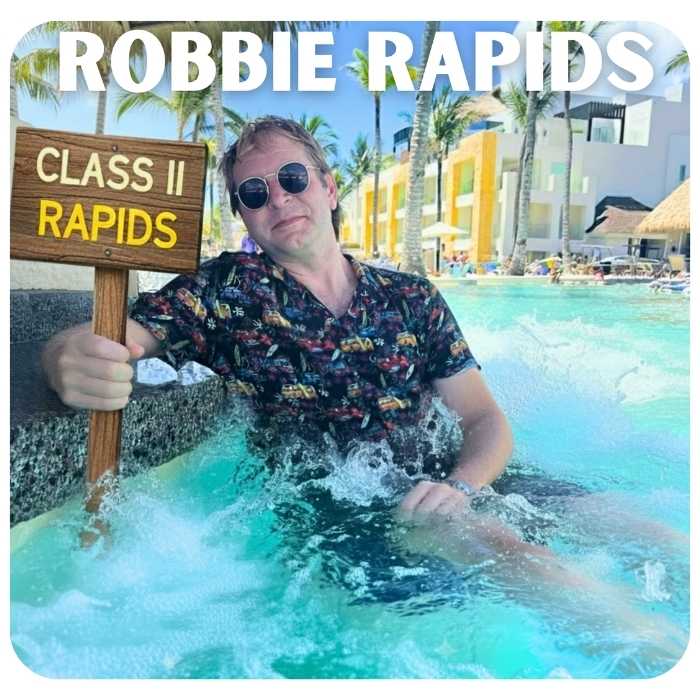
Class 2 Rapids feels exactly like its title suggests: not a violent plunge into chaos, but a restless, churning journey where momentum matters more than speed. Robbie Rapids’ second solo album arrives as a confident statement from a Gen X guitar rocker who has lived enough life to know that smooth waters rarely tell the best stories. Released on December 17, 2025, the album captures two years of writing, recording, and reflection, shaped by collaboration yet unmistakably driven by a singular vision. Across 15 tracks, Rapids positions himself as a storyteller following instinct—letting each song choose its own shape, tempo, and emotional destination.
Musically, the album draws its backbone from classic rock, but that spine is constantly bending and reshaping itself. Pop hooks surface where you least expect them, folk textures soften harder edges, alternative country seeps into narrative-heavy moments, and flashes of metal energy remind you that this is still a guitar-forward record at heart. Rather than feeling scattered, the genre-hopping feels deliberate—like flipping through radio stations late at night and realising each song still sounds unmistakably like the same artist. Recorded at Mosspit Studio in Norcross and BigSound Productions ATL in Johns Creek, the production balances polish with personality, preserving the human feel of musicians playing together rather than sanding everything down to digital perfection.
“Hang Loose” sets the emotional tone early, acting as a mission statement for the album’s worldview. It tackles the modern grind—the endless climb up the corporate ladder—and counters it with a deceptively simple philosophy: scream your worries into the mountains, then let them go. The track’s laid-back swagger masks a deeper frustration familiar to anyone juggling ambition and burnout. It’s not anti-success, but pro-sanity. In that way, the song frames Class 2 Rapids as an album concerned less with escape and more with balance, urging listeners to breathe before the current pulls them under.
Narrative songwriting shines on “Dance with Me,” one of the album’s most cinematic tracks. The story of returning to a dance club in hopes of rekindling a spark plays out with tension, humour, and heartbreak. When the protagonist discovers his dream girl dancing with someone else, the song pivots into a moment of emotional improvisation—mirroring real-life situations where plans collapse, and instinct takes over. Robbie Rapids’ strength here lies in his restraint, and he allows the story to unfold without melodrama, trusting the listener to feel the weight of anticipation and disappointment without being told how to feel.
Heartache deepens on “Black Roses,” a breakup song told from a backwards perspective that makes loss feel disorienting and unresolved. This structural choice mirrors the emotional reality of moving on—where clarity often comes last, not first. Similarly introspective is “I Believe in You,” a quietly powerful reflection on friendship, adulthood, military or career paths, and the loneliness that arrives when support systems fall away. Rather than offering easy answers, the song asks a harder question: who motivates you when no one’s left to lean on? Its resolution feels earned, not forced.
Elsewhere, Class 2 Rapids leans into playful homage and sonic exploration. “BIG BAM BOOM” is a loving tribute to glam rock’s theatrical roots, name-checking icons like David Bowie and T. Rex while blending ’70s swagger with ’80s hair-metal flash. “Dream Away,” reimagined with psychedelic flair and co-written with David Levene, floats through memory and longing, looping days of the week like recurring thoughts you can’t quite shake. These tracks reveal Rapids’ comfort with musical history—not as something to replicate, but as a palette to pull from.
The album’s storytelling becomes more allegorical on tracks like “Out of the Garden,” which reframes the story of Adam and Eve through the lens of modern temptation, and “Mule of Mine,” a humorous yet telling fable about work, rebellion, and redefining value. “Street Shuffle” grounds the record in social reality, addressing post-COVID displacement and tent cities with empathy rather than spectacle. These songs expand the album’s scope, reminding listeners that personal stories exist alongside collective ones, often flowing through the same turbulent waters.

Nostalgia and levity surface in “Fishing the River,” a swamp-rock-infused memory of teenage summers on Michigan’s Pere Marquette River. Its charm lies in its self-awareness—Robbie Rapids openly admits his lack of fishing skill, turning the song into a celebration of moments rather than mastery. “Billy the Kid,” almost childlike in tone, closes the loop thematically by focusing on belonging and return. The lost goat’s realisation that his true friends need him mirrors many of the album’s broader emotional arcs: wander, learn, and come back changed.

Ultimately, Class 2 Rapids stands out because it refuses to be rushed or reduced. It’s an album made by an artist comfortable with contradiction—serious without being solemn, playful without being shallow, nostalgic without being stuck. With contributions from multiple songwriters and musicians, Robbie Rapids still manages to keep the project cohesive through voice, perspective, and intent. As the follow-up to Class 1 Rapids, this record feels like a natural evolution: deeper currents, wider banks, and a stronger sense of direction. It doesn’t promise calm waters, but proves Robbie Rapids knows how to ride the flow.
Connect with Robbie Rapids
FACEBOOK
TWITTER
SPOTIFY
SOUNDCLOUD
YOUTUBE
INSTAGRAM

