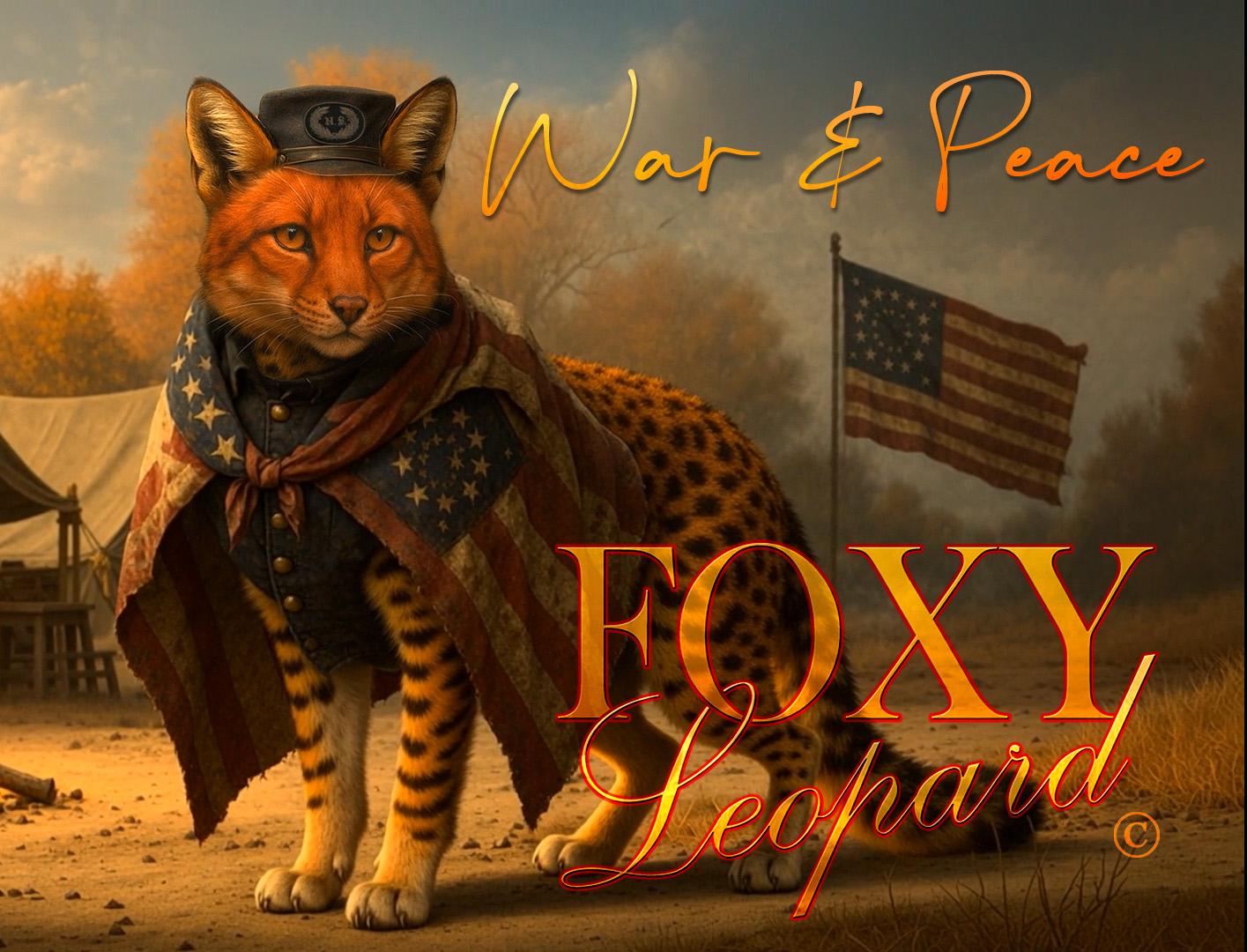
From the very first moments of“The Call,” Foxy Leopard makes it clear that this is not a song designed for passive listening. It arrives heavy with purpose, steeped in reflection, and guided by a deep sense of moral urgency. Hailing from Quebec, Canada, Foxy Leopard steps far beyond geographical or cultural borders to confront one of the most painful chapters in American history: the Civil War and the brutal reality of slavery that defined it. Rather than focusing on battles or dates, “The Call” centres on echoes of suffering, of sacrifice, and of voices that history has too often muted. There is a solemn weight in the song’s atmosphere, as if each note carries the responsibility of remembrance. Released on November 28, 2025, the track feels less like a single and more like a statement, marking a defining moment in Foxy Leopard’s artistic evolution and setting a powerful tone for the forthcoming album, War & Peace.
Musically, “The Call” unfolds with restrained intensity, allowing space for the narrative to breathe. The arrangement avoids excess, instead favouring a measured build that mirrors the gradual revelation of historical truth. Melodies move with a quiet gravity, rising and falling like unresolved questions rather than offering easy catharsis. There is an almost cinematic quality to the track, but it is not grandiose—it is intimate, as if the listener has been invited into a private reckoning. Recorded in Foxy Leopard’s personal sanctuary, the production feels intentionally close and human, free from unnecessary polish. Every instrumental choice serves the story, reinforcing the emotional pull of the lyrics rather than distracting from them. This approach makes the song feel timeless, detached from trends, and deeply rooted in its message.
Lyrically, “The Call” is where the song’s true power lies. Foxy Leopard does not shy away from the unbearable truth at the heart of the Civil War: slavery, stolen lives, and generational trauma. The song honours the millions of enslaved people who endured unimaginable suffering, while also acknowledging the often-overlooked sacrifice of over 300,000 white Union soldiers who died fighting to end that horror. This dual recognition gives the song a rare balance—one that refuses simplification and instead insists on the full, uncomfortable picture. The recurring question, “Can you hear the call?” functions as a refrain and a challenge. It asks whether we are willing to listen to history honestly, without selective memory or emotional distance. Rather than preaching, the lyrics invite reflection, urging listeners to confront how easily sacrifice fades when it becomes inconvenient to remember.
Ultimately, “The Call” transcends the idea of music as entertainment and positions itself as an act of remembrance. It reminds us that history is not sealed in textbooks—it reverberates through the present, shaping systems, identities, and unresolved pain. Foxy Leopard’s decision to root this song in storytelling rather than spectacle is what makes it resonate so deeply. There is courage in choosing such a heavy subject, and even more in handling it with restraint, respect, and sincerity. As a precursor to War & Peace, “The Call” suggests an artist unafraid to grapple with difficult truths and to use music as a means of moral inquiry. Long after the final note fades, the song lingers—not because it demands attention, but because it deserves it. In asking us to listen, Foxy Leopard reminds us that remembering is not optional. Still, a responsibility, and “The Call” rings out as a powerful reminder of why those echoes must never be silenced.