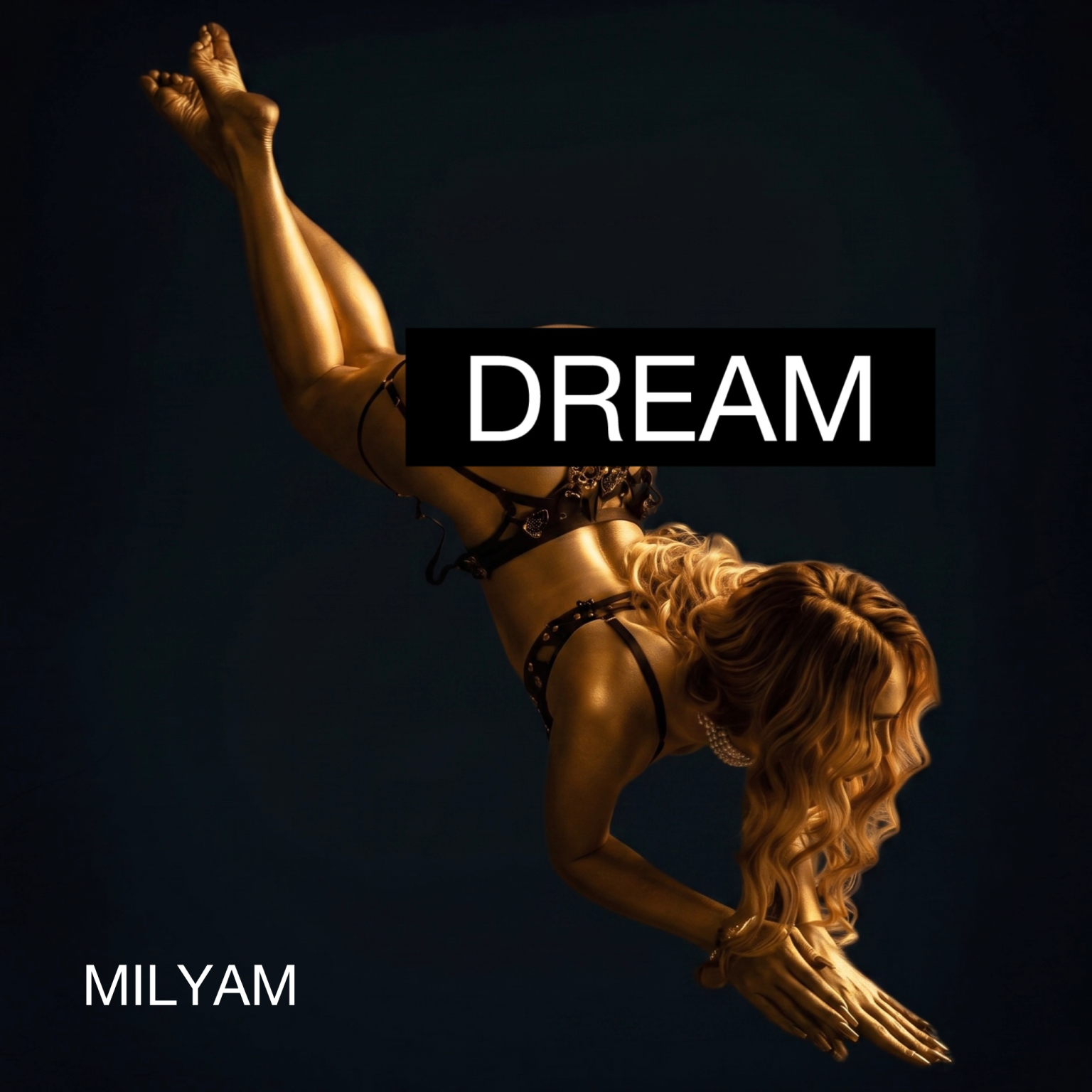
MILYAM’s “DREAM” is the kind of song that feels like it starts before you know it has started. There is no big entrance, no immediate call to attention, no monstrous pop gesture designed to shove the listener into the first chorus. Instead, the track is like a held breath in a dark room that quietly pulls you in until you are completely immersed in its atmosphere. “DREAM” is another fascinating chapter to MILYAM’s evolving artistic universe, exploring the delicate line between illusion and reality with a muted mixture of atmospheric alt-pop and art rap, crafting something intimate enough for headphones but big enough to spark the imagination. The production is intimate and tight, almost claustrophobic in its closeness. It’s like a late train through a city after midnight, when streetlights streak across the windows and familiar surroundings seem strange and alien. Everything is just right, with reverb tails long enough to provide a sense of depth, rhythmic pauses, and low end that provides a subtle physicality underneath the otherwise light surface of the song. This is atmosphere with a purpose, not a decorative label. MILYAM understands that silence can be as expressive as sound, and “DREAM” often finds power in the spaces between musical events. What’s especially impressive about the visual aspect is that it never veers into melodramatic overstatement. “Rather than drown the listener in layers, the production creates a shadowy space where the smallest sonic changes mean something. That makes the track feel almost visual, as though every synth, beat, vocal breath, and pause is another shade in a moving picture. It is the music for when the outside world has quieted down enough for the mind to become louder.
MILYAM’s voice is at the center of this carefully crafted world, and her greatest strength is how easily she expresses vulnerability without sounding frail. She sings as if she’s telling a secret, not something she’s practiced to death, creating a feeling of intimacy that instantly alters the dynamic between artist and listener. Her phrasing floats around the beat rather than locking in dead-on, giving “DREAM” a slack, nighttime swing that recalls the emotional expansiveness of old-school trip-hop but is very much in the wheelhouse of her own art-rap and atmospheric pop. The vocal delivery moves effortlessly from melodic singing into a more spoken cadence, echoing the song’s core concern for the unstable space between waking thought and half-sleep. It is like listening to someone think out loud while trying to figure out what they are thinking at the same time. This quality makes the performance particularly effective because the song doesn’t just describe dreams; it seems to reproduce the mental state in which dreams and reality begin bleeding into one another. The lyrics fight the need to justify every thought. Instead, the images come in fragments, and impressions build until the listener begins to form his interpretation. Some of the track’s maturity comes from its restraint in the lyrics. She trusts her audience enough to leave some doors open, a choice that gives “DREAM” its lingering ambiguity. Instead of explaining every single metaphor, she lets the listener put his own memories, fears, desires, and uncertainties into the song. The result is a highly subjective listening experience, where “DREAM” can become whatever emotional mirror the listener needs it to be. There is vulnerability here, but it is controlled—born from knowing that telling all is not the same as telling it honestly.
The production is all the more impressive when you consider how disciplined the arrangement remains throughout. “DREAM” is never anxious to show how much it can do. The chorus doesn’t burst into a massive wall of sound but rather opens up gradually, almost like a camera lens opening up to reveal another layer of the scene. The percussion is more supportive than intrusive, and there’s plenty of room for the vocal to breathe. The synths hover around the composition rather than overwhelming it. The track’s identifying characteristic is the sense of proportion. In a musical landscape where intensity is measured by volume and density, MILYAM chooses a different definition of impact: closeness.
The more the listener follows, the more details they reveal. A vocal inflection that may seem casual at first takes on an emotional significance on a second listen. A low-frequency pulse starts to sound like the heartbeat of the track. Suddenly, a pause sounds like a thought that has ended. That’s why “DREAM” rewards repetition. It doesn’t give everything away at the beginning because it doesn’t just land one emotional punch and then stop but builds a world for listeners to step into. The broadcast edit apparently preserves that essential character too, with its FCC-compliant tweaks leaving the song’s hushed rhythmic core intact rather than sanding away its personality. This makes the track particularly suitable for listeners and programmers looking for something atmospheric but not directionless and polished but not manufactured. There’s an independence that runs through the production that goes hand in hand with MILYAM’s artistic philosophy. She has built herself a musical identity that feels intentionally self-directed through her independent platform, MILYAM EMPIRE, while also retaining control of her masters and publishing rights. That independence is audible; “DREAM” sounds like no song made to appease a committee. It sounds like a slice of a larger artistic universe, where music, imagery, shadows, silence, and emotion are all forms of narrative that feed each other.

Ultimately, “DREAM” succeeds because MILYAM understands that the greatest songs aren’t always about belting out your message. Occasionally they just need to make enough room for the listener to hear themselves think. This is a deep track on dreams and reality, vulnerability and illusion, and memory and self-reflection, and the most significant achievement is the way it makes those big themes feel intimate. The cinematic production never overpowers the emotional core; the vocals are intimate and expressive, and the arrangement believes in restraint as a source of strength. MILYAM’s artistic identity continues to develop in an intriguing way, balancing the polished possibilities of contemporary pop with the darker, more introspective instincts of art rap and atmospheric alternative music. Her visual approach reinforces that identity even more, suggesting that every sound and shadow exists in the same larger universe. The recent recognition of her latest single “Intimacy” as a semi-finalist in the R&B/Soul category at the Unsigned Only 2026 Music Competition adds another encouraging chapter to that journey, but “DREAM” makes its own case through the music itself. It shows an artist becoming more comfortable with ambiguity, space, and emotional subtlety. There is no rush. Nothing is hyped up. Nothing seems like padding to meet expectations. Instead, the song softly draws the listener into her world and asks them to stay long enough to see what is going on underneath. In the end, that’s what makes “DREAM” compelling. It is not the loudest song in the room; it is the one you remember after the room has gone quiet. It’s a beautiful, unstable place where reality can blur at the edges and imagination can feel almost tangible, like the mysterious moment between sleep and wakefulness. Milyam leaves the door open, and walking through it is an experience worth repeating.