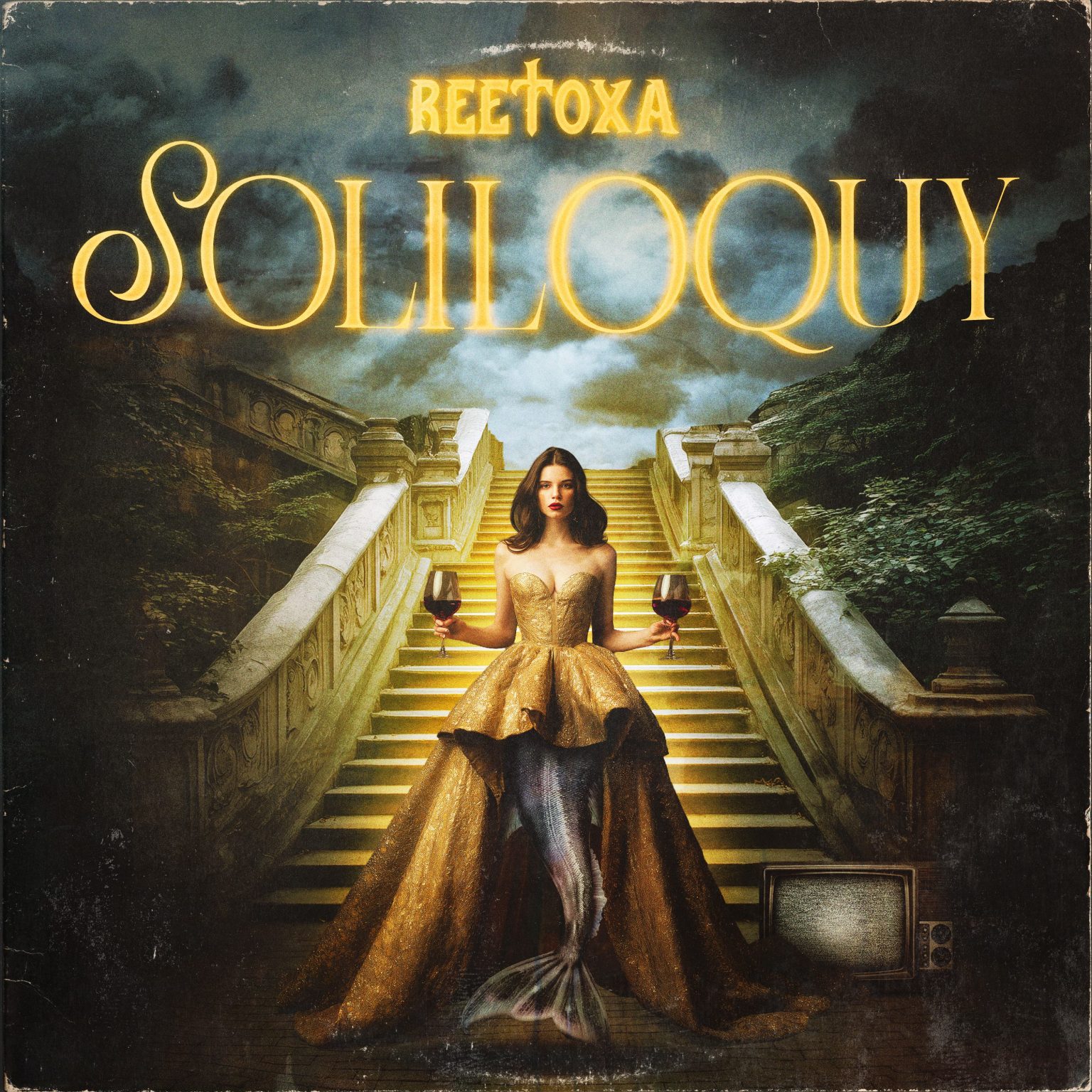
ReeToxA’s Soliloquy accumulates. Spanning 26 tracks and over an hour of runtime, it unfolds less like a conventional record and more like a lived archive, pieced together across decades of interruption, reflection, and return. At the centre of it all is Jason McKee, whose journey into this project began as far back as 1997, long before its eventual completion. What makes Soliloquy remarkable is not just its scale, but its persistence. This is music that has endured life’s detours—loss, addiction, imprisonment, and ultimately renewal. The album’s title feels fitting: it is a solitary expression, but one that invites listeners into its interior world with disarming openness. In an era dominated by immediacy, Soliloquy stands apart as something patient, deliberate, and deeply human.
The origins of the album are inseparable from its emotional weight. Written in fragments over decades and revived during the stillness of the pandemic, Soliloquy carries with it the imprint of time in a way few records do. McKee’s decision to condense what was once envisioned as a six-album saga into a single, cohesive body of work gives the project a sense of distilled purpose. Each track feels like a recovered memory, carefully restored and placed within a broader narrative arc. The transitions between songs are particularly striking; rather than abrupt shifts, they resemble the natural flow of thought, where one idea dissolves into the next. This continuity reinforces the album’s central identity as a reflection—an extended meditation on a life lived, paused, and ultimately reclaimed.
Musically, Soliloquy draws heavily from the lineage of alternative rock while refusing to be confined by it. The influence of bands like Pearl Jam and Radiohead is evident in their brooding textures and dynamic arrangements, yet McKee filters these inspirations through a distinctly personal lens. There are also subtle traces of contemporary pop sensibility, echoing artists such as Olivia Rodrigo and Chappell Roan, particularly in the album’s melodic instincts and emotional directness. The result is a hybrid sound that feels nostalgic and immediate, grounded in the past but unafraid to engage with the present. This balance is one of the album’s defining strengths, allowing it to resonate across generational boundaries.
Central to the album’s impact is McKee’s vocal performance, which carries a rawness that cannot be manufactured. His voice does not aim for perfection, but leans into imperfection as a form of truth. There is a palpable sense of lived experience in every phrase, whether he is reflecting on personal loss or grappling with broader existential questions. The song “Bobbie,” written in honour of his late mother, stands as one of the album’s most poignant moments. Here, the emotional stakes are laid bare, with minimal adornment to soften the blow. It is a reminder that Soliloquy is not merely a creative exercise but a deeply personal act of catharsis, one that transforms private grief into shared understanding.
The album’s standout tracks further illustrate its range and depth. “AKAROA” emerges as a meditative centrepiece, its atmospheric arrangement creating a sense of distance that mirrors its introspective themes. In contrast, “BOTTLE,” the oldest surviving piece from the project’s early days, carries a raw authenticity that bridges past and present. There is something almost archival about its presence, as though it has been preserved in its original form to retain its emotional integrity. “GOWN,” meanwhile, showcases McKee’s ability to translate personal experience into something universally resonant. Its narrative clarity and melodic strength make it one of the album’s most accessible entries, without sacrificing the introspective tone that defines the record as a whole.
Another highlight, “Thrift Shop Dress,” introduces a different dimension to the album’s emotional palette. With its infectious rhythm and subtle wit, it offers a moment of levity without undermining the album’s overall seriousness. This balance between heaviness and lightness is crucial to Soliloquy’s success. It prevents the record from becoming overwhelming, allowing listeners to navigate its emotional terrain with a sense of movement rather than stagnation. Similarly, tracks like “Insatiable” delve into darker, more haunting territories, demonstrating McKee’s willingness to confront discomfort head-on. These shifts in tone contribute to the album’s sense of completeness, as though every facet of experience has been given space to exist.
The production of Soliloquy plays a significant role in shaping its immersive quality. Collaborating with producer Simon Moro and engineer Joe Carra, McKee has crafted a sound that feels expansive and intimate. The inclusion of a string orchestra from Budapest adds a layer of sophistication, elevating the album beyond its rock foundations. These orchestral elements are not merely decorative, but interact dynamically with the core instrumentation, enhancing the emotional resonance of each track. The interplay between electric guitars and strings, particularly in songs like “Akaroa,” creates a tension that mirrors the album’s thematic concerns. It is a careful balancing act, one that underscores the album’s ambition without overshadowing its sincerity.
Instrumentally, the record is consistently engaging. The rhythm section provides a solid foundation, with bass and drums driving the songs forward while allowing space for melodic exploration. The guitar work, in particular, stands out for its versatility, shifting seamlessly between restrained accompaniment and more expressive passages. Pianist Phil Turcio’s contributions add another layer of depth, bringing a sense of elegance to the arrangements. Together, these elements create a cohesive sonic environment that supports McKee’s storytelling without overwhelming it. The result is an album that feels meticulously constructed, yet never loses its sense of spontaneity.



Ultimately, Soliloquy is a statement of endurance. It captures the complexities of the human condition with a level of honesty that is increasingly rare. McKee does not attempt to present a polished version of his experiences, but he embraces their messiness, allowing the music to reflect the contradictions inherent in life itself. This authenticity is what gives the album its lasting impact. It is not designed for passive listening but for engagement, inviting listeners to sit with its themes and find their own reflections within them.
In the end, ReeToxA’s Soliloquy stands as a testament to the power of persistence and the transformative potential of art. It is an album that refuses to be rushed, demanding time and attention in return for its depth. For those willing to immerse themselves in its world, it offers a profoundly rewarding experience—one that lingers long after the final note has faded. In giving voice to his own story, Jason McKee has created something that resonates far beyond himself, reminding us that even the most solitary expressions can find connection in being heard.