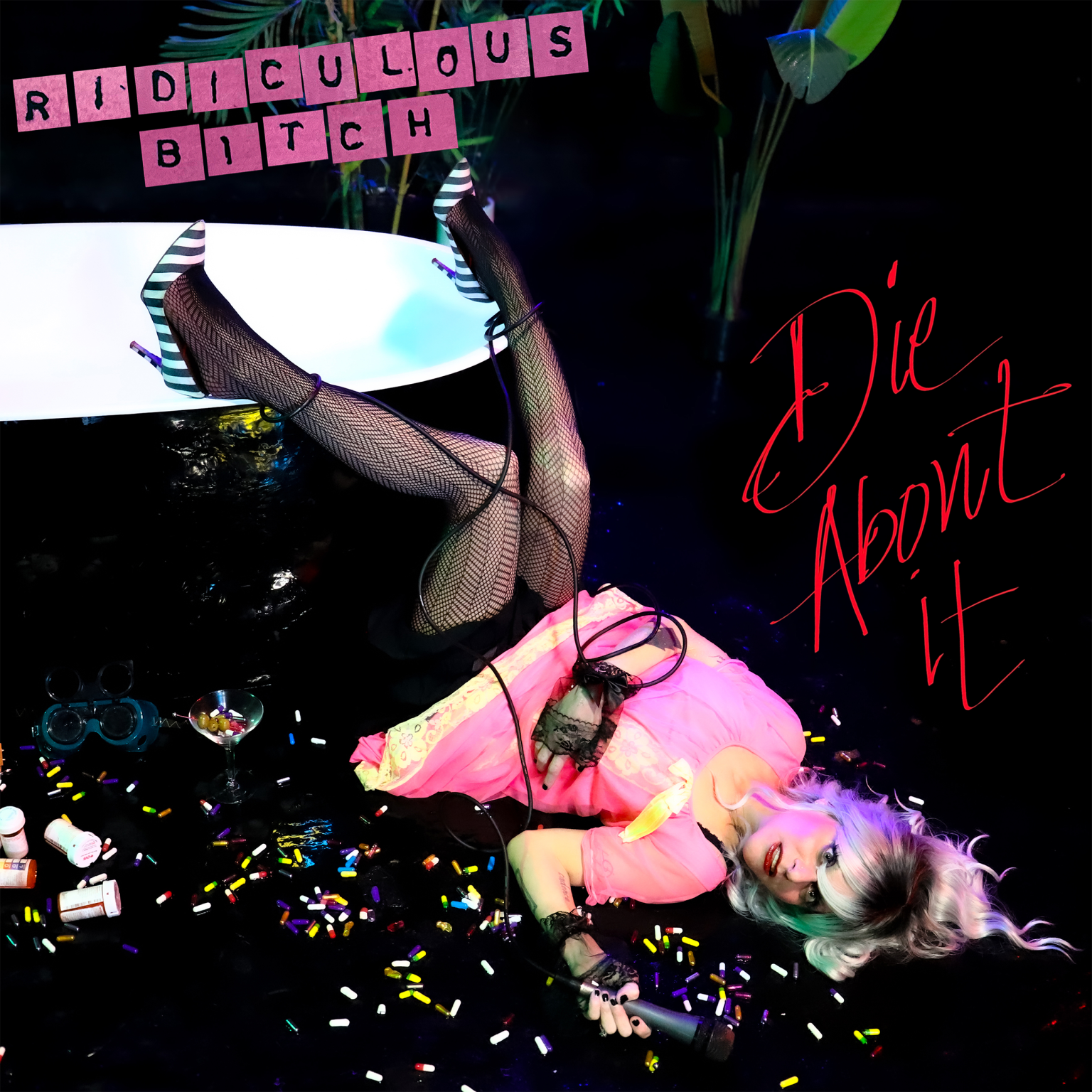
Ridiculous Bitch returns with Die About It, a full-length album that thrives on contradiction—equal parts chaotic and calculated, theatrical yet emotionally grounded. Following the momentum of their debut, Granada, the band pushes further into a space where satire, vulnerability, and sonic experimentation coexist. From the outset, the record signals its refusal to conform, embracing an identity that is as provocative as it is unpredictable. Its presentation is immediate, as though each track is competing for attention, yet beneath the surface lies a deliberate structure that reveals itself with repeated listens. This tension between disorder and intention becomes the album’s defining characteristic.
Opening track “Lady Sadie” introduces the album with a flair for drama, blending sharp instrumentation with an almost narrative vocal delivery. It feels like stepping into a theatrical production mid-scene, where the characters are already in motion, and the stakes are quietly unfolding. This sense of narrative carries into “Lost My Wife,” a track that has already garnered attention for its visual counterpart directed by Kevin Townley Jr.. Here, the band leans fully into their penchant for exaggeration, pairing biting humour with an undercurrent of genuine emotional unrest. The juxtaposition is striking—what initially appears absurd gradually reveals a deeper commentary on relationships, identity, and loss.
As the album progresses, tracks like “Engage” and “Cry About It” expand on this duality, oscillating between confrontation and introspection. The former carries an almost confrontational energy, driven by jagged rhythms and an urgent vocal performance, while the latter slows the pace slightly, allowing space for reflection. Karen Xerri’s vocal presence is central throughout, delivering lines with a sharp, almost theatrical intensity that commands attention. Her ability to shift between sarcasm and sincerity gives the album much of its emotional complexity, ensuring that even its most exaggerated moments feel anchored in something real.
Mid-album, “Rainy Day Recess” offers a tonal shift, introducing a more contemplative atmosphere without abandoning the band’s distinctive edge. The track feels introspective, almost nostalgic, as though looking back on chaos from a distance. This reflective quality is further developed in “Kafka Was the Race,” a title that hints at the band’s intellectual playfulness. The song itself is layered with metaphor and ambiguity, inviting interpretation rather than offering clear answers. It is in these moments that Die About It reveals its depth, demonstrating that beneath its eccentric exterior lies a thoughtful engagement with existential themes.
“Little Boy Blue” continues this exploration, blending vulnerability with an undercurrent of unease. The arrangement feels deliberately sparse at times, allowing the emotional weight of the lyrics to take precedence. There is a sense of fragility here that contrasts sharply with the more bombastic elements found elsewhere on the album. This contrast is not jarring but rather essential, highlighting the band’s ability to navigate a wide emotional spectrum. It also reinforces the idea that the album’s apparent chaos is, in fact, carefully orchestrated.
Closing track “Cadence” serves as a fitting conclusion, bringing together the various threads that run throughout the album. There is a sense of resolution, though not in a conventional sense. Instead of offering closure, the track leaves space for ambiguity, echoing the album’s overarching themes of uncertainty and contradiction. The instrumentation gradually builds before receding, mirroring the ebb and flow of the album as a whole. It is a subtle yet effective way to end a project that consistently resists easy categorisation.
Sonically, Die About It is a dense and textured listening experience. The band’s willingness to experiment with structure and tone results in a sound that feels expansive and cohesive. Elements of alternative rock are interwoven with theatrical flourishes and moments of near-cinematic intensity, creating a dynamic listening journey. The production captures this complexity without becoming overwhelming, allowing each element to retain its distinct character while contributing to the overall sound. It is a delicate balance, one that the band manages with surprising precision.

Beyond the music itself, the album’s rollout and accompanying events reflect Ridiculous Bitch’s commitment to creating a fully immersive artistic experience. From multimedia listening parties to rumoured acoustic performances, the band extends the album’s theatricality into the real world, blurring the line between performance and presentation. This approach reinforces the idea that Die About It is a broader creative statement, one that invites audience participation and interpretation.


Ultimately, Die About It stands as a bold and uncompromising release, one that challenges listeners to embrace its contradictions rather than resolve them. Ridiculous Bitch has crafted a project that is as intellectually engaging as it is emotionally charged, balancing absurdity with authenticity in a way that feels daring and deliberate. It is an album that demands attention for the deeper questions it raises about identity, expression, and the nature of art itself.
Connect with Ridiculous Bitch
WEBSITE
FACEBOOK
SPOTIFY
BANDCAMP
YOUTUBE
INSTAGRAM